The Protector of Oslo
Standing guard at the tip of the headland, overlooking the shimmering waters of the Oslo Fjord, Akershus Fortress (Akershus Festning) is the historic heart of Norway's capital. For over seven centuries, this complex of stone walls, bastions, and towers has been the stage for the nation's most dramatic moments. It has withstood sieges by Swedish kings, served as a lavish residence for Danish-Norwegian monarchs, housed notorious criminals in its dungeons, and witnessed the dark days of occupation during World War II.
Today, it is a potent symbol of Norwegian sovereignty. It is one of the few places in Norway where you can walk through medieval halls, pay respects at the Royal Mausoleum, and see active military guards patrolling the ramparts—all within a ten-minute walk from the city's modern Aker Brygge district.
A Fortress Never Conquered
The construction of Akershus began around 1299 under King Haakon V. At the time, Oslo was a small town vulnerable to attacks. The King recognized the strategic need for a stronghold to protect the capital. His vision proved correct; the fortress was put to the test almost immediately. In 1308, it successfully withstood a siege by the Swedish Duke Eric of Södermanland.
This set a precedent that would last for centuries. Despite numerous sieges—most famously by the Swedish warrior-king Charles XII in 1716—Akershus Fortress has never been conquered by a foreign enemy in battle. (It was surrendered without a fight to the Germans in 1940 after the government evacuated, a tragic exception driven by necessity rather than military defeat).
The City Builder: Christian IV
The fortress is inextricably linked to the city of Oslo itself, largely due to one man: King Christian IV. In 1624, a devastating fire reduced the old medieval town of Oslo to ashes. Rather than rebuilding it on the same spot, the King ordered the entire population to move. He pointed to the area behind the protective walls of Akershus Fortress and declared, "Here shall the city lie!"
He renamed the new city Christiania (which it was called until 1925), and designed it with wide, straight streets to prevent future fires. Thus, Akershus Fortress is not just a building in Oslo; it is the reason modern Oslo exists where it does.
The Renaissance Transformation
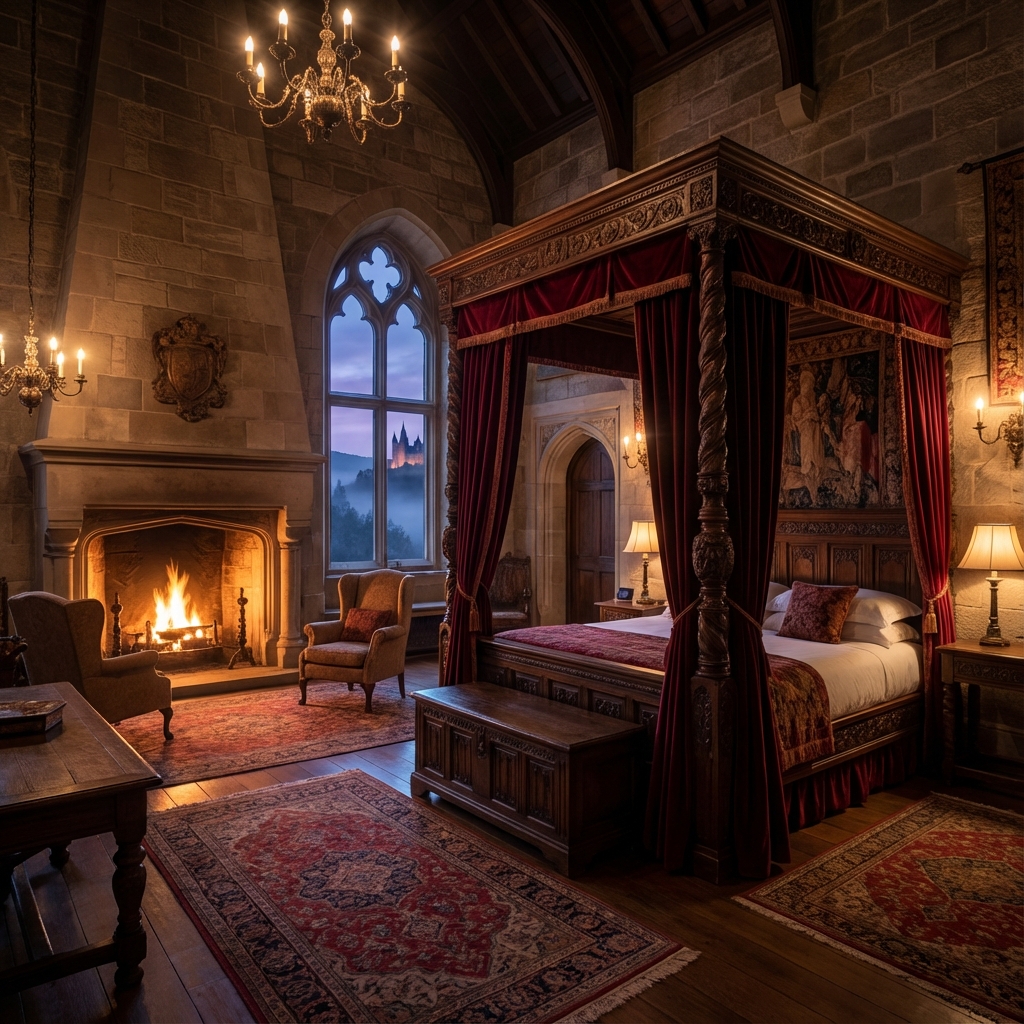
King Christian IV did not just build a city; he also transformed the fortress. He fell in love with the site and decided to turn the grim medieval castle into a modern Renaissance palace fit for a king. He added the "Blue Tower" and the "Romerike Tower," and decorated the halls with tapestries and golden leather.
Walking through the castle today, you can see this duality. The dark, damp passages of the "Daredevil's Tower" (Våghalsen) speak of the Middle Ages, while the banquet halls above, with their high ceilings and large windows, speak of Renaissance luxury. The Castle Church, still in use today, dates from this period and is the main church of the Norwegian Armed Forces.
The Royal Banquet Halls
The interior of the castle is a trip through royal history. The Christian IV Hall, with its magnificent tapestries and long wooden tables, is still used by the Norwegian Government for official state dinners and representations. If you visit during a state visit, you might see the tables set with the finest silver and crystal. The Romerike Hall, located in the north wing, is equally impressive, often used for concerts and receptions. These rooms are not dead museums; they are living spaces where the history of Norway continues to be written.
The Prison and the Master Thief
For much of the 18th and 19th centuries, the fortress served as a feared prison, known as "The Slavery" (Slaveriet). Prisoners were sentenced to hard labor, often working in chains to expand the fortifications or clean the city streets.
The most famous inmate was Ole Høiland, a master thief and folk hero comparable to Robin Hood. He possessed an uncanny ability to escape. In 1839, after years of planning, he managed to break out of his cell in the Crown Prince's Tower, dig through stone walls, and descend the high ramparts using a rope made of bedsheets. His escape remains a legend in Norwegian history, though his ultimate fate was tragic.
The Shadow of World War II
The darkest chapter in the fortress's history occurred between 1940 and 1945. During the Nazi occupation of Norway, the fortress was used by the Wehrmacht and the collaborationist government of Vidkun Quisling. It became a place of execution for members of the Norwegian Resistance.
After the liberation in 1945, the tables turned. Quisling himself was tried for treason and executed by firing squad at Akershus Fortress. Today, the Norway's Resistance Museum (Norges Hjemmefrontmuseum) is located in one of the old storehouses on the grounds. It offers a powerful and moving account of the occupation, the resistance movement, and the everyday struggle of Norwegians during the war. It is widely regarded as one of the best museums in Oslo.
The Royal Mausoleum
Akershus is the final resting place of modern Norwegian royalty. In the Royal Mausoleum, located under the Castle Church, lie the sarcophagi of King Haakon VII (the first king of independent modern Norway) and Queen Maud, as well as King Olav V and Crown Princess Märtha. It is a place of national pilgrimage and quiet dignity.
Ghosts of the Fortress
With such a long and bloody history, it is no surprise that Akershus is rumored to be the most haunted place in Norway. The most famous spirit is Malcanisen, the "Vicious Dog." Legend says a dog was buried alive at the fortress gates to serve as a spectral guard. It is said that anyone who sees the ghost of Malcanisen will die within three months.
Another frequently reported apparition is Mantelgeisten (The Cloaked Ghost), a faceless figure in a long coat who emerges from the darkness of the Margaret Hall. Guards on night patrol have reported strange noises, whispers, and the feeling of being watched for generations.
Planning Your Visit
Akershus Fortress serves as a massive green lung for the city of Oslo, popular for picnics and summer strolls.
- Access: The fortress grounds (the outer walls and park) are open to the public daily from 06:00 to 21:00 and are free to enter. The Visitor Centre is located near the main gate.
- The Castle: To see the interiors (the halls, the mausoleum, the church), you must buy a ticket to Akershus Castle. Guided tours are available and highly recommended to understand the complex architecture.
- Changing of the Guard: The Royal Guard (Hans Majestet Kongens Garde) patrols the fortress. Watching the changing of the guard is a highlight for many visitors.
- Museums: In addition to the Resistance Museum, the fortress also houses the Armed Forces Museum (Forsvarsmuseet), which covers Norwegian military history from the Vikings to the present day.
Akershus Fortress is more than a museum; it is the stone memory of Norway. From the medieval kings who built it to the resistance fighters who died within its walls, it tells the story of a small nation's fight for survival and independence.