The Stone of Eloquence
Blarney Castle is famous for one thing: the **Blarney Stone**. Legend says that anyone who kisses this block of carboniferous limestone will be given the "gift of the gab" (great eloquence or skill at flattery). For over 200 years, millions of pilgrims—from Sir Winston Churchill to Mick Jagger—have climbed the steps to kiss it.
But Blarney is much more than a gimmick. It is one of Ireland’s most complete and magical medieval estates. Beyond the keep, there are acres of ancient druidic gardens, mysterious caves, poisonous plants, and a grand Scottish Baronial mansion that visitors often completely overlook.
How to Kiss the Stone (The Acrobatics)
Kissing the stone is not as easy as it sounds. The stone is set into the wall below the battlements, 85 feet above the ground. You cannot just walk up and kiss it. You have to perform a terrifying acrobatic maneuver.
The Process:
- You must lie flat on your back on a mat on the castle roof.
- You grasp two iron safety bars behind your head.
- You must lean your head **backwards and downwards** into the gap in the machicolations (the murder hole).
- You kiss the bottom of the stone while hanging upside down, looking at the ground 85 feet below.
The Legend of the Blarney Witch
The estate is rich in folklore, particularly concerning the **Blarney Witch**. She is said to be a powerful enchantress who has lived on the grounds for centuries.
Legend says the Witch is imprisoned during the day in the **Witch Stone**, a large rock in the Rock Close that looks uncannily like the profile of a hag's face. Unlike other imprisoned witches, she is not evil; she simply wants her freedom. She is allowed to escape only after nightfall.
If you arrive early enough in the morning (before the first tour buses), you should head straight to the **Witch's Kitchen**, a cave located under the roots of a 600-year-old Yew tree. Folklore says that you can still see the dying embers of the fire she lit the night before to keep warm. It was this Witch who supposedly told Cormac MacCarthy (the Lord of Blarney) about the powers of the Stone as a reward for saving her from drowning in the lake.
The Rock Close: A Druid's Paradise
The **Rock Close** is the most magical part of the estate. It is a landscaping masterpiece built around massive natural rock formations and ancient yew trees. It is believed to be the site of an ancient druidic settlement and place of worship.
Here you will find:
- The Wishing Steps: A narrow, slippery staircase cut into the limestone. The legend is specific: if you walk down the steps and back up them **backwards** with your eyes closed, focusing on a single wish, it will be granted within a year and a day. It is harder than it looks!
- The Druid's Circle: A circle of low stones that feels ancient and spiritual.
- The Dolmen: A "portal tomb" formed by a massive boulder balanced on smaller stones. Though it looks prehistoric, it may have been arranged by the aesthetic gardeners of the 18th century.
The Poison Garden
Hidden behind the castle battlements is the **Poison Garden**, a fascinating collection of dangerous plants from around the world. It was created to educate visitors about the darker side of nature.
The garden contains plants like **Wolfsbane, Mandrake, Ricin, Opium Poppies, and Cannabis**. Signs everywhere warn visitors: "Don't touch, don't smell, don't eat!" Some of the most toxic specimens are kept inside large iron cages, not to keep them in, but to keep curious tourists out. It is a stark reminder that in nature, beauty often masks death.
The Mystery of Badger's Cave
Beneath the castle lies a network of natural limestone caves. The most famous is **Badger's Cave**. It played a crucial role in the Siege of 1646 by Oliver Cromwell's forces.
When Cromwell's general, Lord Broghill, finally breached the mighty walls of the castle after a long bombardment, he rushed in expecting to capture the MacCarthy family and their legendary gold plate. He found the castle empty. The entire garrison and family had escaped through the Badger's Cave system, taking the treasure with them. The gold was never recovered. Local legend says it was thrown into the depths of **Blarney Lake**, and that three of the MacCarthys' finest prize bulls stand guard over it at the bottom of the murky water.
Blarney House
About 200 yards from the castle ruins stands **Blarney House**, a magnificent Scottish Baronial mansion built in 1874. It is easy to miss if you are just focused on the Stone, but it is worth the walk.
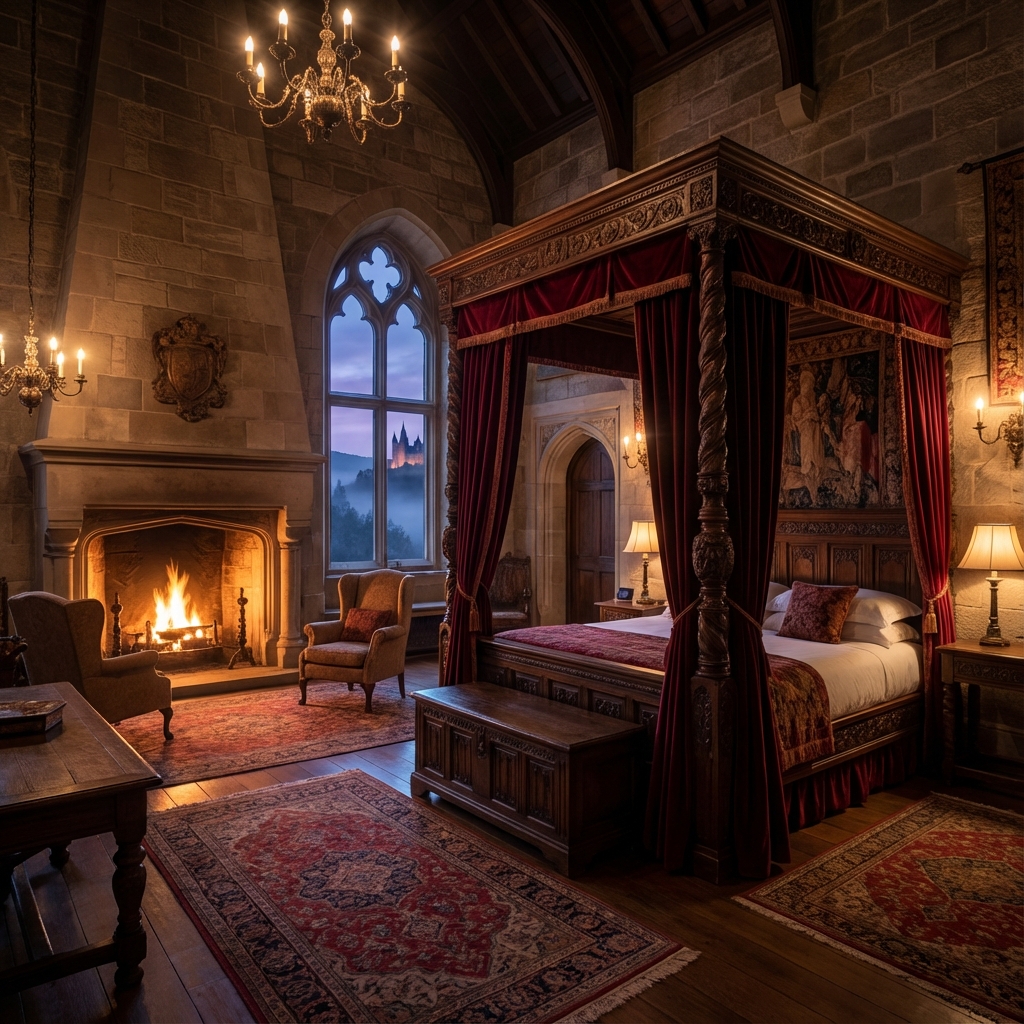
While the castle is a medieval ruin, the House is a fully restored, lived-in family home (the Colthurst family still resides here). It is open to the public during the summer months. The interior is like a time capsule of Victorian aristocracy, filled with ancestral portraits, tapestries, and fine furniture. It offers a completely different vibe—"Downton Abbey" luxury compared to the castle's "Game of Thrones" ruggedness.
Visitor Tips
- Beat the Crowds: Blarney is one of the busiest tourist sites in Ireland. In summer, the line for the Stone can be 2 hours long. Go at 9 AM strictly, or wait until 4 PM when the tour buses have left.
- Footwear: The climb to the top involves 120 steps on a narrow, winding spiral staircase. It is steep and slippery. Wear flat, grip-soled shoes.
- The Grounds: Do not just do the Stone and leave. The grounds cover 60 acres and include a Fern Garden, an Arboretum, and the Lake Walk. Allow at least 3-4 hours for the full experience.