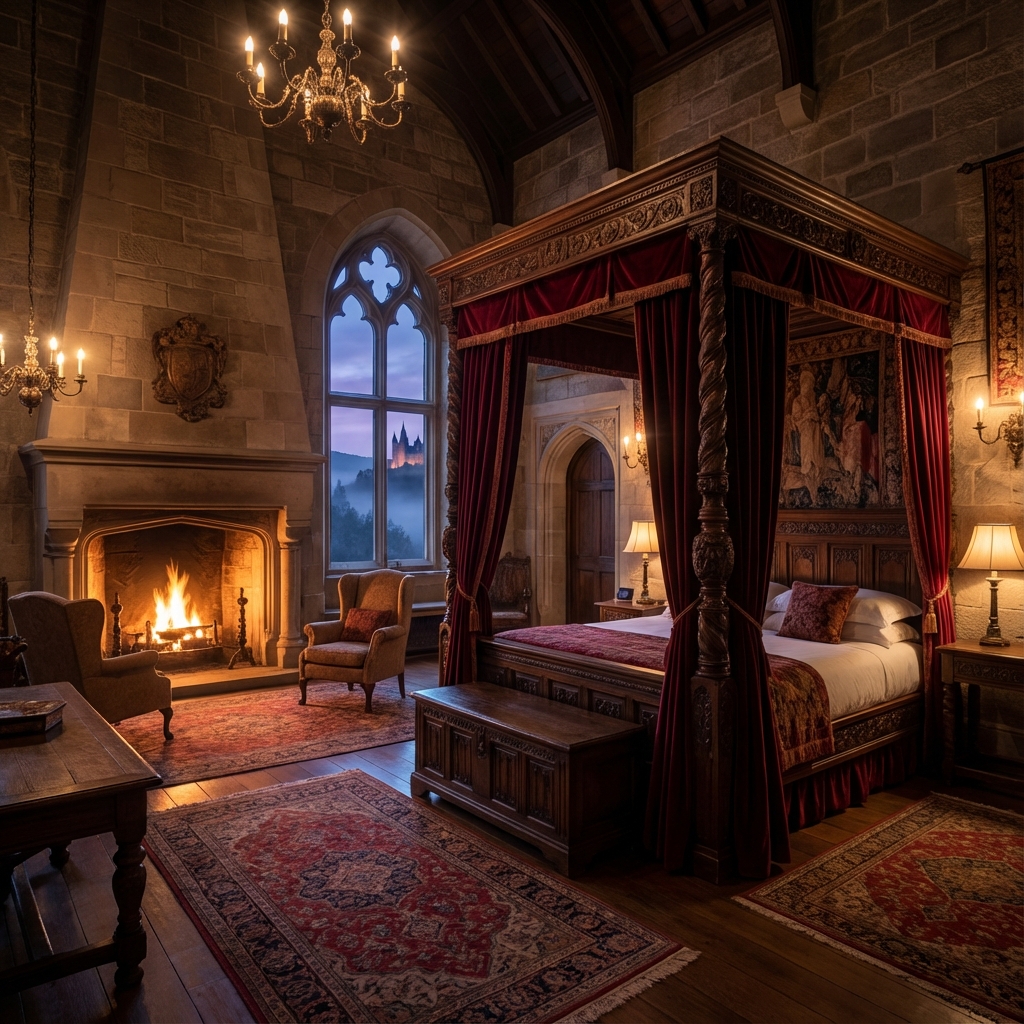
A Renaissance Jewel in South Bohemia
Český Krumlov Castle is a monumental complex located in the South Bohemian region of the Czech Republic. Standing on a massive rock promontory carved by the meandering Vltava River, it overlooks the scenic red roofs of the town below. It is the second largest castle complex in the country, surpassed only by Prague Castle. The entire historic center, including the castle, is a UNESCO World Heritage site, recognized for its exceptional architectural integrity. The town layout has remained virtually unchanged since the 16th century, earning it the nickname "The Pearl of the Renaissance."
The Lords of the Rose
The history of the castle is defined by three powerful families. Founded in the 13th century by the Lords of Krumlov, it soon passed to the **Rosenberg family** (Rožmberk), who held it for 300 years (1302–1602). The Rosenbergs were the "uncrowned kings" of South Bohemia, rivaling the power of the Bohemian monarch. Their emblem—a red five-petaled rose—can still be seen everywhere in the castle and town today.
Under the Rosenbergs, specifically **William of Rosenberg** (Vilém z Rožmberka), the castle was transformed from a gloomy Gothic fortress into a magnificent Renaissance residence inspired by Italian palaces. It was a golden age of culture, alchemy, and science. William invited Italian architects and painters to remodel the castle, creating the airy arcades and frescoed courtyards we see today. The last Rosenberg, Peter Vok, was forced to sell the castle to Emperor Rudolf II in 1601 due to mounting debts. Later, the castle passed to the **Eggenberg** family (who built the theatre) and finally to the **Schwarzenberg** family, who gave it its Baroque grandeur before fleeing the Nazis and Communists in the 20th century.
The Complex: A City Within a City
The castle is not a single building but a sprawling complex of 40 palaces and buildings arranged around five courtyards. Key highlights include:
- The Castle Tower: The symbol of the town. Originally Gothic, it was given its colorful, festive Renaissance appearance in the 1580s by the Italian architect Baldassare Maggi. Visitors can climb the 162 steps for a stunning 360-degree view of the meandering Vltava river. The tower is decorated with illusionist paintings that mimic architectural details.
- The Masquerade Hall: A Rococo masterpiece painted in 1748 by Josef Lederer. The walls are covered in life-size frescoes of carnival characters—Harlequins, Columbines, Turks, and aristocrats—creating the illusion of a crowded ball. The paintings are so realistic that the painted figures seem to mingle with real visitors. Mirrors are strategically placed to enhance the illusion of infinite space. It is a playful, whimsical room that captures the spirit of 18th-century hedonism.
- The Cloak Bridge: A spectacular multi-story arched bridge that connects the Upper Castle with the theatre and gardens. It looks like something out of a fantasy novel, defying gravity as it spans the deep moat. Its name comes from the fortifications ("cloak") that historically protected the western side.
The World's Best Preserved Theatre
The absolute jewel of the castle is the **Baroque Theatre**. Completed in 1766, it is one of only two completely preserved Baroque theatres in the world (the other is at Drottningholm, Sweden). Unlike modern theatres, everything here is original: the stage, the auditorium, the orchestra pit, the costumes, the props, and even the complex wooden stage machinery.
The machinery allows for instant scene changes using a system of ropes and pulleys. With the turn of a capstan, the entire set can shift from a forest to a palace in seconds. The theatre also retains its original sound effect machines: a wooden drum filled with stones to simulate thunder, and a rotating cylinder covered in silk to mimic the sound of rain. Because of its extreme fragility, it is only used for performances three times a year and is accessible only via a special guided tour.
Legends: The White Lady and The Bears
Like any proper castle, Český Krumlov has a ghost: the **White Lady** (Bílá paní). She is the spirit of Perchta von Rosenberg, a 15th-century noblewoman who was cursed by her abusive husband on his deathbed. Legend says she wanders the castle corridors wearing white gloves to signal a birth or happiness, and black gloves to warn of impending death or disaster. She is said to be the guardian of the Rosenberg descendants.
A more tangible tradition is the keeping of **bears** in the moat between the first and second courtyards. This tradition dates back to the 16th century, supposedly because the Rosenbergs claimed lineage from the noble Italian Orsini family (*Orsa* means bear). Today, the bears are well-cared for in a renovated enclosure and are a favorite attraction for children. Every Christmas and birthday, the town holds a festival where the bears are given cakes and honey.
The Gardens and Bellarie
Beyond the Cloak Bridge lies the vast 11-hectare Baroque Garden. It is a masterpiece of symmetry, featuring a central cascade fountain populated by statues of water deities. At the center of the garden stands the **Bellarie Summer House**, a delicate Rococo pavilion used by the nobility for garden parties and refreshments. It is painted in pastel shades and features a double staircase and an artificial grotto.
Nearby is the controversial **Revolving Auditorium**. Built in the 1950s, this open-air theatre features a seating platform that physically rotates inside the park, allowing the audience to follow the actors as the scene moves from the bushes to the Bellarie. While heritage preservationists argue it disrupts the historic garden, it remains an incredibly popular venue for summer Shakespeare festivals.
Visitor Information
Český Krumlov is a popular day trip from Prague (approx. 2.5 hours by bus), but staying overnight is recommended to experience the castle after the crowds leave.
- Tours: The castle offers several tour routes. Route 1 focuses on the Renaissance and Baroque eras (including the Masquerade Hall), while Route 2 focuses on the 19th-century history of the Schwarzenbergs. The Baroque Theatre requires a separate ticket and booking in advance is essential.
- Five-Petalled Rose Festival: In June, the entire town travels back in time for this Renaissance festival. Locals dress in period costume, jousting tournaments are held in the castle gardens, and medieval markets fill the squares.
- Canoeing: A popular way to view the castle is from the water. You can rent a canoe or raft and float down the Vltava, looking up at the towering castle walls from below.