The Only Royal Castle in North America
Perched atop a volcanic hill in the center of Mexico City, Chapultepec Castle (Castillo de Chapultepec) holds a unique distinction that surprises many visitors: it is the only true castle in North America to have served as the residence of a sovereign. While wealthy Americans built 'castles' (like Hearst Castle), Chapultepec was the actual imperial palace of Emperor Maximilian I and Empress Carlota of Mexico. It is a piece of European royalty dropped into the middle of a Latin American metropolis, creating a fascinating clash of cultures, history, and tragedy.
The name 'Chapultepec' comes from the Nahuatl language (meaning 'at the hill of the grasshopper'). This site has been sacred for millennia. The Aztecs considered it a holy place and built aqueducts here to supply Tenochtitlan with fresh water. Later, the Spanish viceroys used it as a summer retreat, laying the foundations for the fortress we see today. It sits at a height of 2,325 meters (7,628 ft) above sea level, literally looking down on the skyscrapers of the modern city.
The Imperial Dream
The castle's most glamorous (and tragic) era began in 1864, when the Austrian Archduke **Maximilian von Habsburg** was installed as the Emperor of Mexico by Napoleon III of France. Maximilian and his wife, the Belgian princess **Carlota**, fell in love with the site's stunning views of the valley and the volcanoes.
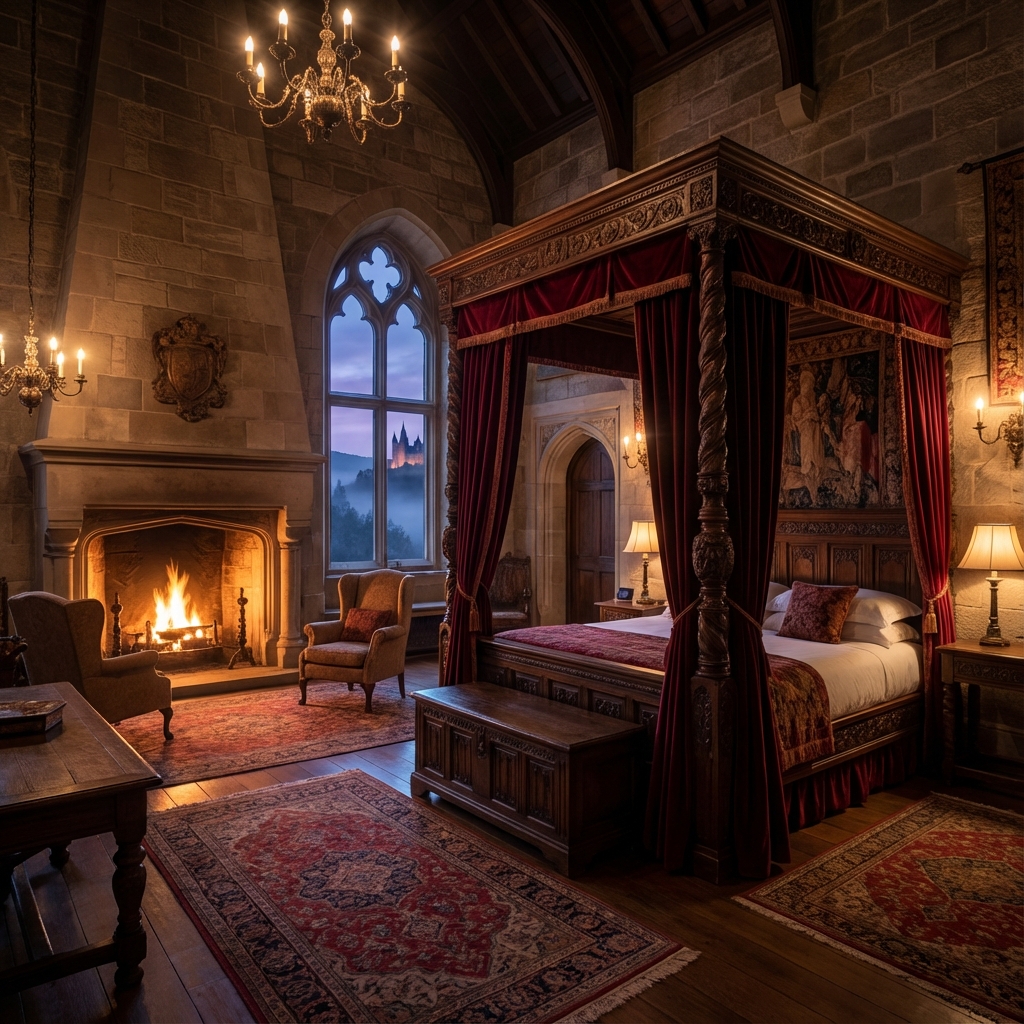
They transformed the austere military college into a lavish palace. They hired architects like Ramón Rodríguez Arangoity to remodel the interiors in a Neo-Classical style, adding marble floors, European furniture, and roof gardens that rivaled those of Europe's grandest palaces. Maximilian was so fond of the view that he commissioned a grand boulevard to connect the castle directly to the city center. Modeled after the Champs-Élysées in Paris, it was originally called the *Paseo de la Emperatriz* (Promenade of the Empress). Today, it is the famous **Paseo de la Reforma**, Mexico City's most iconic avenue.
The Boy Heroes (Los Niños Héroes)
Before the arrival of the Emperor, the castle served as Mexico's Military Academy. It was here, during the Mexican-American War, that a defining moment of Mexican patriotism took place. On September 13, 1847, U.S. forces stormed the hill in the Battle of Chapultepec. The defenders included young military cadets, some as young as 13.
According to legend, when defeat was imminent, six of these cadets refused to surrender to the invading Americans. They fought to the death. The most famous story tells of **Juan Escutia**, who allegedly wrapped himself in the Mexican flag and leaped from the castle ramparts to his death on the rocks below to prevent the flag from being captured by the enemy. These six are immortalized as **Los Niños Héroes** (The Boy Heroes). At the entrance to the park, six massive marble columns (Altar a la Patria) stand as a monument to their sacrifice. The mural *The Fall of Juan Escutia* inside the castle captures this dramatic moment.
Inside the Castle: Two Museums in One
Visiting Chapultepec Castle is like visiting two different museums. The building is divided into two distinct sections:
The National Museum of History
The older section of the building houses a vast collection of artifacts chronicling Mexico's history from the Spanish conquest to the Mexican Revolution. The walls are adorned with stunning murals by Mexico's greatest muralists, including **David Alfaro Siqueiros**, **José Clemente Orozco**, and **Juan O'Gorman**. These massive paintings are not just art; they are political statements. O'Gorman's *Retablo de la Independencia* is particularly famous, a lively, chaotic depiction of the struggle for freedom.
The Alcázar (Imperial Palace)
The other wing is the preserved residence of Maximilian and Carlota (and later President Porfirio Díaz). Walking through these rooms feels like stepping back into 19th-century Europe. You can see:
- The Carriage Room: Displaying the golden state coach of Maximilian and the black carriage of Benito Juárez.
- The Malachite Room: Featuring a massive malachite vase, a gift from the Russian Tsar to Mexico.
- The Dining Room: Set with fine French porcelain and crystal, looking exactly as it did during imperial banquets.
- The Stained Glass Gallery: A long corridor with floor-to-ceiling windows featuring stained glass depictions of Greek goddesses. This is one of the most photogenic spots in the entire city, with light flooding onto the checkerboard marble floor.
The Treaty of Chapultepec
The castle has continued to shape history well into the 20th century. In 1945, it hosted the Inter-American Conference on Problems of War and Peace, which resulted in the **Treaty of Chapultepec**. This treaty was a precursor to the Rio Treaty and established the principle of reciprocal assistance and American solidarity—essentially, that an attack on one American state is an attack on all. It was a major step in Pan-American diplomacy during World War II.
Visitor Information
The castle is located in the First Section of Chapultepec Park (Bosque de Chapultepec), the largest city park in the Western Hemisphere.
- The Climb: To reach the castle, you must walk up a winding paved road ('La Rampa') that spirals up the hill. It takes about 15-20 minutes and is a moderate workout due to the altitude. A small train runs for those who cannot walk, but lines are often long.
- Water Checks: Security is strict. You are generally not allowed to bring food or sugary drinks inside the museum to protect the artifacts, though water is usually permitted.
- Views: The terrace offers the absolute best view of Mexico City. You can look straight down the Paseo de la Reforma to the Angel of Independence monument and see the modern skyscrapers rising from the green sea of the park trees.
Frequently Asked Questions
- Was Romeo + Juliet filmed here?
- Yes! If the castle looks familiar, it might be because Baz Luhrmann used it as the setting for the Capulet Mansion in his 1996 movie *Romeo + Juliet* (starring Leonardo DiCaprio). The famous masquerade ball scene was filmed here.
- Is it free?
- It is free for Mexican citizens and residents on Sundays (which makes it very crowded). For tourists, there is a small entry fee (around 90-100 pesos).
- Can I take photos?
- Yes, but flash photography and tripods are strictly forbidden. You may need to pay a small extra fee for professional video equipment.