The Model for Marlinspike Hall: A Comic Book Icon
For millions of comic book fans around the world, **Château de Cheverny** is instantly recognizable, not as a French château, but as **Marlinspike Hall** (Château de Moulinsart), the ancestral home of Captain Haddock in *The Adventures of Tintin*. Hergé, the Belgian creator of Tintin, used Cheverny as his model, removing the two outer wings to create the fictional mansion. The owners of Cheverny have embraced this legacy enthusiastically. A permanent interactive exhibition, *The Secrets of Marlinspike Hall*, allows visitors to walk through scenes from the comic books, complete with life-sized models, sound effects, and interactive displays. You can see the Professor Calculus's shark submarine, the crypt from *The Secret of the Unicorn*, and the broken glass from *The Castafiore Emerald*.
A Family Legacy of Six Centuries
However, Cheverny's real history is just as compelling as its fictional one. Unlike many Loire Valley châteaux that changed hands between kings, queens, and mistresses, Cheverny has remained in the same family, the **Huraults**, for over six centuries. It was built between 1624 and 1630 by Henri Hurault, Count of Cheverny, and his wife Marguerite Gaillard de La Morinière. Because it was built in a single, continuous period, the château presents a perfect unity of style, known as pure Louis XIII classicism. It was designed by the architect Jacques Bougier brilliance lies in its symmetry and its material: the white *tuffeau* stone from the Bourré quarries, which hardens and whitens as it ages.
Today, the Marquis and Marquise de Vibraye (descendants of the Huraults) still live in the right wing of the castle with their children. This uninterrupted ownership gives Cheverny a unique atmosphere; it is not a cold museum, but a warm, lived-in home filled with personal history, fresh flowers, and family photos alongside the antiques.
Interiors: The Height of French Grandeur
Cheverny is widely considered to have the most beautifully furnished interiors of any Loire Valley château. The furniture is not a collection of museum pieces brought in for display; these are the actual items used by the family for centuries.
The Arms Room
The largest room in the castle, the **Arms Room**, displays a formidable collection of armor and weapons from the 15th, 16th, and 17th centuries, including suits of armor belonging to the Count of Chambord. But the real treasure here is the Gobelins hanging from the 17th century, depicting the abduction of Helen of Troy. The vivid colors have been perfectly preserved because they were kept away from direct sunlight for centuries.
The King's Bedroom
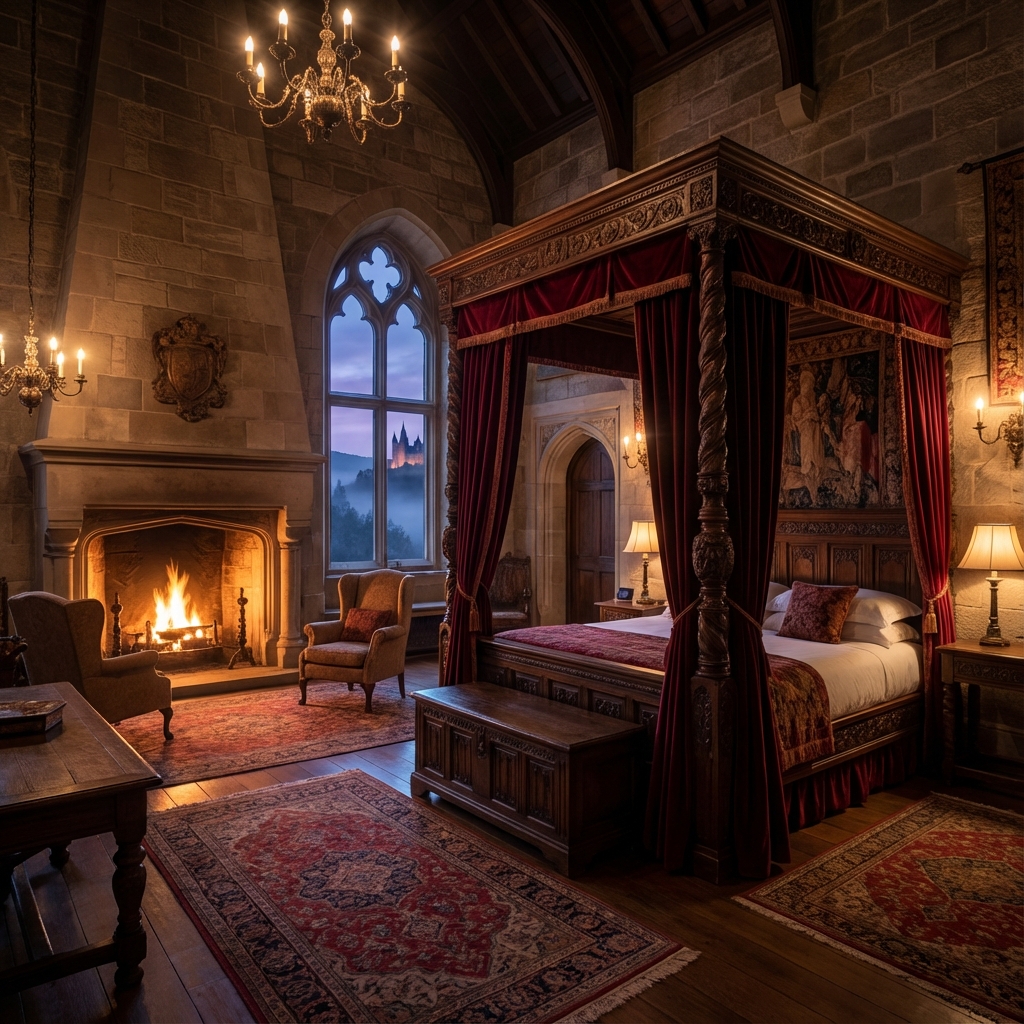
It was customary for noble houses to keep a room ready for the King, just in case he passed by. The **King's Bedroom** at Cheverny is a riot of decoration, featuring a ceiling painted with scenes from the story of Perseus and Andromeda. Ironically, no king ever slept here, though Henri IV did sleep in the previous castle on this site. The room contains a magnificent canopied bed embroidered with Persian motifs.
The Dining Room
The dining room brings the 19th century to life, with 34 panels illustrating the story of Don Quixote painted by Jean Monier. The table is often set for a grand dinner, complete with silverware and crystal, reinforcing the sense that the family has just stepped out.
The Hounds and the Hunt
Cheverny is a living center of French hunting tradition (*la vénerie*). The kennels are home to a pack of over 100 Anglo-French tricolor hounds. These are working dogs, crossbred to have the stamina for hunting deer in the surrounding forests. A highlight for many visitors is the daily **"Soup of the Dogs"** at 11:30 AM (times may vary), where the kennel master feeds the entire pack. The discipline is incredible; the hungry dogs wait motionless, drooling but silent, until the whip cracks and the command is given to eat. It is a spectacle of raw instinct and rigid training.
The Estate: Gardens and Canals
The château is surrounded by a vast English-style park planted with giant sequoias, cedars, and lime trees. The estate has expanded its garden offerings in recent years to encourage visitors to spend the whole day: * **The Kitchen Garden:** A bouquet of colors and scents, mixing flowers and vegetables that supply the family table and the castle café. * **The Tulip Garden:** In spring, over 100,000 bulbs create a spectacular ribbon of color across the lawns, rivaling the great gardens of Holland. * **The Maze:** A fun hedge maze associated with the Tintin theme, perfect for children. * **The Garden of Love:** A lakeside garden featuring six monumental bronze sculptures by Swedish artist Gudmar Olovson, representing different stages of love from courtship to family. * **Boat and Cart Rides:** Visitors can rent electric golf carts to explore the forest or take an electric boat ride on the canal to see the castle from a different perspective.
Visitor Information
Château de Cheverny is open every day of the year. It is located near Blois and neighbors the massive Château de Chambord, making it easy to visit both in one day. Unlike many state-owned monuments, Cheverny offers a very seamless visitor experience, with ample parking and a focus on family entertainment.
Combining Cheverny with Chambord
Cheverny and the nearby Château de Chambord are located just 18 kilometres apart and are almost always visited together on a single day trip from Blois or Tours. The contrast between the two is instructive: Chambord is the overwhelming, slightly inhuman statement of royal megalomania—440 rooms, a 32-kilometre park wall, and a double-helix staircase that one person can use alone for the rest of their life. Cheverny is its intimate, liveable counterpart: the château as home rather than symbol. Most visitors find that the contrast makes each property more legible. After Chambord's vast, echoing rooms and mostly empty spaces, Cheverny's furnished interiors and personal family atmosphere feel like stepping into a real life.
A recommended itinerary is to visit Chambord in the morning (arrive at opening to beat the tour groups) and Cheverny in the afternoon, when the dog-feeding spectacle at 11:30 AM has passed and the crowds have thinned. End at Cheverny's garden café, which serves seasonal produce from the kitchen garden alongside Loire wines—a thoroughly civilised conclusion to a day in the valley.