The Castle That Sparked a King's Envy
Château de Vaux-le-Vicomte is a masterpiece of tragedy and beauty. Located 55 km southeast of Paris, it is the founding monument of the "Louis XIV style," a harmonious mix of architecture, interior design, and scenery gardening that would define French power for centuries. But before there was Versailles, there was Vaux. In fact, Versailles was directly modeled on Vaux-le-Vicomte, built by the same team of geniuses: the architect Louis Le Vau, the painter Charles Le Brun, and the scenery gardener André Le Nôtre.
This perfect château was the dream of one man, Nicolas Fouquet, the Superintendent of Finances for the young King Louis XIV. His family crest featured a squirrel (fouquet in the local dialect) and the motto "Quo non ascendet?" ("To what heights will he not scale?"). He wanted to build a home that reflected his success, taste, and devotion to the arts. He succeeded too well. The result was so magnificent that it provoked the jealousy of the King and led to Fouquet's life imprisonment. Today, it remains the largest private estate listed as a historical monument in France, owned by the de Vogüé family who have opened it to the world.
History: The Party of the Century
In 1641, Fouquet bought a small manor house and demolished it to build his masterpiece. He spared no expense, leveling three villages to create the gardens. On August 17, 1661, Fouquet hosted a lavish fête to inaugurate the completed château. The guest of honor was Louis XIV. It was the party of the century. There were plays by Molière, a dinner by Vatel, and a fireworks display that lit up the night sky. But the King was not amused. He saw the opulence as proof that Fouquet had been embezzling royal funds (though the reality was more complex—Fouquet was actually funding the state). The King's pride was wounded; the "Squirrel" was outshining the "Sun King."
Three weeks later, Fouquet was arrested by D'Artagnan (of Musketeer fame). He was subjected to a show trial and sentenced to life imprisonment in the fortress of Pignerol, where he died in 1680. The King then seized Fouquet's team—Le Vau, Le Brun, and Le Nôtre—and ordered them to build something even bigger: Versailles. Vaux-le-Vicomte is thus the tragic parent of the most famous palace in the world. The arrest of Fouquet marked the true beginning of Louis XIV's absolute rule.
Architecture: Transparency and Harmony
The château is situated on a moated platform, reached by two bridges. Its defining feature is the grand Oval Salon, surmounted by a slate dome. This was an architectural innovation, creating a central space that looked out over the gardens on one side and the courtyard on the other. The design concept is known as "transparency"—when you stand at the entrance gate, you can see straight through the open doors of the château to the gardens beyond, integrating the building perfectly with the scenery. The facade is a perfect example of French Baroque classicism: symmetrical, balanced, and imposing without being heavy.
The Interiors
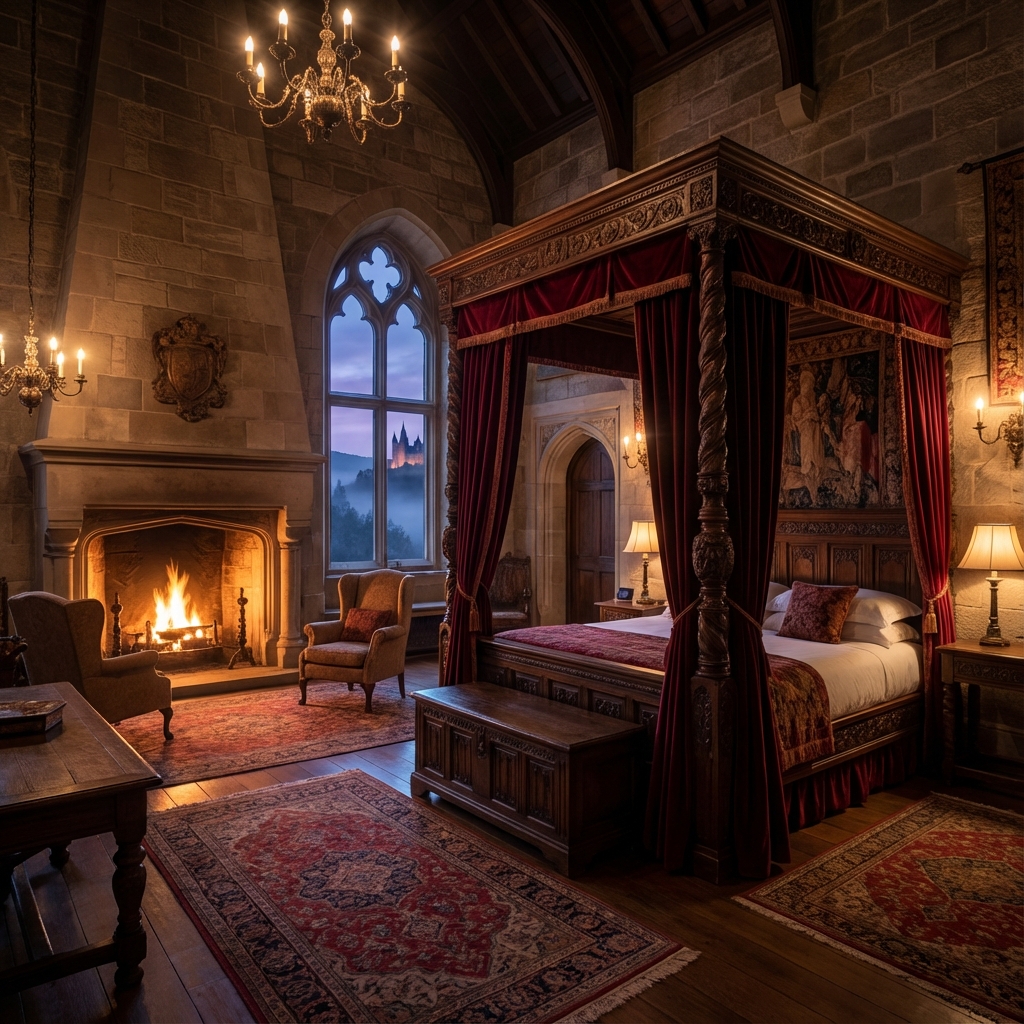
The interiors have been preserved with remarkable care. The King's Room (which Louis never slept in) is decorated with heavy stucco and gold, fit for a monarch. The Muses' Salon, painted by Le Brun, features mythological scenes celebrating the arts. Visitors can also see the Kitchens in the basement, which are fully equipped with copper pots and a massive roasting spit, giving a glimpse into the logistics of the famous 1661 feast. A climb to the top of the dome offers a 360-degree view of the estate, revealing the perfect geometry of the layout.
The Gardens: An Optical Illusion
The gardens of Vaux-le-Vicomte are the first major work of André Le Nôtre and the founding example of the Jardin à la française (French formal garden). They are a masterpiece of optical illusion known as anamorphosis abscondita ("hidden distortion"). From the château steps, the gardens look like a flat, manageable carpet stretching to the horizon. But as you walk into them, the perspective shifts. Hidden levels, transversal canals, and the "Grottes des Tritons" reveal themselves. The use of perspective makes the distant Hercules statue look close, when it is actually kilometers away. The Grand Canal, invisible from the house, is actually larger than the one later built at Versailles.
Pop Culture: From James Bond to The Iron Mask
The château's cinematic beauty has made it a favorite location for filmmakers. It famously served as the Californian estate of the villain Hugo Drax in the James Bond film Moonraker (1979). It also stood in for the royal palace in the 1998 film The Man in the Iron Mask, starring Leonardo DiCaprio. This is fitting, as the real Man in the Iron Mask was imprisoned at Pignerol at the same time as Nicolas Fouquet, leading to centuries of speculation that Fouquet himself might have been the masked prisoner (a theory popularized by Alexandre Dumas).
Visitor Information
Getting There
Vaux-le-Vicomte is in Maincy, near Melun. It is accessible by train from Paris Gare de Lyon to Melun (approx. 30 mins), followed by a shuttle bus (Châteaubus) that runs on weekends and during the high season. Driving takes about an hour from Paris. It is an easy day trip from the capital.
Candlelit Evenings
The most magical time to visit is during the Candlelit Evenings (Soirées aux Chandelles), held on Saturday evenings from May to October. The electric lights are turned off, and the château and gardens are illuminated by 2,000 candles. Classical music plays in the gardens, ending with a fireworks display. It recreates the atmosphere of Fouquet's fateful party, minus the arrest. Dining at the ephemeral restaurant facing the gardens by candlelight is an unforgettable experience.
Christmas at Vaux
In December, the château is transformed for Christmas. Each room is decorated with a different theme, featuring thousands of ornaments, lights, and fires in the great fireplaces. It is widely considered the best Christmas decoration of any château in France, turning the tragic history into a festive fairytale.