The Garden of France: A Renaissance Masterpiece
Château de Villandry is unique among the Loire Valley castles. While most are famous for their architecture, their royal residents, or their political history, Villandry is renowned worldwide for its dirt—or rather, what grows in it. It is the site of the most magnificent **Renaissance Gardens** in France, a geometric wonderland of vegetables and flowers that attracts gardeners and photographers from all over the globe. The château itself is the last of the great Renaissance palaces built on the banks of the Loire, completed in 1536 by Jean Le Breton, Finance Minister to Francis I.
Unlike the royal extravagances of Chambord or Chenonceau, Villandry has a simpler, purely French style, distinctive for its steep slate roofs and lack of Italianate ornamentation. But the real masterpiece lies outside the walls. The gardens are a living painting, changing color with the seasons, carefully maintained by a team of ten master gardeners who work year-round to ensure perfection.
History: A Labour of Love
The estate has a long and varied history. It was here, in the original medieval fortress (of which only the massive keep remains), that King Philip Augustus of France met Richard the Lionheart of England in 1189 to discuss peace. Jean Le Breton bought the castle in the 16th century and completely rebuilt it to showcase his love of gardening, inspired by the Italian gardens he had seen during diplomatic missions.
However, the gardens we see today are a 20th-century recreation. Over the centuries, the original Renaissance gardens were destroyed and replaced by an English-style garden, which was fashionable in the 19th century. In 1906, the estate was bought by **Joachim Carvallo**, a Spanish doctor and scientist. He fell in love with Villandry and devoted his life (and his entire fortune) to restoring it to its former glory. Using archaeological evidence and old plans, he tirelessly recreated the intricate geometric gardens. Today, his great-grandson, Henri Carvallo, owns and manages the château, ensuring that Joachim's vision is preserved for future generations.
The Gardens: A Living Mosaic
The gardens are laid out on three terraced levels, each with a different theme. They are best viewed from the belvedere in the woods above or from the castle tower, where the geometric patterns reveal themselves fully as a living carpet.
The Ornamental Garden: The Language of Love
Located on the second terrace, these are known as the "Love Gardens." Four squares of boxwood are clipped into specific shapes representing different kinds of love, a concept derived from medieval courtly love tradition:
- Tender Love: Hearts separated by small flames at the corners, symbolizing the spark of love.
- Passionate Love: Broken hearts arranged in a chaotic pattern, symbolizing hearts broken by passion, intertwined with boxwood cut into spirals representing continuous movement.
- Fickle Love: Fans (for hiding affairs) and horns (symbolizing cuckoldry) and letters, representing the instability of feelings.
- Tragic Love: Dagger blades and swords, representing the duels caused by rivalry, with red flowers symbolizing the blood spilled.
The Kitchen Garden (Le Potager)
On the lowest terrace lies the most famous part of Villandry: the **Renaissance Kitchen Garden**. It consists of nine squares planted with vegetables and flowers in strict geometric patterns. But this is no ordinary vegetable patch. The gardeners treat vegetables as colors in a painting. They plant blue leeks, red cabbages, jade-green lettuce, and purple artichokes to create a checkerboard effect. The planting scheme changes twice a year (spring and summer), meaning the garden looks completely different depending on when you visit. It produces over 40 tons of organic vegetables annually, but the primary goal is aesthetics, not food.
The Water and Sun Gardens
The highest terrace features the **Water Garden**, centered around a large, mirror-like pond in the shape of a Louis XV mirror. It is a place of tranquility, surrounded by lime trees and grassy banks, designed for reflection and rest. The newest addition is the **Sun Garden** (created in 2008), which features a lime tree avenue, a cloud chamber, and a children's maze planted with hornbeam. There is also a simpler **Herb Garden** with medicinal and culinary plants used in the Middle Ages, identifying the plants that would have been used for healing and cooking centuries ago.
The Château Interior
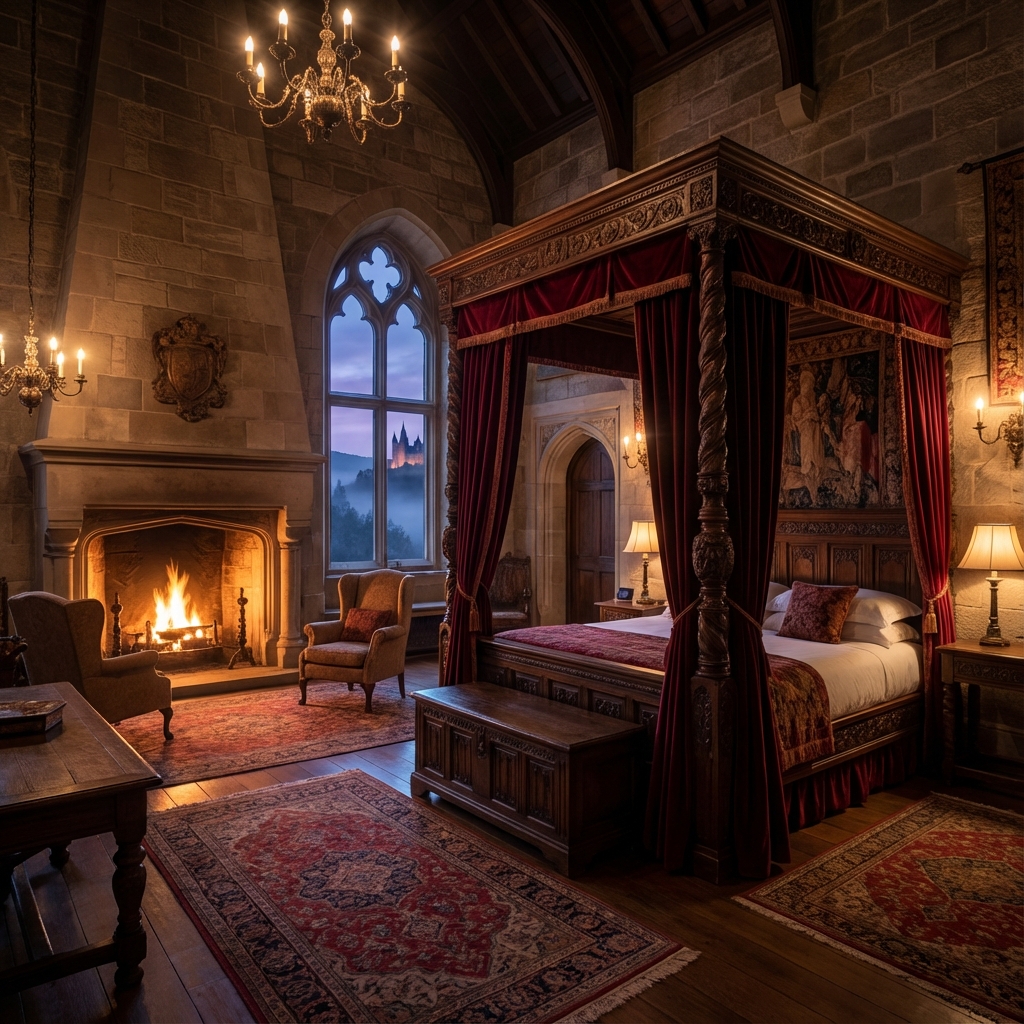
The interior of the château has been lovingly restored by the Carvallo family to feel like a warm, inhabited home rather than a cold museum. The rooms are furnished with 18th-century furniture and family portraits. The dining room, with its salmon-pink walls and Provençal fountain, is particularly charming and feels ready for a family meal.
A highlight is the **Oriental Drawing Room**. Its ceiling is a masterpiece of Hispano-Moorish art. Made of 3,600 pieces of polychrome wood, it dates from the 15th century and was originally part of the Maqueda Palace in Toledo, Spain. Joachim Carvallo bought the ceiling when the palace was being dismantled, brought it to France, and reassembled it here piece by piece. It took a year just to reassemble the puzzle. It is a stunning, exotic surprise in the middle of a French Renaissance castle.
Visitor Information
Opening Hours
The gardens of Villandry are open every day of the year, usually from 9:00 AM until sunset. The château is open from February to mid-November and during the Christmas holidays. A ticket allows access to both, or you can buy a cheaper ticket just for the gardens (which many visitors choose if they are short on time).
Best Time to Visit
The gardens are spectacular in all seasons, but they are at their peak in late spring (May/June) for the tulips and first planting, and early autumn (September/October) when the pumpkins and squashes bring striking orange and yellow tones to the kitchen garden. Winter offers a stark, structural beauty with the frost on the boxwood hedges emphasizing the geometry.
Facilities
There is a restaurant, "La Doulce Terrasse," at the entrance to the château serving lunch and tea, offering produce from the garden. Picnicking is not allowed in the gardens themselves to preserve their pristineness, but there is a designated picnic area nearby. The village of Villandry also has several cafes.