The Castle on the Cliff
Perched high atop Cape Diamond, looking down upon the St. Lawrence River and the cobblestone streets of Old Quebec, the Château Frontenac is not just a hotel; it is the icon of a city and a nation. With its steep copper roofs, forest of turrets, and massive brick towers, it looks like a French fairy-tale castle that has been transported to the New World. It holds the Guinness World Record for 'the most photographed hotel in the world,' and it is easy to see why. It defines the skyline of Quebec City, visible from miles away.
Built in 1893, it was part of a grand vision by the Canadian Pacific Railway (CPR) to encourage luxury tourism across Canada. They built a chain of castle-hotels (including Banff Springs and Lake Louise) to entice wealthy travelers to ride their trains from coast to coast. The Frontenac was the jewel in this crown, designed to appeal to American tourists by evoking the romantic architecture of the Loire Valley châteaux.
A Meeting Place of History
While it was built for luxury, the Château Frontenac has been a stage for world-changing events.
The Quebec Conferences (1943 & 1944)
During World War II, the hotel was requisitioned to host two top-secret strategic meetings known as the Quebec Conferences. Winston Churchill (UK Prime Minister), Franklin D. Roosevelt (US President), and Mackenzie King (Canadian Prime Minister) met here to plan the Allied path to victory. It was in the citadel and the hotel's suites that the initial plans for D-Day (the invasion of Normandy) were ratified. Today, history buffs can stay in the 'Churchill Suite' or 'Roosevelt Suite,' which have been preserved to reflect their 1940s grandeur.
Architecture: The Château Style
The hotel was designed by American architect Bruce Price. He created a style that became uniquely Canadian: the 'Château Style.' It blends elements of French Renaissance architecture (steep roofs, dormer windows, circular towers) with Scottish baronial influences. The building grew in stages over the decades. The central citadel tower, which gives the hotel its imposing height, was actually a later addition, completed in 1924, proving that the hotel's popularity was booming.
Inside the Hotel
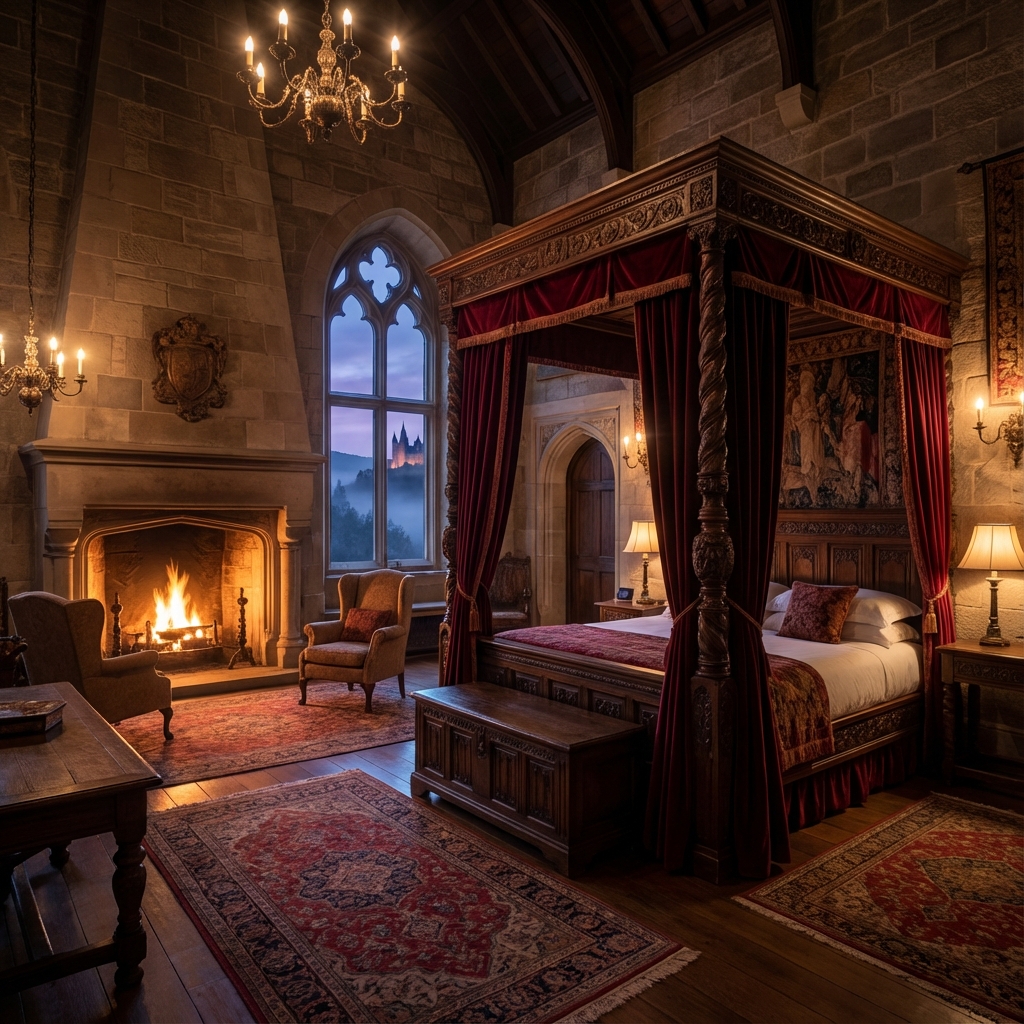
Walking into the lobby is like stepping back into the Golden Age of travel. The walls are panelled in dark mahogany, and the chandeliers cast a warm, golden light. A recently completed multimillion-dollar renovation has refreshed the interiors, blending modern luxury with Art Deco and historical elements.
- The Champlain Restaurant: Named after Samuel de Champlain, the founder of Quebec, this is one of the finest dining rooms in Canada. It offers modern Quebecois cuisine featuring local game, cheeses, and seafood, paired with a wine list from the massive cellar.
- 1608 Bar: A circular bar known for its views of the river and its extensive selection of cheeses. It is named after the year Quebec City was founded.
- The Ballroom: A magnificent room with 10 crystal chandeliers, inspired by the Hall of Mirrors at Versailles. It has hosted royal galas and state dinners for decades.
- The Rooftop Bees: Hidden from view on the roof of the hotel are four beehives housing 70,000 bees. They produce hundreds of pounds of 'Château Frontenac Honey' each year, which is used by the chefs in the kitchen and cocktails.
The Dufferin Terrace and Saint-Louis Forts
The hotel is inseparable from the Dufferin Terrace, a broad wooden boardwalk that wraps around the cliff edge. In summer, it is filled with street buskers and tourists eating ice cream. In winter, a giant toboggan slide (built in 1884!) sends thrill-seekers rocketing down the hill at speeds of up to 70 km/h. It is a terrifying yet exhilarating tradition that has thrilled visitors for over a century.
But the real secret lies *under* the terrace. When visiting, look for the viewing prisms or take the stairs down to the Saint-Louis Forts and Châteaux National Historic Site. Here, archeologists have uncovered the ruins of the official residence of the French and British governors, which stood on this spot from 1620 until it burned down in 1834. The Château Frontenac was built literally on top of the foundations of political power in New France.
A Royal Welcome
The guestbook of the Frontenac reads like a Who's Who of the 20th century. Queen Elizabeth II, Charles de Gaulle, Alfred Hitchcock (who filmed the thriller *I Confess* here in 1953), Grace Kelly, and Leonardo DiCaprio have all stayed here. The hotel staff pride themselves on treating every guest 'like royalty,' maintaining the standards of service that defined the grand railway hotels of the past.
Hitchcock and Hollywood
The master of suspense, Alfred Hitchcock, loved the hotel so much he kicked off his 1953 film I Confess with a dramatic shot of the hotel looming over the city. Montgomery Clift starred as a priest embroiled in a murder mystery filmed in the hotel's halls.
Visitor Information
The Château Frontenac is located in the heart of Old Quebec (Vieux-Québec), inside the fortified walls.
- Staying Here: It is a Fairmont property. Prices vary wildly by season. Winter (during the Carnival) and summer are peak times. November and April offer better deals.
- Tours: You don't have to be a guest to see the inside. Guided tours are available that take you through the historic halls, the chef's garden on the roof (where they harvest honey from their own bees!), and explain the WWII history.
- Dress Code: The hotel is generally relaxed, but the Champlain Restaurant requires 'smart casual' attire.
- Accessibility: The hotel is fully accessible, but be aware that the streets of Old Quebec outside are hilly and cobblestoned, which can be challenging for wheelchairs.
Frequently Asked Questions
- Is it a real castle?
- Architecturally, yes. Historically, no. It was never a defensive fort for a king; it was built as a hotel. But it sits next to the Citadel, which *is* a real military fort.
- Can I just walk in?
- Yes, the lobby, bars, and shops are open to the public. You can wander the main floor and soak up the atmosphere.
- Why is there a dog in the lobby?
- That's likely the 'Canine Ambassador.' The hotel has a resident dog (currently a Saint-Pierre named Daphnie) who greets guests and can even be taken for walks!