Introduction
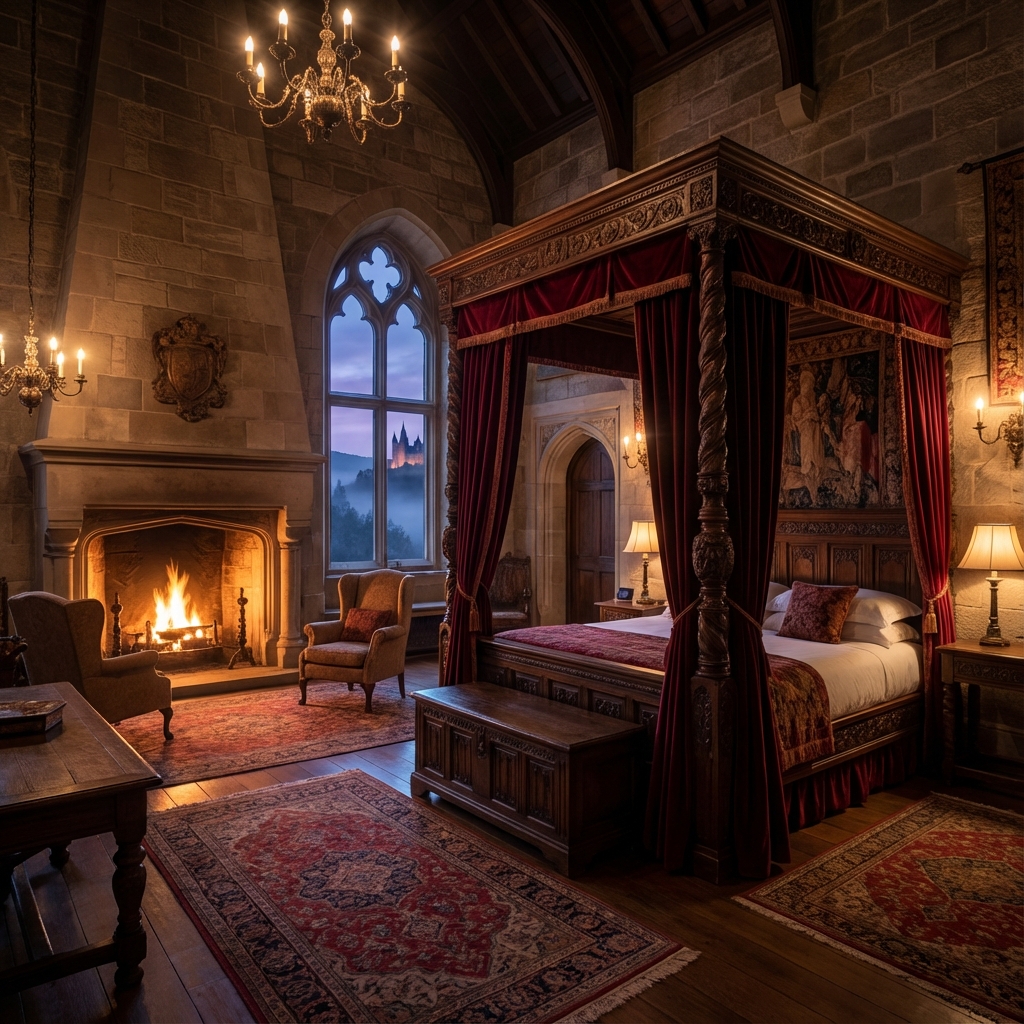
Perched on a strategic promontory overlooking the Loire River, the Royal Château de Blois is more than just a castle; it is a textbook of French architecture and a stage for some of the most bloody and significant events in French history. Unlike the harmonious unity of Cheverny or the grandiose symmetry of Chambord, Blois is a composite monument, a patchwork of palaces built over several centuries. Its four wings, built during four distinct epochs, surround a central courtyard, allowing visitors to trace the evolution of French architectural style from the Middle Ages to the 17th century with a single 360-degree turn.
As the chosen residence of seven kings and ten queens of France, Blois was the political capital of the kingdom for over a century. It was here that Joan of Arc was blessed by the Archbishop of Reims in 1429 before marching to liberate Orléans. It was here that poets like Pierre de Ronsard resided, and where the scandalous and brutal assassination of the Duke of Guise took place in 1588. Every stone in Blois whispers a story of power, romance, or treachery.
Architecture: A Panorama of Style
The château's courtyard acts as an open-air museum of architecture, featuring four distinct wings that harmonize despite their stylistic differences.
The Medieval Fortress (13th Century)
The oldest part of the castle is the Salle des États (Hall of the Estates General), built by Count Theobald VI in 1214. It is one of the oldest and largest preserved gothic civil halls in France. Its double-nave structure, separated by a row of columns, and its paneled wooden ceiling evoke the feudal era of the Counts of Blois. This hall was used for the courts of justice and later for the assemblies of the Estates General in 1576 and 1588, which attempted to resolve the religious wars tearing France apart.
The Louis XII Wing (1498-1500)
Built by King Louis XII, who was born at Blois, this wing marks the transition from the fortress to the pleasure palace. Constructed in red brick and white stone, it is a prime example of the Flamboyant Gothic style mixed with early Renaissance influences. The entrance features an equestrian statue of the King (a modern copy; the original was destroyed during the Revolution) and the porcupine, his royal emblem, symbolizing that he was 'qui s'y frotte s'y pique' (who rubs against it gets pricked).
The Francis I Wing (1515-1524)
Initiated by Francis I shortly after his accession, this wing is the masterpiece of the French Renaissance. Influenced by Italian architecture, it features the famous monumental octagonal spiral staircase, which projects outward from the façade rather than being hidden inside a tower. Adorned with intricate sculptures, salamanders (Francis I's emblem), and balconies, the staircase was designed to see and be seen, serving as a grand stage for the court to watch events in the courtyard. The facade facing the town is equally impressive, with its loggias reminiscent of the Vatican.
The Gaston d'Orléans Wing (1635-1638)
Designed by the famous architect François Mansart, this wing represents the Classical style. Gaston d'Orléans, brother of Louis XIII, planned to rebuild the entire castle in this modern style, but lack of funds halted the project, saving the Renaissance wings from destruction. This wing features a monumental stone stairwell with a double dome, a masterpiece of stereotomy (stone cutting) that anticipates the grandeur of Versailles.
History: Power, Queens, and Intrigue
Blois was the center of court life during the Renaissance. Francis I founded the royal library here, which was later moved to Fontainebleau. But it is the women of Blois who often left the deepest marks. Claude of France, daughter of Louis XII and wife of Francis I, spent much of her life here and died at the castle. Catherine de' Medici, the powerful Queen Mother, also resided at Blois and died here in 1589. Her chamber, with its restored wood paneling, is a highlight of the tour. Legend speaks of her 'poison cabinets' hidden behind secret panels, though historians suggest these were likely used for storing documents or jewelry.
The Assassination of the Duke of Guise
The most dramatic event in the castle's history occurred on December 23, 1588. During the Wars of Religion, King Henry III felt threatened by the growing power of Henry I, Duke of Guise, the leader of the Catholic League. Under the pretext of a council meeting, the King summoned the Duke to his private apartments. As the Duke entered the King's Bedchamber, he was set upon by the King's personal guards, the 'Forty-Five', and stabbed to death at the foot of the King's bed. His brother, the Cardinal of Guise, was executed the next day in the castle dungeons.
The King reportedly emerged from hiding to view the corpse, kicking it and declaring, "He seems even bigger dead than alive." This brutal act did not save Henry III, who was assassinated himself a few months later, but it remains one of the most infamous political murders in French history.
The Museum of Fine Arts and Collections
Today, the Louis XII wing houses the Museum of Fine Arts of Blois (Musée des Beaux-Arts). The collection includes over 30,000 works, featuring paintings, sculptures, and tapestries from the 16th to the 19th centuries. Highlights include works by Ingres, Rubens, and Boucher, as well as a gallery of royal portraits.
The royal apartments in the Francis I wing have been restored and furnished to recreate the atmosphere of the 16th century. Visitors can walk through the King's Chamber, the Queen's Gallery, and the Council Chamber, admiring the polychrome fireplaces and tiled floors that have been meticulously reconstructed based on historical records.
Visiting Blois
A visit to the Royal Château de Blois provides a comprehensive overview of the history of the Loire Valley castles. Located in the center of the town of Blois, it is easily accessible and offers spectacular views of the river and the slate roofs of the old town. In the evenings, a spectacular Sound and Light show illuminates the courtyard, narrating the castle's turbulent history against the backdrop of its four distinctive façades, bringing the ghosts of kings and queens back to life.