The Gothic Masterpiece of Transylvania
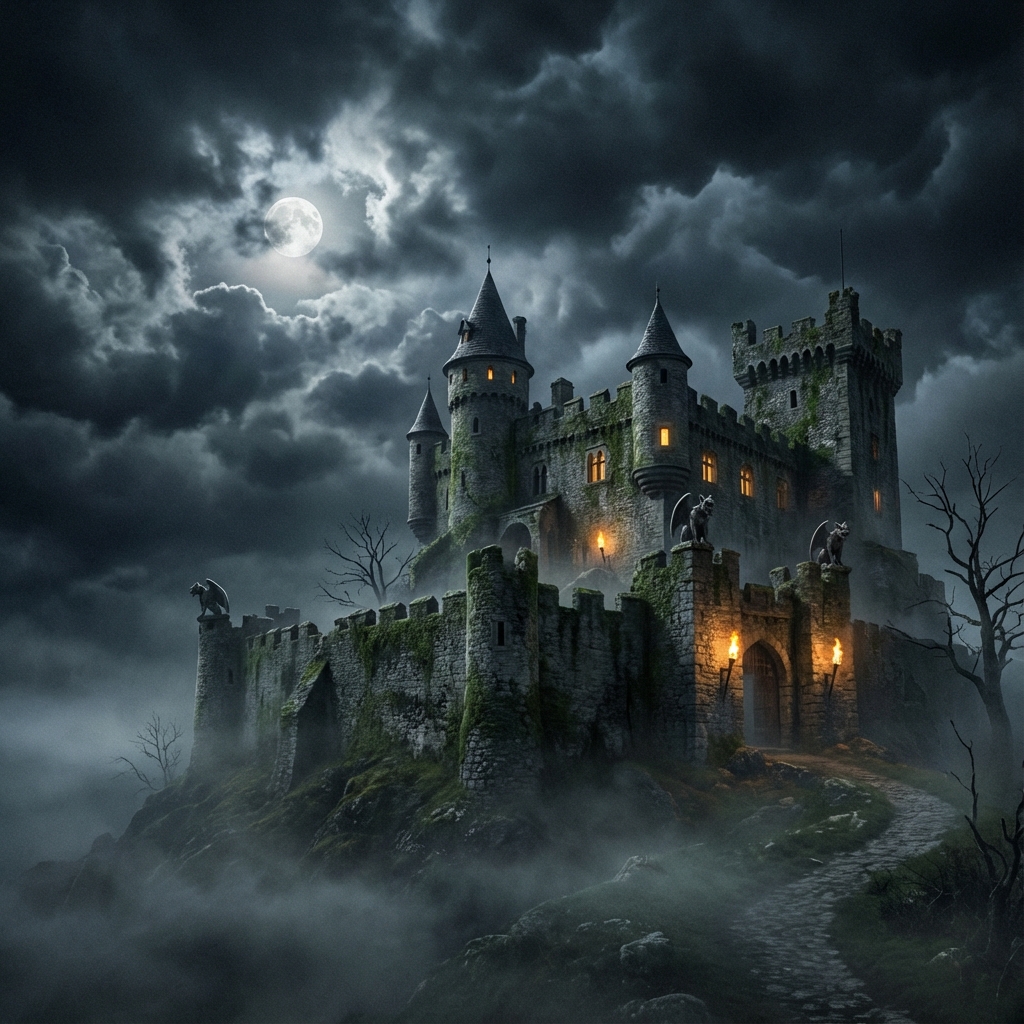
Rising from a rock over the small Zlaști River in Hunedoara, Corvin Castle (also known as Hunyadi Castle or Castelul Corvinilor) is a sight that demands awe. With its high, pointed towers, drawbridge, inner courtyards, and myriad windows and balconies, it is the quintessential Gothic fairytale castle—albeit a dark and imposing one. It is one of the largest castles in Europe and is counted among the Seven Wonders of Romania. Unlike the more famous Bran Castle, which is often associated with Dracula but has a tenuous historical connection, Corvin Castle feels heavier with history and authentic medieval power.
Construction began in 1446 under the orders of John Hunyadi (Iancu de Hunedoara), the Voivode of Transylvania and a brilliant military commander who stopped the Ottoman advance into Europe at the Siege of Belgrade in 1456. He transformed an existing keep into a majestic residence and fortress. The castle served as a strategic point for the defense of Christendom and a display of the Hunyadi family's power. After John's death, his son, Matthias Corvinus (one of Hungary's greatest kings), continued the expansion, adding Renaissance elements that softened the severe Gothic lines.
The Legend of the Raven
The castle's name comes from the family crest of the Corvinus house, which depicts a raven holding a golden ring in its beak. The legend says that John Hunyadi was actually the illegitimate son of King Sigismund of Luxembourg. To protect the child and his mother, the King gave them a golden ring as a token of recognition. One day, during a picnic, a raven stole the ring from the young boy. Instead of crying, John grabbed a bow and shot the bird down, retrieving the ring. Impressed by the boy's skill and the bird's audacity, the King decided that the raven with the ring would become the family symbol. The name 'Corvinus' comes from the Latin corvus, meaning raven. Visitors can see this crest carved in stone above the gateways and painted in the halls, a reminder of the family's royal bloodline.
Dracula's Prison?
Corvin Castle is frequently linked to Vlad the Impaler, the historical inspiration for Bram Stoker's Dracula. It is rumored that John Hunyadi imprisoned Vlad here for seven years after Vlad was deposed from the throne of Wallachia in 1462. Locals claim that Vlad went insane during this imprisonment, his mind warping into the cruel tyrant he became known as, resorting to catching and torturing rats and spiders in his cell to satisfy his bloodlust. While historians debate the accuracy of this stay (Vlad was more likely imprisoned in Visegrád, Hungary), the legend persists, adding a layer of vampire lore to the castle's spooky atmosphere. The castle's damp dungeons and torture chambers certainly make the story plausible to the imagination.
The Well of the Turks
In the castle courtyard, there is a deep well with a tragic story. Legend tells that it was dug by three Turkish prisoners captured by John Hunyadi. They were promised their freedom if they could find water. For 15 years, they dug through solid rock, finally finding water at 28 meters depth. However, John Hunyadi had died by then, and his wife, Elizabeth Szilágyi, refused to honor the promise. Instead, she ordered the prisoners beheaded. Before they died, they inscribed a message on the well wall: 'You have water, but you have no soul.' This inscription (in Arabic) still exists on a pillar near the well, though scholars translate it more mundanely as a record of the digger: 'He who wrote this inscription is Hasan, who lives as slave of the giaours, in the fortress near the church.'
Architecture and Highlights
The castle is a spectacular mix of Gothic and Renaissance styles. The Knights' Hall was used for feasts and as a court of justice, while the Diet Hall was used for ceremonies. Both are divided by a row of octagonal marble pillars. The Mace Tower, the Capistrano Tower (named after the friar St. John of Capistrano), and the Neboisa Tower (meaning 'Not Afraid' in Serbian) form part of the formidable defensive system.
The Bear Pit was used, as the name suggests, to keep bears—sometimes used to dispose of prisoners or for cruel entertainment. The gallery and the Nje Boisia tower are connected by a suspended corridor that is over 30 meters long, a unique feature of military engineering for its time.
The Matthias Wing (or Matei Wing) is the most obvious Renaissance addition to the castle. Built by King Matthias Corvinus, it features an open loggia with frescoes that are unique in Transylvania, depicting secular scenes rather than religious ones. The upper floor contains the Golden Room, which was likely the King's bedchamber. Although the original gold leaf is gone, the room still commands a majestic view of the valley. Nearby is the Ladies' Chamber, where the noblewomen of the castle lived. Archaeological finds here, such as bronze jewelry and sewing needles, offer a glimpse into the domestic life that continued amidst the military preparations.
The interior of the castle has been partially restored, with period furniture helping to recreate the atmosphere of the 15th century. The chapel, with its Gothic vaults, is another highlight.
Visitor Information
Corvin Castle is located in the industrial city of Hunedoara. The contrast between the smoking factories of the communist era and the medieval splendor of the castle is striking. The castle is open daily, though hours vary by season. It hosts several medieval festivals throughout the year, featuring knight tournaments, medieval music, and archery, bringing the stone halls back to life.
Due to its eerie atmosphere, the castle has been a filming location for numerous movies and TV shows, including The Nun and several Dracula adaptations. It is widely considered one of the most haunted places in Romania. Ghost hunters often visit to investigate reports of strange lights and phantom monks in the corridors. Whether you believe in ghosts or not, the sheer scale and history of Corvin Castle leave a lasting impression.