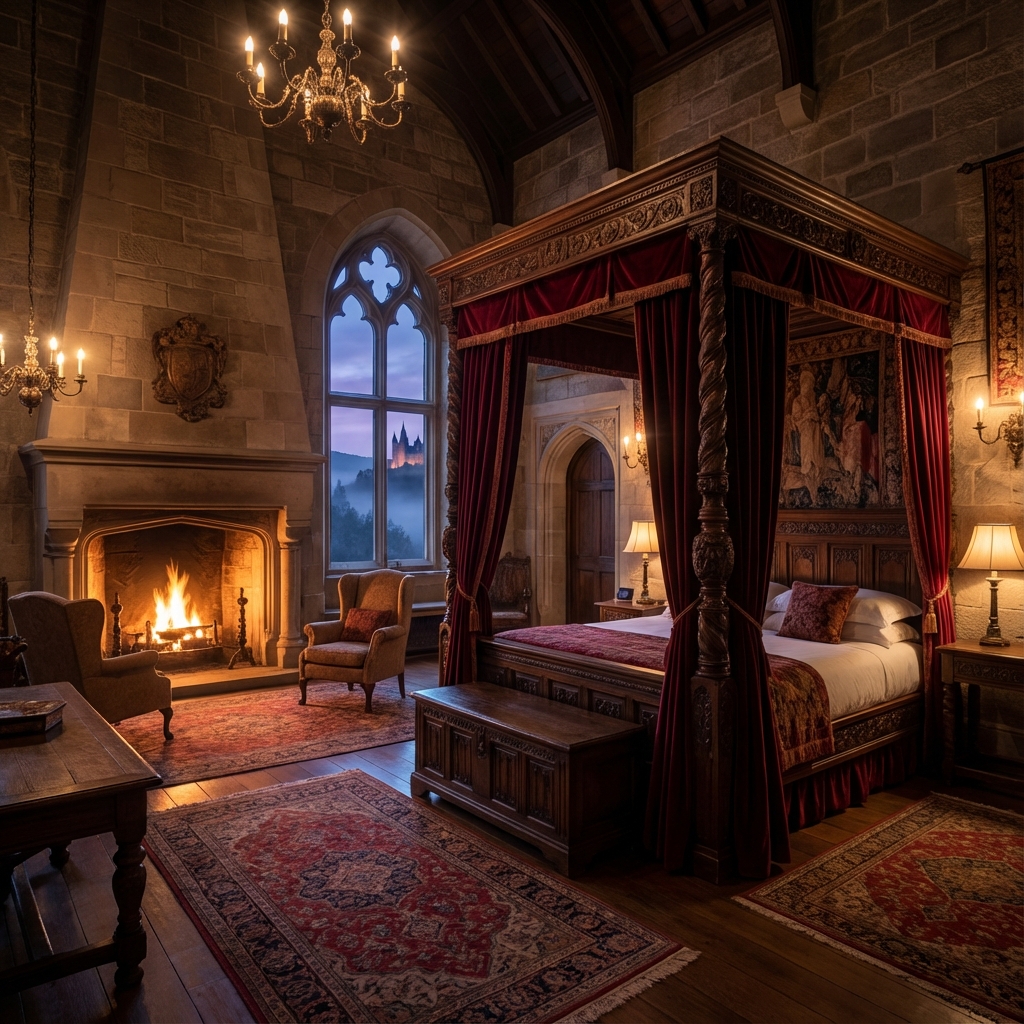
The Heart of the Order: Malta's Centre of Power
Standing in the center of Valletta, the Grandmaster's Palace has been the administrative heart of Malta for over 450 years. It was the headquarters of the Knights of St. John (the Knights Hospitaller), a noble military order that ruled the island from 1530 to 1798. Today, it serves as the official office of the President of Malta and a museum of the state's turbulent history. Unlike many European palaces key designed for leisure and balls, this was built for men who were equally monks and warriors—princes of the church and soldiers of the cross.
The palace was one of the first buildings erected in the new city of Valletta, founded after the Great Siege of 1565. Its simple, austere limestone facade hides lavish interiors, reflecting the dual nature of the Knights: humble servants of the sick on the outside, but wealthy princes of Europe on the inside.
The State Rooms: Where History Was Made
The Palace State Rooms are where the Grandmasters hosted foreign envoys and enacted the decisions that shaped the Mediterranean. The most impressive is the **Throne Room** (originally the Supreme Council Hall). The walls here are lined with a stunning cycle of 12 frescoes by Matteo Perez d'Aleccio, a student of Michelangelo. They depict the **Great Siege of 1565** in vivid detail. These are not just decorations; they are a visual record of the Knights' greatest victory against the Ottoman Empire, painted by an artist who interviewed the survivors. Looking at them, you can see the disposition of the fleets, the breaches in the walls, and the desperate hand-to-hand fighting.
Another highlight is the **Hall of the Ambassadors** (or the Red Room). Hung with red damask and featuring portraits of European monarchs (including Catherine the Great and Louis XVI), this room was designed to impress. It signaled the Order's powerful connections and its status as a sovereign entity. The **Dining Room** features a portrait of Queen Elizabeth II, a reminder of Malta's time as a British colony. The floor is covered with colorful inlaid marble, bearing the coats of arms of the Order.
The History Chamber
The Council Chamber is home to one of the palace's greatest—and most fragile—treasures: the **Gobelins Tapestries**. This complete set, titled Les Teintures des Indes (The Hangings of the Indies), was a gift from Grandmaster Ramón Perellos in the early 18th century. They depict exotic scenes of flora and fauna from the New World—elephants, rhinos, ostriches, and strange tropical plants—based on reports from explorers. They are incredibly rare because the original cartoons (designs) were destroyed, making this set unique. The room is kept in semi-darkness to protect the silk dyes, which have held their color remarkably well over 300 years.
The Palace Armoury
For many visitors, the absolute highlight is the **Palace Armoury**. Originally, the Order stored enough arms and armor here to equip thousands of soldiers instantly. Although much was looted by Napoleon's troops in 1798 (who stripped the silver and gold), the remaining collection is world-class. It is one of the largest collections of its kind housed in its original building.
You can see the evolution of warfare from the heavy plate armor of the medieval knights to the lighter, bullet-proof breastplates of the 17th century. The collection includes the personal armor of Grandmasters like **Alof de Wignacourt** (beautifully inlaid with gold) and a suit of armor made for a child. There are also captured Ottoman weapons, including reflex bows, scimitars, and the famous "sipahi" armor, showing the cross-cultural nature of the conflict. The sheer quantity of mass-produced munitions armor hanging on the walls is a stark reminder of the scale of the wars fought here.
The Courtyards: Oases of Calm
The palace is built around two main courtyards, which offer a cool respite from the Maltese sun. **Neptune's Courtyard** is named after the bronze statue of the sea god that presides over it; legend says it was originally a statue of Admiral Doria but was modified by the Knights. The other is **Prince Alfred's Courtyard**, famous for its clock tower. This tower, the **Pinto Clock**, has four dials showing the time, the date, the phase of the moon, and the position of the sun. It was a technological marvel of the 1740s, ensuring the Knights kept strict time for their prayers and duties.
A Living Institution
While parts of the palace are a museum, it remains a working government building. You might see officials rushing through the corridors or catch a glimpse of a state function. This continuity is what makes the Grandmaster's Palace special. It isn't a fossilized relic; it is still the center of authority in Malta, just as it was when the first stone was laid in 1571.
Visitor Information
Opening Hours
The Palace State Rooms and the Armoury are open daily from 9:00 AM to 5:00 PM (last admission 4:30 PM). However, because it is the Office of the President, the State Rooms may close without notice for official business. The Armoury usually remains open even when the State Rooms are closed.
Getting There
The palace is located on St George's Square, right in the center of Valletta. It is a short walk from the City Gate and the bus terminus. Valletta is a pedestrian-friendly city, and the palace is impossible to miss. It is surrounded by cafes and shops, making it easy to integrate into a day of sightseeing.
Tips
An audio guide is included with the ticket and is highly recommended to understand the complex history of the Knights. Allow at least 1.5 to 2 hours for a visit. Be aware that large bags may need to be checked in.
The Siege and Spiritual Legacy
The Grandmaster's Palace is not merely a secular seat of power; it is deeply intertwined with the spiritual mission of the Knights Hospitaller. Originally founded in Jerusalem to care for sick and poor pilgrims, the Order maintained its dual identity as both a military force and a religious brotherhood. This is reflected in the palace's private chapels and the religious iconography discreetly woven into its grand public spaces. Deeper within the palace complex, away from the busy state rooms, one can sense the contemplative atmosphere where Grandmasters would retreat for prayer and reflection before making decisions that would impact the entire Mediterranean. The legacy of their medical vocation also lingered in their governance; the Knights established the Sacra Infermeria (Holy Infirmary) nearby, which was one of the most advanced hospitals in Europe at the time. The wealth displayed within the palace walls was, in theory, dedicated to the defense of the faith and the care of the vulnerable. Understanding this complex mix of immense worldly power, martial prowess, and monastic vows is essential to fully grasp the historical significance of the Grandmaster's Palace and its enduring profound impact on Maltese identity.