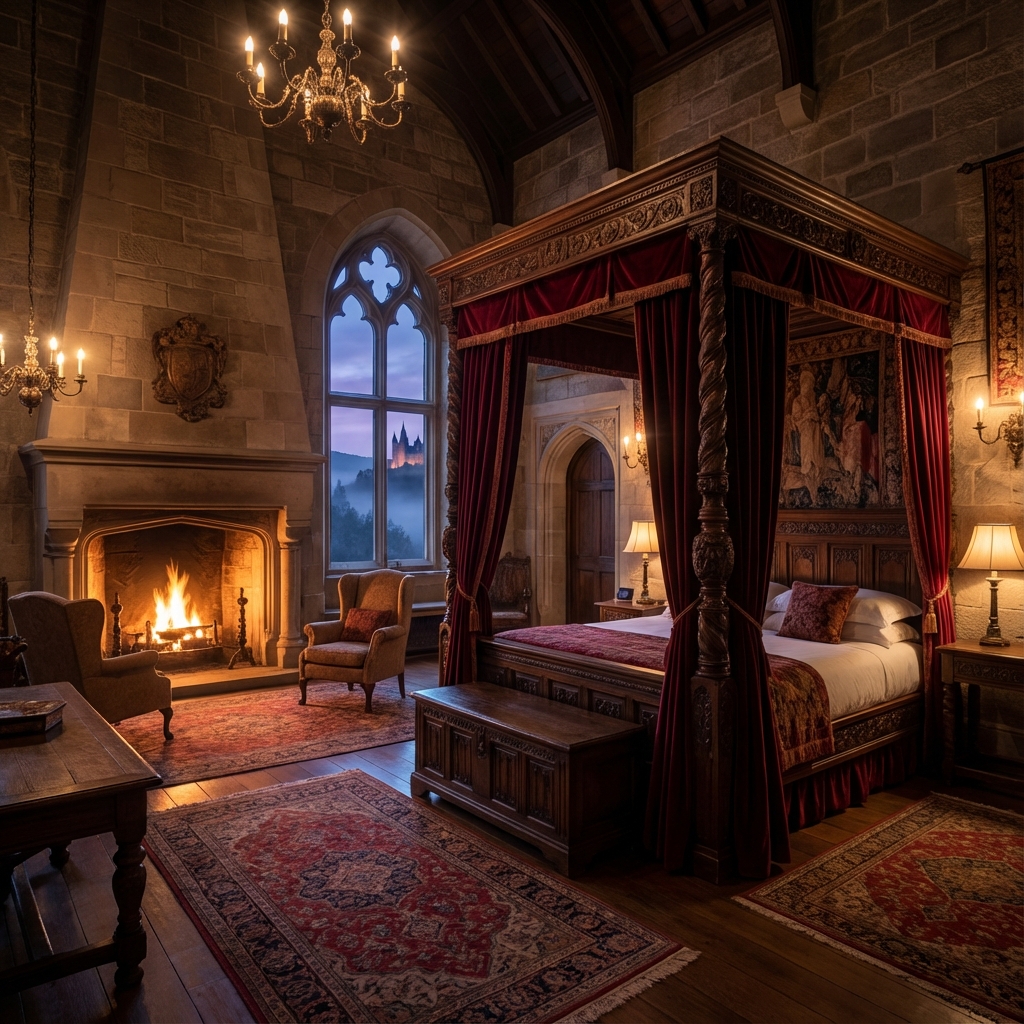
King Henry VIII's Pleasure Palace
Hampton Court Palace is inextricably linked to the larger-than-life figure of King Henry VIII. Originally built by Cardinal Thomas Wolsey in the early 16th century, it was intended to be the finest palace in England, rivaling even the King's own residences. When Wolsey fell from favor in 1529 (failing to secure Henry's divorce from Catherine of Aragon), he gifted the palace to the King in a desperate attempt to save his life. Henry accepted the gift—and then arrested Wolsey anyway. It remains one of only two surviving palaces out of the many owned by King Henry VIII (the other being St James's Palace).
Henry massively expanded the palace, turning it into a venue designed for pleasure, celebration, and hunting. It became the backdrop for the most dramatic events of his reign. It was here that his third wife, Jane Seymour, gave birth to his long-awaited male heir, the future Edward VI. Tragically, she died in the palace just two weeks later; her heart is said to be buried beneath the altar of the Chapel Royal. It was also here that Henry was attending Mass when he was handed the note alleging the adultery of his fifth wife, Catherine Howard.
The Haunted Gallery
Speaking of Catherine Howard, the palace is said to be home to her ghost. The story goes that after her arrest, she broke free from her guards and ran down what is now known as the Haunted Gallery, screaming for the King's mercy. Henry, praying in the chapel, ignored her cries. Visitors today often report feeling a sudden drop in temperature or hearing faint screams in this specific corridor. It remains one of the most famous ghost stories in Britain, and has been investigated by numerous paranormal teams.
The Great Hall and Tudor Kitchens
The Great Hall is the last medieval hall in England still in use. With its magnificent hammer-beam roof, it was the center of court life. Shakespeare's company, the 'King's Men', performed plays here for King James I in 1603. The walls are still hung with the priceless 'Story of Abraham' tapestries commissioned by Henry VIII, woven with gold thread. Be sure to look for the 'Eavesdroppers'—carved heads in the roof beams that were said to listen for treasonous whispers.
But a palace runs on its stomach. Below stairs, the vast Tudor Kitchens are a marvel of logistics. In Henry's day, they had to feed the entire court—over 600 people—twice a day. That meant roasting oxen on massive spits, baking hundreds of loaves of bread, and storing thousands of gallons of beer (which was safer to drink than water). Today, the kitchens are often filled with the smell of roasting meat and woodsmoke as historic cooks demonstrate Tudor culinary techniques.
The Astronomical Clock
In the Clock Court stands the magnificent Astronomical Clock, installed in 1540. It was a marvel of Tudor technology. It doesn't just tell the time; it shows the day, the month, the number of days since the beginning of the year, the phase of the moon, the sun's position in the zodiac, and—crucially for a riverside palace—the time of high water at London Bridge. It is still functioning today, a reminder of the scientific curiosity of the Renaissance court.
The Baroque Palace: A Rival to Versailles
Half of Hampton Court looks completely different. In the late 17th century, King William III and Queen Mary II commissioned the famous architect Sir Christopher Wren (who built St Paul's Cathedral) to rebuild Hampton Court. Their goal was to create a modern palace that would rival the Palace of Versailles in France. They tore down Henry's royal apartments but ran out of money before they could demolish the Great Hall. The result is a unique building: one half red-brick Tudor fortress, the other half elegant Portland stone Baroque palace.
The highlight of this section is the King's Staircase, with its stunning murals by Antonio Verrio depicting 'The Victory of Alexander', a not-so-subtle allegory for William III's military triumphs. The King's Guard Chamber displays a remarkable collection of arms—muskets, pistols, and swords—arranged in decorative patterns on the walls by John Harris, a gunsmith who worked for the Tower of London.
The Chapel Royal
The Chapel Royal has been in continuous use for over 450 years. It features a beautiful timber and plaster ceiling installed by Henry VIII. It was here in 1540 that Archbishop Cranmer handed Henry the letter accusing Catherine Howard of adultery. The chapel is still an active place of worship, with services held every Sunday.
The Gardens and The Maze
The palace is surrounded by 60 acres of world-famous formal gardens that run down to the River Thames.
- The Maze: Planted in the 1690s, this is the UK's oldest surviving hedge maze. It's surprisingly difficult (and frustrating) to solve, having confused visitors for over 300 years. It takes about 20 minutes to reach the center.
- The Great Vine: Planted in 1768 by 'Capability' Brown, this Black Hamburg vine is the largest grape vine in the world. It still produces a crop of sweet grapes every autumn, which are sold in the palace shops.
- The Real Tennis Court: The palace is home to the oldest Real Tennis court in the world still in use (built in 1625). Real Tennis is the original version of the sport, played with heavier balls and complex rules. You can often see club members playing a match.
- The King's Beasts: As you cross the bridge to the palace, you are greeted by ten statues of heraldic animals (the King's Beasts), representing the ancestry of Henry VIII and Jane Seymour.
Visitor Information
Hampton Court is easily accessible from central London.
- Getting There: The easiest way is by train from London Waterloo to Hampton Court station (approx 35 mins), which is just a 5-minute walk across the bridge to the palace.
- Magic Garden: If visiting with children, do not miss the Magic Garden. It's an immersive play area inhabited by mythical beasts, with towers to storm and a dragon's lair.
- Ticket Tips: The palace is huge. Allow at least 3-4 hours to see everything. Buying tickets online in advance is recommended.