The Bavarian Versailles
Floating on the Herreninsel (Men's Island) in the middle of the Chiemsee, Bavaria’s largest lake, Herrenchiemsee New Palace is a monument to obsession, beauty, and tragedy. It was the final and most expensive of the "fairy tale" castles built by King Ludwig II of Bavaria, the "Swan King." Unlike Neuschwanstein, which is a romanticized medieval castle, or Linderhof, which is a rococo jewel box, Herrenchiemsee was designed with a specific, singular purpose: to be a homage to the absolute monarchy of France's King Louis XIV, the "Sun King," whom Ludwig idolized.
Intended not as a residence but as a "Temple of Fame," it is a near-replica of the Palace of Versailles. Yet, in many ways, it surpasses the original in opulence, benefiting from two centuries of technological advancement. However, the palace stands as a magnificent fragment. Only the central wing was completed before Ludwig's mysterious death in 1886. Today, visitors walk through rooms dripping with gold and porcelain, only to step through a door into raw, unplastered brick corridors—a stark physical representation of a dream cut short.
History: A Lonely King's Dream
Ludwig II purchased the island of Herreninsel in 1873 to save its trees from being logged. But soon, his imagination took over. Having visited Versailles in 1874, he meticulously studied its plans. In 1878, construction began. The project was immense. Materials had to be ferried across the lake. Steam engines were installed to pump water for the fountains. The cost was astronomical, draining the royal coffers and alarming the Bavarian government.
Ludwig only stayed in the palace for a few days in the autumn of 1885. He slept in the State Bedchamber, wandered the Hall of Mirrors by candlelight, and vanished back into the night. When he died by drowning in Lake Starnberg the following year, construction halted immediately. The unfinished sections were demolished or left as shells. For decades, the palace was seen as a white elephant, but today it is one of Bavaria's most visited cultural treasures.
Architecture: Surpassing the Sun King
The architecture of Herrenchiemsee is Neoclassical Baroque, a faithful recreation of the garden facade of Versailles. But Ludwig did not just want to copy; he wanted to perfect.
The Great Hall of Mirrors
The centerpiece of the palace is the Great Hall of Mirrors (Spiegelsaal). It is the most stunning room in the complex. Stretching 98 meters long, it is actually longer than the original Galerie des Glaces at Versailles. It features 17 arched windows facing the garden and 17 corresponding mirrors on the opposite wall. The ceiling is painted with scenes glorifying Louis XIV. In the evenings, Ludwig would have all 33 crystal chandeliers and 44 candelabras lit—over 2,000 candles in total—creating a corridor of infinite light for his solitary walks.
The State Bedroom
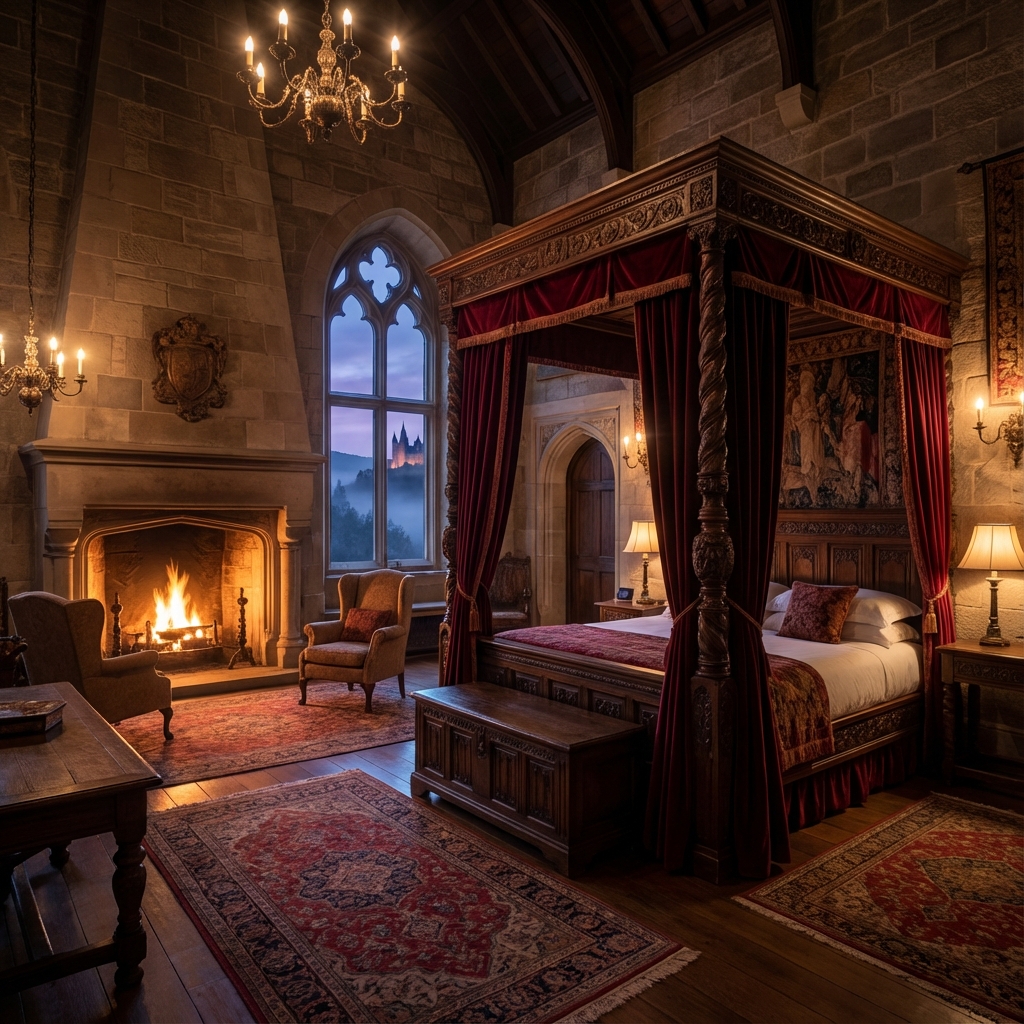
The State Bedroom (Paradeschlafzimmer) was the sacred heart of the palace. It was never intended for sleeping but for the "Lever" and "Coucher" ceremonies (the ritual rising and retiring of the King), mimicking the French court. The bed itself is a masterpiece of woodcarving and embroidery, taking seven years to complete. The room is separated from the rest of the hall by a golden balustrade, emphasizing the divine nature of the monarch.
The Dining Room and the "Wishing Table"
The Private Dining Room features an engineering marvel that appealed to Ludwig's desire for isolation: the "Tischlein-deck-dich" (Little Wishing Table). This mechanical table could be lowered through the floor into the kitchen below, set with food, and hoisted back up. This allowed the King to dine completely alone, without ever seeing a servant. The chandelier in this room is made of Meissen porcelain, the single largest porcelain object ever created.
The Unfinished North Wing
A tour of the palace usually ends with a glimpse into the unfinished North Wing. Here, the illusion breaks. You see the bare brick walls, the empty window frames, and the scaffolding holes. It is a haunting space that reveals the construction techniques of the 19th century and the abrupt end of the King's reign.
The Gardens and Fountains
The park was designed by Carl von Effner and, like the palace, follows the strict symmetry of French formal gardens. The central axis leads from the palace to the canal and the lake. The fountains are spectacular, adorned with statues of Fame, Fortune, and Latona. Unlike Versailles, where water pressure was always a problem, the engineers at Herrenchiemsee used steam-powered pumps to create jets of water that shot high into the air, a feat Ludwig was particularly proud of. The Fountains play regularly during the summer season.
Legends: The King's Ghost
The island has a melancholy atmosphere, particularly in the autumn mists. Locals sometimes speak of the "Kini" (the Bavarian affectionate term for Ludwig) still wandering his island. It is said that on the anniversary of his death, the unlit chandeliers in the Hall of Mirrors sometimes flicker with a ghostly light. Whether true or not, the spirit of the lonely King is palpable in every room.
Visitor Information
Getting There
Access to Herrenchiemsee is an adventure in itself. You must first travel to the town of Prien am Chiemsee (about an hour by train from Munich). From the harbor in Prien (accessible by a historic steam tram during summer), you take a boat to the Herreninsel. The boat ride offers beautiful views of the Alps.
The Walk
From the island's pier, it is a pleasant 15-20 minute walk through the forest to the palace. For a more royal experience, horse-drawn carriages operate between the pier and the palace entrance.
Tickets and Hours
The palace is open daily (except Jan 1, Shrove Tuesday, Dec 24/25/31). Hours are typically 9:00 AM – 6:00 PM in summer and shorter in winter. Visits are by guided tour only, which lasts about 35 minutes. Tours are available in German and English. During the summer, special "Royal Twilight" tours are sometimes offered, but tickets sell out months in advance.
The King Ludwig II Museum
Your ticket usually includes entry to the King Ludwig II Museum, located on the ground floor of the palace. It is highly recommended to visit this after the tour. It displays his coronation robes, personal photographs, death mask, and the plans for other castles he never got to build (including a Chinese palace and a Byzantine citadel). It provides the crucial psychological context to understand the man behind the masonry.