The Seat of Clan Campbell: A Highland Powerhouse
Inveraray Castle is not just a home; it is the ancestral seat of the Duke of Argyll, Chief of the Clan Campbell. For centuries, the Campbells were arguably the most powerful—and controversial—clan in the Highlands, acting as the government's primary agents in a region often hostile to authority. Their stronghold reflects this immense status. The current castle was the first of its scale to be built in the Gothic Revival style, creating a striking silhouette of turrets, conical roofs, and crenellations that looks like a fairytale palace set against the rugged backdrop of the Dunderave hills and the dark waters of Loch Fyne.
History: A Modern Castle for a Modern Chief
The site has been occupied by the Campbells since the 1400s, but the original medieval fortress was deemed unsuitable for an 18th-century nobleman. In the 1740s, the 3rd Duke of Argyll, Archibald Campbell, decided to build a new, modern residence. He commissioned the famous architect Roger Morris to design the castle and William Adam (father of the famous Robert Adam) to oversee construction. To ensure his privacy and improve the view, the Duke made a radical decision: he moved the entire village of Inveraray to its current location, demolishing the old cottages that stood too close to his new home. This act of town planning created the handsome white-walled town we see today, which is considered one of the best examples of an 18th-century new town in Scotland.
Construction began in 1743 but was interrupted by the Jacobite Rising of 1745. The Campbells were staunch supporters of the government, and the castle was garrisoned against the Jacobite rebels. The castle was finally completed in 1789. It suffered a devastating fire in 1877, which resulted in the addition of the third floor and the iconic conical roofs on the corner towers, giving the castle its distinctive "French château" look that sets it apart from the more severe Scottish baronial style.
The Interior: Weapons and Weddings
The interior of Inveraray is as impressive as its exterior, combining military might with refined elegance.
The Armoury Hall
The Armoury Hall is the most striking room in the castle and holds the Guinness World Record for the highest ceiling in a Scottish castle (21 meters). Its walls are adorned with a precisely arranged, geometric display of over 1,300 weapons. These include Brown Bess muskets from the Battle of Culloden (some still bearing battle damage), Lochaber axes, and Scottish broadswords. It is a dazzling and intimidating reminder of the clan's martial power and their role in suppressing the Jacobite rebellions.
The State Rooms
In contrast to the martial Armoury Hall, the State Dining Room and the Drawing Room feature exquisite French neo-classical decoration, with painted ceilings and walls hung with Beauvais tapestries. These rooms were the setting for the 2012 Christmas special of Downton Abbey, where the castle stood in for "Duneagle Castle," the home of the Marquess of Flintshire. Fans of the show will instantly recognize the opulent setting where the Crawley family stayed. The castle has also appeared in other productions, serving as a backdrop for the drama and romance of the Highlands.
The Clan Room
Another highlight is the Clan Room, which tells the complex history of the Campbells. It includes a genealogical tree showing the vast reach of the clan and displays artifacts such as the dirk handle and sporran belonging to Rob Roy MacGregor, a famous outlaw and rival of the Campbells. The room serves as a pilgrimage site for Campbells from around the world looking to connect with their roots.
The Gardens and Grounds
The castle is set in 16 acres of formal gardens and a larger estate of 60,000 acres. The garden borders are immaculate, filled with rhododendrons and azaleas that thrive in the mild, wet climate of the West Coast. The "Flagstaff Border" is particularly famous for its colorful display.
The views over Loch Fyne are stunning. Visitors with energy to burn can walk up to the Dun Na Cuaiche watchtower for a panoramic view of the castle, the town, and the loch. The walk is steep but rewarding, offering one of the most iconic photo opportunities in Argyll.
Legends: The Ghostly Piper and the Bed
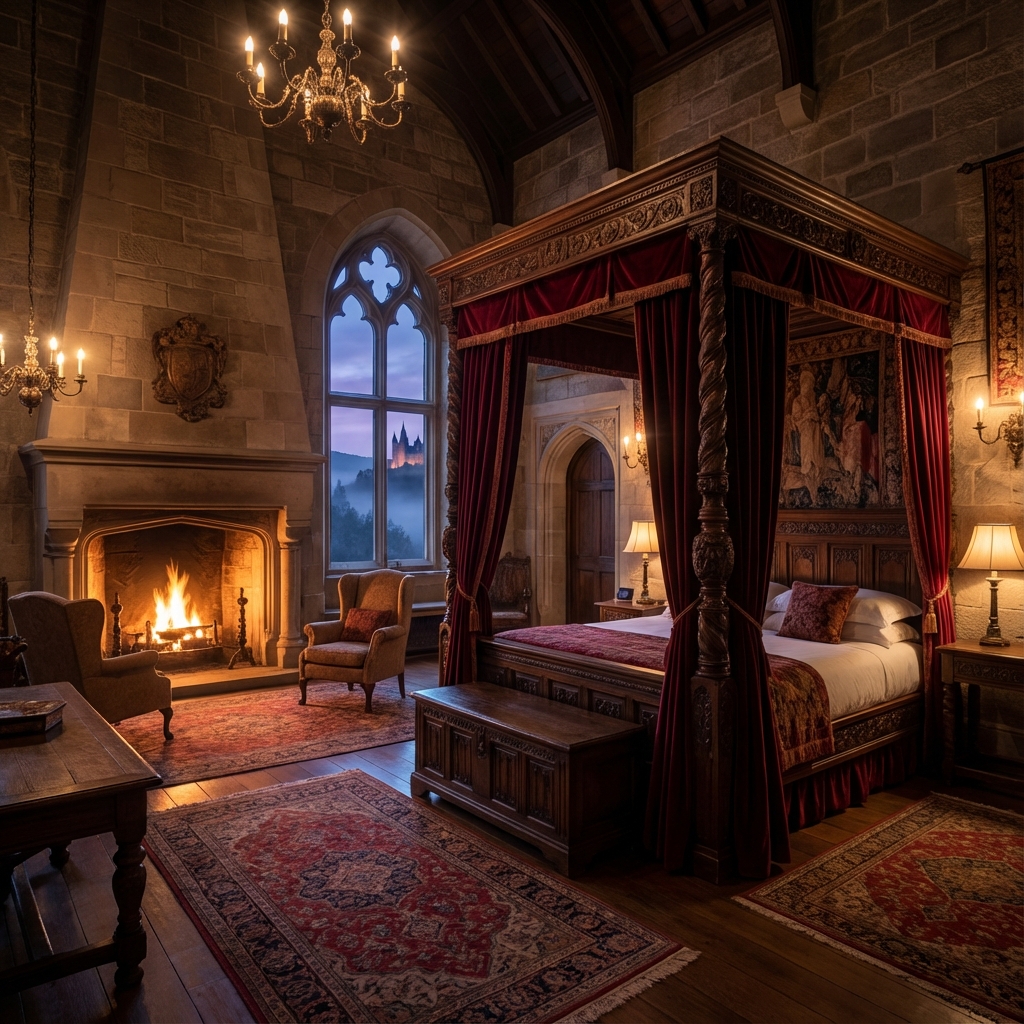
Like any good Scottish castle, Inveraray is said to be haunted. The most famous spirit is the "Ghostly Piper." According to legend, he was hanged for stealing a cup, a crime he likely didn't commit. His pipe music is said to be heard in the castle, especially when a member of the Campbell family is about to die. Another legend concerns the "Haunted Bed" in the MacArthur Room. A young Irish harpist was murdered here by the Duke's men in 1644. Guests who have slept in the room report feeling a cold presence or having the bedclothes pulled off them in the middle of the night. Even the current Duke has admitted to feeling an eerie presence in that room.
Visitor Information
Opening Hours
Inveraray Castle is open to the public from April to October. Opening hours are usually 10:00 AM to 5:00 PM (last admission 4:30 PM). It remains the family home of the 13th Duke of Argyll, Torquhil Campbell, and his family, giving it a warm, lived-in atmosphere that many pure museums lack.
Facilities
The castle has a tea room serving local Scottish produce, soups, and cakes. There is also a gift shop selling Campbell tartans and souvenirs. It is located on the edge of the town of Inveraray, which is itself a handsome planned town worthy of exploration. Don't miss the Inveraray Jail, a 19th-century prison and courthouse that is now a fascinating interactive museum, or the maritime museum on the pier which tells the story of the herring fishing industry.
Getting There
Inveraray is located on the A83, about 60 miles northwest of Glasgow. It is a scenic drive through the Trossachs National Park and along the "Rest and Be Thankful" pass. Buses also run from Glasgow Buchanan Street bus station to Inveraray, making it accessible even without a car.