The Key to Sweden
Situated on a small peninsula jutting out into the Kalmar Strait, surrounded by a double moat of Baltic seawater, Kalmar Castle (Kalmar Slott) is a Nordic icon. For centuries, it was known as the 'Key to the Kingdom' due to its vital strategic location. Before the Treaty of Roskilde in 1658, the Swedish-Danish border ran just 50 kilometers south of Kalmar. This meant that any enemy fleet attempting to sail north towards Stockholm had to pass the guns of this fortress, making it the most besieged castle in the country.
Today, it stands as the best-preserved Renaissance castle in the entire Nordic region. Unlike many castles that remain as empty shells/ruins, Kalmar feels remarkably complete. Its massive round cannon towers, copper-domed spires, and intricate plasterwork facades look almost exactly as they did in the late 16th century, offering a direct window into the Vasa era.
History: From Tower to Palace
The castle's history begins in the 12th century, when a solitary round defensive tower was built to protect against pirates and invaders. In the late 13th century, King Magnus Ladulås expanded this into a fortress with a curtain wall and corner towers. However, the castle's most historically significant moment occurred on June 17, 1397. In these halls, nobles from across Scandinavia gathered to crown Eric of Pomerania as the king of Sweden, Denmark, and Norway. This event, known as the Kalmar Union, united the three Nordic kingdoms under a single monarch (Queen Margareta I, the 'Semiramis of the North') for over a century. It was an early European Union, designed to counter the economic power of the German Hanseatic League.
The Vasa Transformation
While the medieval roots run deep, the castle's current appearance is a masterpiece of the Vasa dynasty. In the 16th century, King Gustav Vasa (the father of modern Sweden) and his sons, Erik XIV and Johan III, transformed the grim medieval fortress into a sumptuous Renaissance palace. They hired the best architects—most notably Domenicus Pahr in 1574—and craftsmen from Germany and Italy to create a residence fit for a modern European monarch.
- Gustav Vasa: He modernized the defenses, building the massive round cannon towers (rondeels) capable of withstanding artillery fire. He famously complained about the drafty medieval halls and demanded modern comforts.
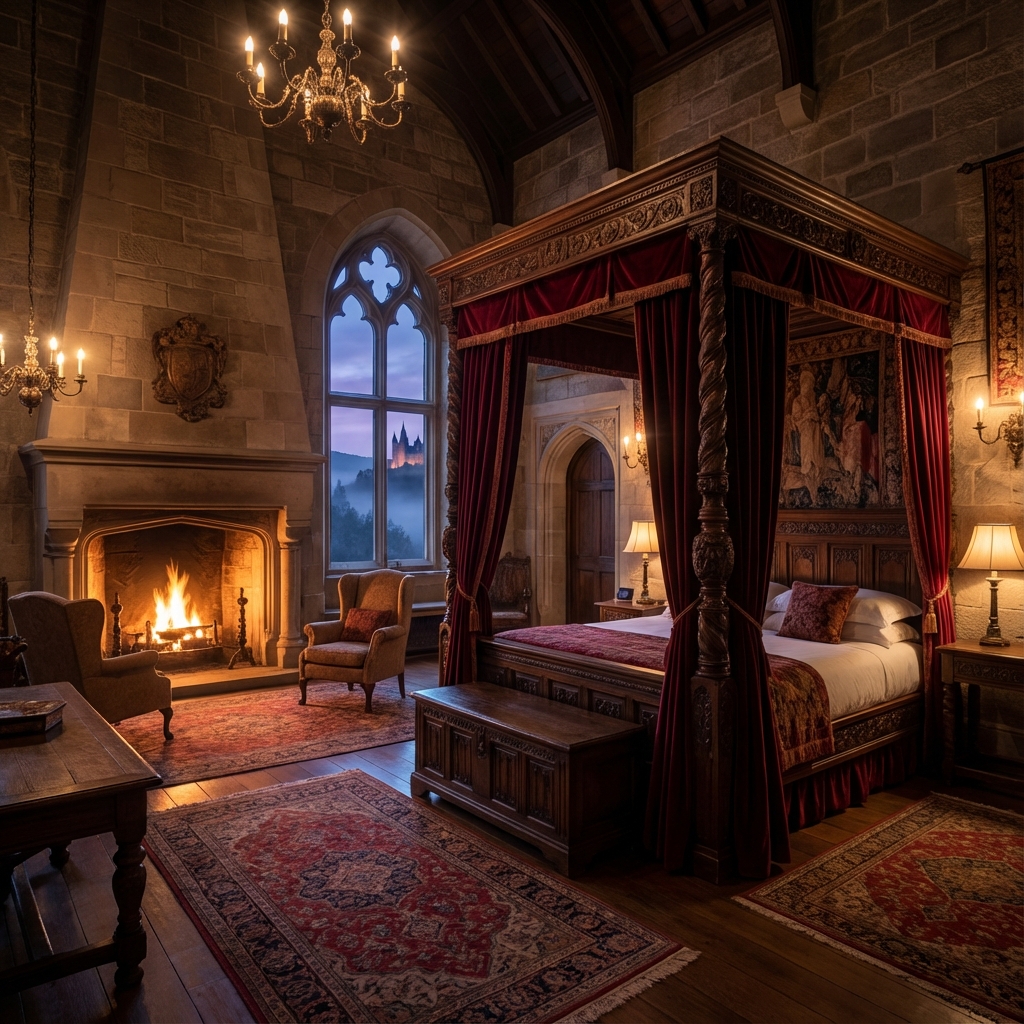
- Erik XIV: The artistic and somewhat mad king focused on interior decoration. His bedroom, the King's Chamber, is one of the castle's artistic highlights, featuring incredible intarsia (wood inlay) paneling. Visitors should look closely at the hunting frieze; one of the hunters has lost his head, supposedly a dark joke by the king reflecting his own paranoia about assassination.
- Johan III: He completed the transformation, adding the castle church and the 'Golden Hall' with its magnificent coffered ceiling. His vision was to rival the palaces of Italy and France, bringing continental luxury to the harsh Nordic climate.
The Kalmar War and the Traitor
The castle saw heavy fighting during the Kalmar War (1611–1613). The defense was commanded by Krister Somme. After a relentless siege by the Danish army, Somme eventually surrendered the castle on August 3, 1611. He was branded a traitor by the Swedish crown and, according to legend, his face is carved into the staircase leading to the eastern wing so that visitors may forever trample upon him. The local legend of the "Women's Battle" also stems from this era, telling of the brave women of Kalmar who poured boiling water and tar on invaders scaling the walls when the garrison was overwhelmed.
The Prison Years
By the late 17th century, the border moved south, and Kalmar lost its strategic importance. It ceased to be a royal residence and became a Crown prison, a grim chapter in its history. The conditions were horrific. The most infamous dungeon is the 'Women's Prison', where women accused of witchcraft or child murder were kept in darkness. The walls are still covered in graffiti scratched by the hopeless prisoners centuries ago, a haunting reminder of their suffering.
Ghost Stories: The Grey Lady
A castle this old inevitably has ghosts. The most famous is the Grey Lady. Unlike the scary spirits often associated with dungeons, she is a benevolent ghost, believed to be the spirit of a servant girl who served at the castle. She wanders the halls checking that doors are locked and everything is tidy. However, stay away from the Golden Hall at night. Legend says that bloodstains on the floor near the window—remnants of a murder centuries ago—can never be scrubbed away. Every time the floor is cleaned or the wood replaced, the stain mysteriously returns.
Visitor Information
Kalmar Castle is open year-round, but the experience changes with the seasons.
- Summer Season: This is the peak time to visit. The castle comes alive with 'The Vasa Period' reenactments. Actors dressed as King Erik, his court, jailers, and servants wander the halls, interacting with visitors and bringing history to life. There is a 'Children's Castle' in the courtyard where kids can be knighted or challenge the Black Knight to a duel.
- Exhibitions: Surprisingly, the castle has become a major venue for international art exhibitions. In recent years, it has hosted major displays of works by Van Gogh, Monet, and Da Vinci, attracting art lovers from all over Europe to its historic halls.
- The Chapel: The whitewashed Castle Chapel (1592) is still an active church. It is incredibly popular for weddings—one of the most booked venues in Sweden—with couples often waiting years for a slot to marry under its historic arches.
- Dining and Shopping: The castle is home to the popular Slottskrogen restaurant, which serves traditional Swedish cuisine with a modern twist, often using local ingredients from Småland. The castle shop is also worth a visit, offering high-quality replicas of historic jewelry, local crafts, and books on the castle's history.
- The Courtyard Well: In the inner courtyard, don't miss the Renaissance well. In times of siege, this source of fresh water was the difference between life and death for the garrison. It is beautifully preserved and decorated with the crests of the Vasa kings.
Nearby
Don't miss a walk through Gamla Stan (The Old Town) just outside the castle walls. This was the original location of the city of Kalmar before it was moved to the island of Kvarnholmen in the 1600s due to fire risks and defense needs. The small wooden cottages and cobblestone streets are incredibly charming and offer a stark contrast to the imposing stone fortress.