The Heart of the Marble City
Dominating the "High Town" of Kilkenny City, Kilkenny Castle is one of Ireland's most iconic and enduring landmarks. Standing dramatically on a height above the River Nore, it has been the nerve center of the city for over 800 years. For nearly six centuries, it was the principal seat of the powerful Butler family, the Earls, Marquesses, and Dukes of Ormonde. It is a symbol of the Anglo-Norman occupation, the turbulent history of Irish politics, and ultimately, a triumph of restoration. The castle is not merely a monument; it is the soul of Kilkenny, woven into the fabric of daily life for the citizens who walk in its park and work in its shadow.
Today, the castle is a mix of architectural styles, reflecting the changing fortunes and tastes of its owners. From a rugged medieval fortress designed to hold back the native Irish tribes to a Victorian "château" built for entertaining royalty, Kilkenny Castle tells the story of Ireland's aristocracy. It is the jewel in the crown of Ireland's Ancient East, attracting visitors from around the globe who come to marvel at its grandeur.
History: The Butlers of Ormonde
The site was originally a wooden fortress built by Richard de Clare (Strongbow) in 1172 to consolidate the Norman conquest. However, the stone castle we see today was begun in 1195 by William Marshal, 1st Earl of Pembroke, often called "the greatest knight that ever lived." He built a massive square castle with four circular corner towers, three of which still stand today, protecting the river crossing.
In 1391, the castle was bought by the Butler family. The Butlers were one of the most powerful Norman families in Ireland, and they would call Kilkenny home until 1967. Throughout the centuries, they played a pivotal role in Irish history. In the 17th century, the Great Duke of Ormonde, James Butler, returned from exile with Charles II and transformed the medieval fortress into a French-style château. However, the castle suffered during the Cromwellian wars and later fell into disrepair as the family's fortunes waned.
By the mid-20th century, the castle was in a sorry state. The family had lost much of their wealth, and the building was crumbling. In 1967, Arthur Butler, the 6th Marquess of Ormonde, made a historic gesture: he sold the castle to the Castle Restoration Committee (effectively the people of Kilkenny) for a ceremonial payment of just £50. "It is with great pride," he said, "that I hand over the castle to the people of Kilkenny." This act saved the building from ruin and began a decades-long project of restoration.
Architecture: A Victorian Revival
While the footprint is medieval, much of what visitors see today dates from the 19th-century reconstruction. In 1826, the architect William Robertson was hired to remodel the castle. He attempted to return it to its medieval roots but with Victorian comforts, creating a romanticized vision of the past.
The Picture Gallery
The undisputed highlight of the interior is the Long Gallery** (Picture Gallery). Built in the 19th century to house the Butler family's extensive art collection, it is a stunning space. It features a magnificent hammer-beam roof painted with Pre-Raphaelite motifs of gold, red, and blue. The walls are lined with family portraits dating back to the 17th century, and the fireplace is made of pure Carrara marble. It is widely considered one of the finest rooms in Ireland and is often used for civic receptions and concerts.
The Withdrawing Room and Library
The restoration work has meticulously recreated the Victorian splendor of the reception rooms. The **Withdrawing Room** features hand-painted Chinese wallpaper and opulent silk curtains. The **Library** evokes the atmosphere of a gentleman's club, filled with leather-bound books and warm mahogany. These rooms offer a glimpse into the "upstairs" life of the Anglo-Irish aristocracy, a world of privilege and service.
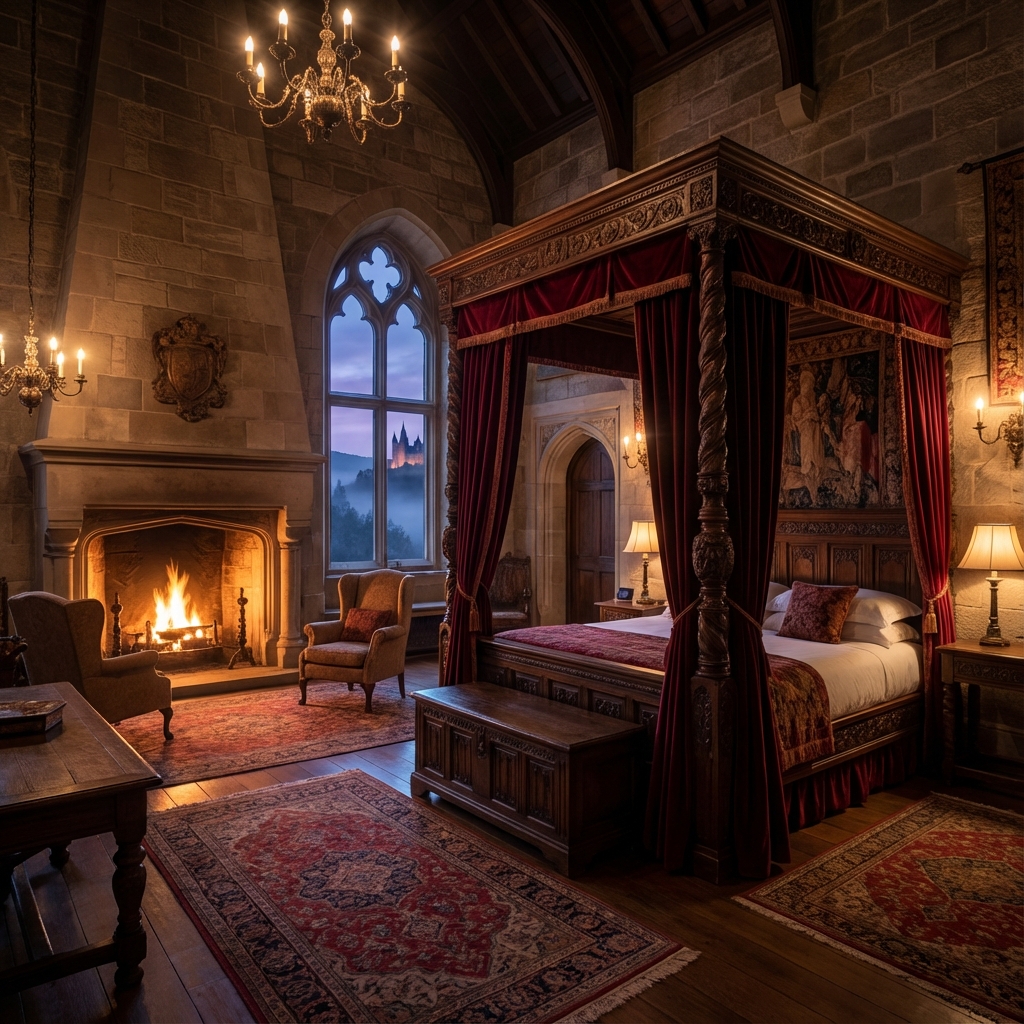
The Blue Bedroom
Visitors can also see the **Blue Bedroom, which was once used by King Edward VII and Queen Alexandra during their visit in 1904. It is furnished with the original suite of furniture, giving a sense of the royal welcome the Butlers could provide to their monarchs.
The Parklands
The castle is set within 50 acres of rolling parkland, a rare green lung in the center of a medieval city. The park features a terraced rose garden, a man-made lake, and a playground. It is a beloved recreational space for locals, used for picnics, jogging, and festivals. From the park, you get the classic view of the castle's massive drum towers rising above the trees, a sight that has defined Kilkenny for centuries.
Legends: The Witch and the Curse
Kilkenny is famous for the story of Dame Alice Kyteler, the first person condemned for witchcraft in Ireland (in 1324). While she lived in the city (at Kyteler's Inn), her story is intertwined with the power structures of the castle. Her son, William Outlaw, was imprisoned in the castle dungeon as part of her penance. Some say the dark energy of the witch trials still lingers in the city.
There are also stories of a "White Lady" haunting the castle gardens, believed to be the spirit of a young Butler woman who died tragically. Visitors and staff have reported strange cold spots and the feeling of being watched in the older parts of the castle, particularly near the Parade Tower. The sound of phantom footsteps has been reported in the Long Gallery after dark.
Visitor Information
Getting There
Kilkenny Castle is located at the top of The Parade in Kilkenny City. It is a pleasant 15-minute walk from MacDonagh Train Station. The city is well connected by train and bus from Dublin (approx. 1.5 hours), making it an easy day trip.
Tours
The castle is open year-round. Access to the interior is by self-guided tour (with brochures available in multiple languages) or guided tour. The guided tours are highly recommended as they provide the context of the Butler family history that brings the rooms to life. Due to its popularity, booking tickets online in advance is advisable, especially in summer. Photography is allowed (without flash).
Accessibility
The ground floor and the Picture Gallery wing are accessible to wheelchair users via a lift. However, some of the medieval sections have uneven floors. The tea room in the old castle kitchen is a great place to stop for lunch, offering high-quality food in a historic setting with views of the rose garden.