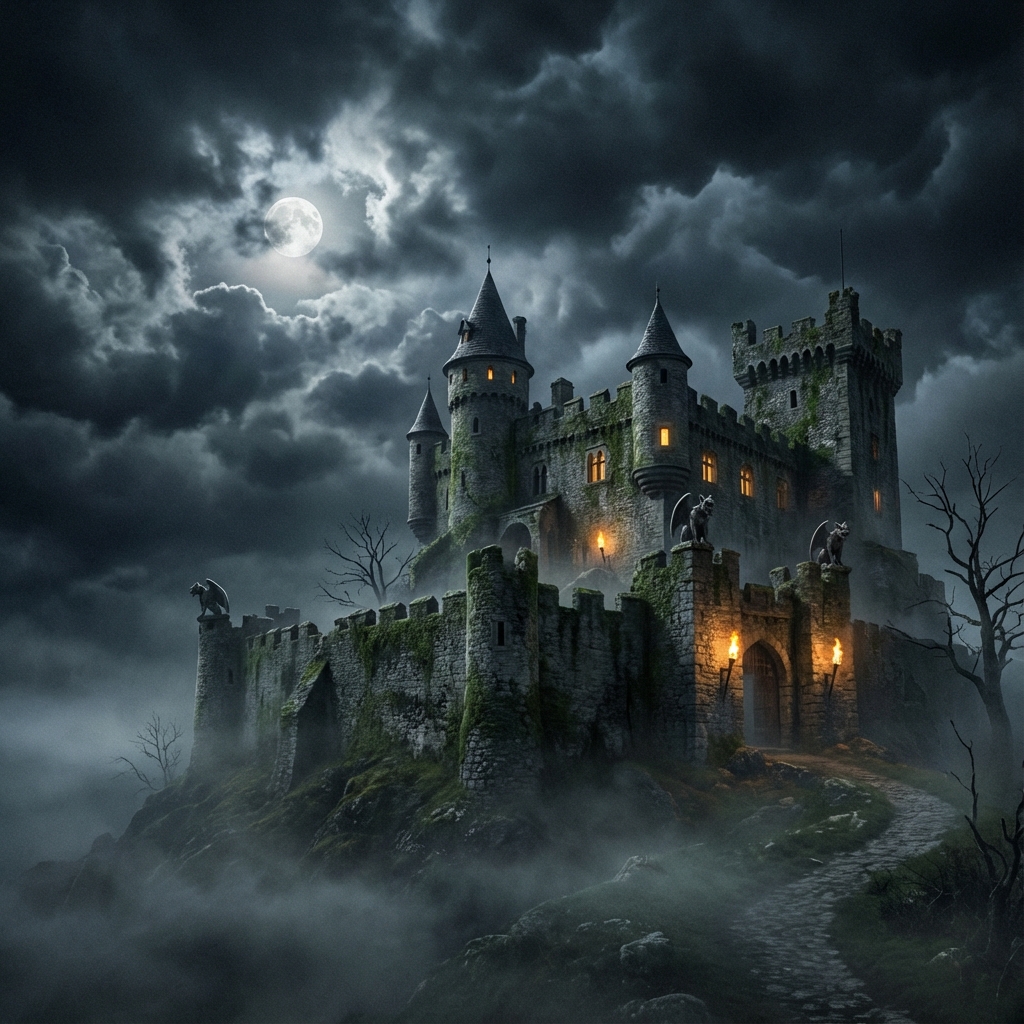
The Pearl of Silesia
Perched majestically on a rock cliff surrounded by the dense forests of the Książ Scenery Park, Książ Castle (Zamek Książ) is the third-largest castle in Poland (after Malbork and Wawel). Its scale is staggering: it has over 400 rooms, and its facade, combining Baroque, Renaissance, and Gothic elements, stretches for what seems like miles. Known as the 'Pearl of Silesia,' it was the residence of the powerful Hochberg family for over 400 years. But beneath its pink, fairytale exterior lies one of the darkest mysteries of World War II, a contrast that defines the soul of this place.
The Hochberg Dynasty and Princess Daisy
From 1509 until 1941, the castle belonged to the House of Hochberg, one of the wealthiest families in Prussia. The castle's most famous resident was Princess Daisy of Pless (born Mary Theresa Olivia Cornwallis-West), an English socialite who married Prince Hans Heinrich XV in 1891. Daisy was the Lady Diana of her time—beautiful, charismatic, and beloved by the public, but trapped in an unhappy marriage and a rigid court life.
During her time at Książ, Daisy undertook significant renovations and charitable works. She worked to improve the living conditions of the local miners and their families, earning her the love of the common people. However, the family's fortune declined after WWI, and they were eventually forced to leave the castle as the Nazis rose to power. Daisy died in poverty in Wałbrzych in 1943, but her spirit is said to still watch over the castle.
The Legend of the Pearl Necklace
A persistent legend surrounds Daisy's famous 6-meter-long pearl necklace. It was rumored that when she was buried, the pearls were hidden in her coffin or somewhere on the estate to prevent them from falling into Soviet or Nazi hands. For decades, treasure hunters have scoured the grounds looking for the "Daisy's Pearls." The tragic reality, however, is likely more mundane but no less heartbreaking: recent research suggests she sold the pearls piece by piece in 1936 to bribe the Gestapo to release her son, Bolko, who had been arrested and tortured.
Project Riese and the Nazi Tunnels
In 1941, the Nazi regime seized the castle to pay off the family's debts. In 1943, the paramilitary Organization Todt began a massive, top-secret construction project known as Project Riese ('Giant'). Thousands of forced laborers and prisoners from the Gross-Rosen concentration camp were brought here to dig a vast system of tunnels deep into the bedrock beneath the castle. The work was brutal, and thousands died from exhaustion, starvation, and execution.
The purpose of these tunnels remains a subject of intense debate and speculation. Some historians believe it was intended to be a new headquarters for Adolf Hitler (who had his own elevator shaft dug to connect his planned suite to the tunnels). Others suggest it was a factory for secret weapons (like the V2 rockets) or a hiding place for Nazi gold and looted art. The legendary 'Gold Train,' rumored to be filled with Nazi treasure, is said to be buried somewhere in the tunnels near Wałbrzych, sparking treasure hunts that continue to this day.
Today, a section of these underground tunnels is open to the public. Walking through the cold, damp, concrete-reinforced corridors offers a chilling contrast to the opulence of the Baroque salons 50 meters above. It is a stark reminder of the castle's dual history of beauty and horror. Seismic sensors and ground-penetrating radar are still frequently used in the area by explorers hoping to find the lost chambers.
Architecture and Restoration
The castle's architecture is a mix of styles due to its long history of destruction and rebuilding. The oldest part is the medieval keep, while the most visible parts are the Baroque wings added in the 18th century. The Maximilian Hall is the castle's showpiece. This two-story ballroom is modeled after the Hall of Mirrors in Versailles, featuring marble fireplaces, crystal mirrors, and a ceiling fresco depicting mythological scenes. It is one of the few rooms that has been fully restored to its pre-war glory, as much of the castle was looted by Soviet troops in 1945.
The restoration is ongoing. Many rooms were stripped bare during the communist era, but recent efforts have seen original furniture returned and the elaborate stucco work repaired. The 'Black Courtyard' and the 'Honorary Courtyard' are impressive spaces that host concerts and markets.
The Gardens and Palm House
Surrounding the castle are series of terraced gardens, each on a different level, decorated with fountains and statues. They offer spectacular views of the Pełcznica River gorge below. A short drive (or a 20-minute walk) away is the Palm House in Lubiechów, built by Prince Hans Heinrich XV as a gift for Daisy. It is a historic greenhouse filled with over 250 species of exotic plants from around the world, including palms, banana trees, and bamboo.
What makes the Palm House unique is its construction material: the walls are lined with tuff (volcanic rock) brought all the way from Mount Etna in Sicily. This was reportedly done at Daisy's request, as she loved the porous rock for its ability to hold moisture and support climbing plants. Today, the Palm House also serves as a sanctuary for lemurs, turtles, and exotic birds, creating a tropical oasis in the middle of Silesia.
Visitor Information
Książ Castle is located in the city of Wałbrzych in Lower Silesia. It is a major tourist attraction, offering various guided tours, including a 'Daisy Tour' focusing on the princess's life and a 'World War II Tour' exploring the tunnels. The castle also hosts a hotel and several restaurants. In May, the 'Festival of Flowers and Art' takes over the castle courtyards, filling them with elaborate floral arrangements that attract visitors from all over Poland.
Whether you are drawn by the romance of Princess Daisy, the architectural grandeur, or the sinister mystery of the Nazi tunnels, Książ Castle offers a multifaceted look at European history. It is a place where the glittering world of the aristocracy collided violently with the darkest machinery of the 20th century, leaving behind a monument that is both striking and haunting.