A Castle in Connemara: Ireland's Most Romantic Building
**Kylemore Abbey** is more than just a beautiful building; it is a monument to love, tragedy, and resilience. Perched on the edge of Pollacapall Lough in the wilds of Connemara, County Galway, its white granite facade reflects perfectly in the dark waters below, creating one of Ireland's most iconic images. But before it was an abbey, it was a castle built from a dream.
The Love Story of Mitchell and Margaret Henry
The story of Kylemore begins in 1850, when **Mitchell Henry**, a wealthy doctor and politician from Manchester, and his wife **Margaret** visited Connemara on their honeymoon. They fell in love with the rugged beauty of the scenery. Years later, when Mitchell inherited a fortune from his father's cotton business, he decided to build a fairy-tale castle for Margaret in the heart of this wilderness.
Construction began in 1867 and took four years to complete. It was a massive undertaking, employing over a hundred local men during a time of recovery from the Great Famine. The castle covered 40,000 square feet and featured over 70 rooms, including 33 bedrooms, 4 bathrooms, 4 sitting rooms, a ballroom, a billiard room, a library, and various offices. It was incredibly modern for its time, boasting its own gasworks for lighting, a hydro-electric plant, and a fire hydrant system.
Tragedy Strikes
The Henrys lived a seemingly perfect life at Kylemore, raising their nine children in this idyll. But in 1874, tragedy struck. While on a family holiday in Egypt, Margaret contracted dysentery and died at the age of 45. Mitchell was heartbroken. He brought her body back to Kylemore and laid her to rest in a small brick mausoleum in the woods near the castle. He could not bear to be apart from her.
As a lasting memorial, Mitchell built the **Gothic Church** a mile from the castle. Often called a "cathedral in miniature," it is a masterpiece of neo-Gothic architecture. Inside, it features pillars made from four different types of Irish marble: green from Connemara, black from Kilkenny, red from Cork, and white from Tyrone, symbolizing a united Ireland.
The Arrival of the Benedictine Nuns
Mitchell Henry eventually left Kylemore, and the estate passed to the Duke and Duchess of Manchester, who lost it due to gambling debts. In 1920, a new chapter began. The **Benedictine Nuns**, who had been based in Ypres, Belgium, for hundreds of years, were forced to flee their abbey during World War I. Their ancient home had been shelled and destroyed. Looking for a new sanctuary, they purchased Kylemore Castle.
The nuns transformed the castle into an abbey and opened an international boarding school for girls, which educated generations of students until its closure in 2010. Today, the community of nuns still lives here, following the Rule of St. Benedict. They are known for their hospitality and for their handcrafted products, including chocolate, soap, and pottery, which help support the restoration of the estate.
The Victorian Walled Garden
A mile west of the castle lies the 6-acre **Victorian Walled Garden**. Built by Mitchell Henry at the same time as the castle, it was one of the last great walled gardens built in Ireland. It was a marvel of Victorian engineering, featuring 21 heated glasshouses that used underground hot water pipes to grow exotic fruits like bananas, melons, and grapes in the cool Irish climate.
After falling into ruin in the 20th century, the garden underwent a massive restoration project in the late 1990s. It is now restored to its 1870 glory. Uniquely, the garden only contains plant varieties that were available in Victorian times. It is divided by a mountain stream into two sections: the **Flower Garden** (for pleasure) and the **Kitchen Garden** (for food), which still supplies the abbey's café.
Inside the Abbey Today
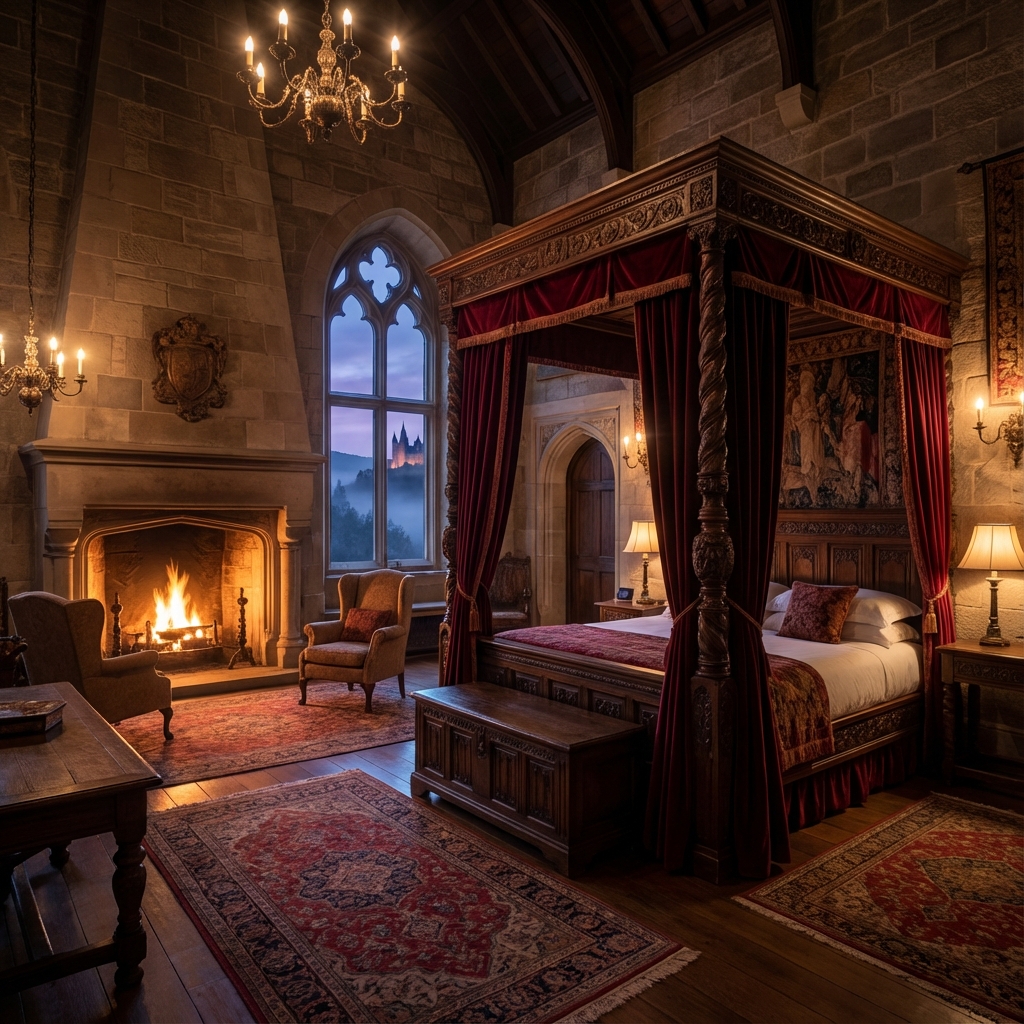
While the nuns live in a private enclosure, visitors can tour the restored ground floor rooms of the abbey. Highlights include: * **The Entrance Hall:** Paneled in oak and featuring a large fireplace, it welcomes guests just as it did in the Henrys' time. * **The Dining Room:** Set as it would have been for a Victorian dinner party. * **The Drawing Room:** Where the ladies of the house would withdraw after dinner. * **The Community Gallery:** An exhibition space telling the story of the nuns and the school.
Myths and Legends
Like any Irish castle, Kylemore has its legends. The most famous involves the **"Ironing Stone"** (Cloch na Maol), a giant glacial rock located near the garden tea house. Legend says that two giants, fighting on the mountain tops, threw stones at each other. This rock missed its target and landed here. It is said to be a wishing stone: if you stand with your back to it and throw a pebble over the top three times, your wish will be granted.
The Living Community: Crafts and Contemplation
One of the things that sets Kylemore apart from other castles and heritage sites is that it remains a living, working community. The Benedictine nuns follow the ancient Rule of St. Benedict, which prescribes a daily rhythm of prayer, work, and study. Visitors who attend the abbey during the hours of the Divine Office can hear the community chanting in the chapel—a sound that connects the present moment directly to a monastic tradition stretching back 1,500 years.
To support the ongoing restoration of the estate, the community produces and sells a range of handcrafted goods. Their Kylemore Abbey Chocolate has won international awards, made by the sisters using Belgian techniques adapted to Irish ingredients. The pottery studio produces hand-thrown pieces decorated with Celtic motifs, and the soap workshop creates natural products using herbs from the kitchen garden. Purchasing these items is both a souvenir and a direct contribution to preserving this extraordinary place for future generations. The visitor centre shop and online store carry the full range, and the abbey café serves food prepared using produce from the walled garden.
Visitor Information
Kylemore Abbey is located on the N59, the main road through the heart of Connemara, about an hour's drive from Galway City. It is a signature discovery point on the Wild Atlantic Way. The estate is open year-round, though opening hours vary by season. Shuttle buses run regularly between the abbey and the walled garden, or visitors can enjoy the scenic woodland walk between the two.