The Fairytale Castle of Württemberg
Clinging precariously to the edge of a sheer white limestone cliff in the Swabian Jura, Lichtenstein Castle (Schloss Lichtenstein) is one of the most dramatic and photogenic castles in Germany. Often called the "little brother" of Neuschwanstein, it shares the same spirit of romantic yearning for the Middle Ages. However, while Neuschwanstein is massive and operatic, Lichtenstein is compact, vertical, and defies gravity. It looks less like a building and more like an extension of the rock itself, separated from the mainland by a deep fissure and connected only by a wooden drawbridge.
It is a place where fiction became reality. Most castles inspire stories, but Lichtenstein was actually inspired by one. It is a stone manifestation of 19th-century German Romanticism, a tribute to knighthood and chivalry built in an era of industrialization. Its slender tower piercing the sky above the green Echaz Valley is an iconic image of the region.
History: A Novel Idea
The site has a long history. A fortress existed here as early as 1100, belonging to the Lords of Lichtenstein. However, it was destroyed twice during local wars and fell into total ruin by the 17th century. The land was eventually acquired by the Kings of Württemberg, who built a simple hunting lodge there.
The turning point came in 1826 with the publication of the historical novel Lichtenstein by Wilhelm Hauff. The book was a sensation, a romantic tale of a banished duke hiding in the castle during the 16th century. It captured the imagination of the public, including Count Wilhelm of Württemberg (later Duke of Urach). Inspired by the novel and the medieval revival sweeping Europe, Count Wilhelm decided to rebuild the castle exactly as described in the book. He hired the architect Carl Alexander Heideloff, and between 1840 and 1842, the fantasy became stone. It is one of the few examples in the world of a building based on a book. The Count was a passionate collector of medieval art and weapons, and he needed a suitable setting for his collection.
Architecture: Neo-Gothic Cliffs
The architecture is pure Neo-Gothic. It features a tall, slender keep, a curtain wall with battlements, and a residential building (Palas) adorned with oriel windows and turrets. The design emphasizes verticality, mimicking the steep lines of the cliff. The layout is surprisingly small, constrained by the narrow rock spur, but this intimacy adds to its charm.
The Drawbridge and Courtyard
Access to the castle is dramatic. Visitors must cross a wooden drawbridge that spans a deep chasm. The small courtyard offers dizzying views down into the Echaz Valley, 250 meters below. The outer walls seem to grow organically out of the rock face. The Gerobau (the outer building) and the keep frame the courtyard, creating a secluded medieval atmosphere.
The Interiors
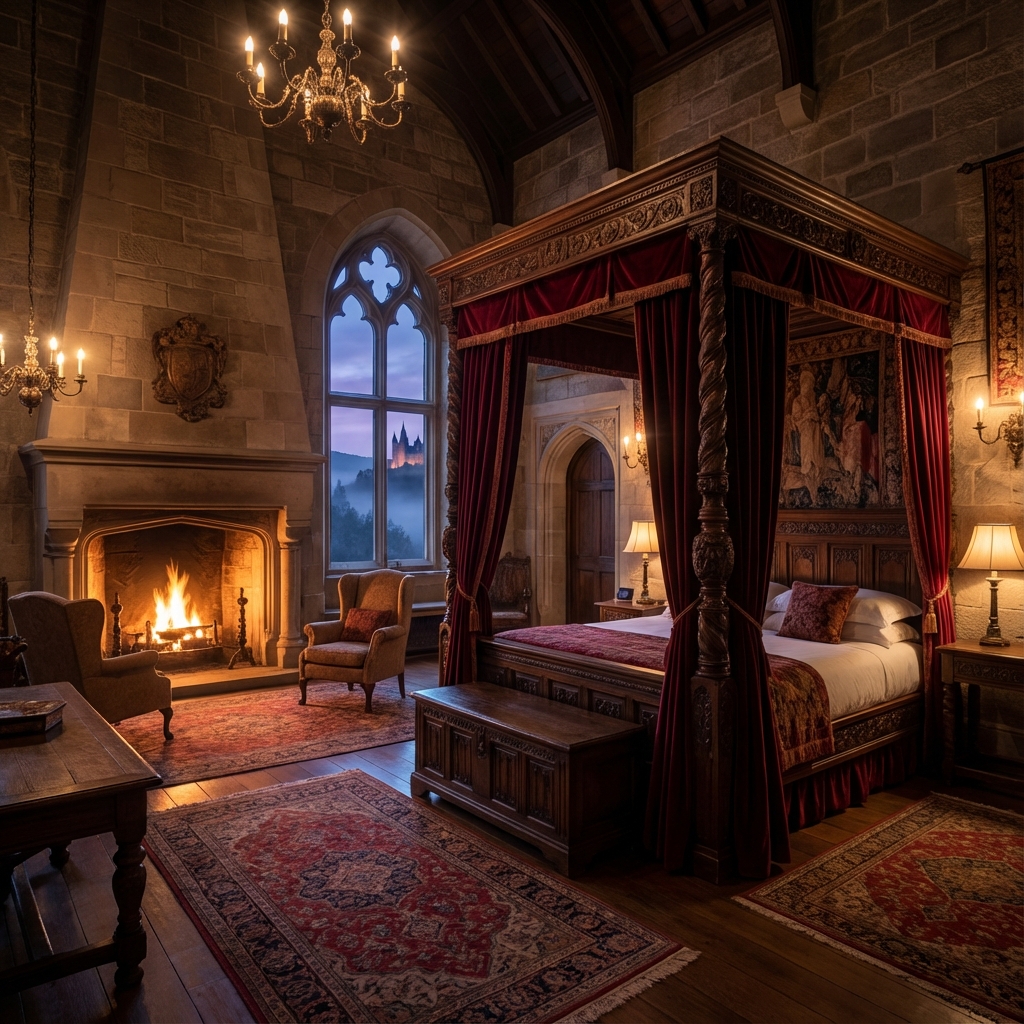
Despite its small footprint, the interior is lavishly furnished. The Armoury (Waffenkammer) contains a collection of historic weapons and armor, reflecting the Count's passion for military history. The King's Room is the most ornate, featuring a painted ceiling, heavy wooden furniture, and wall paintings depicting scenes from local history. The Knight's Hall is lined with wood paneling and served as a gathering place for the Count and his guests. Every room was designed to evoke the atmosphere of the 15th century, but with the comforts of the 19th. The attention to detail is evident in the stained glass windows and the intricate wood carvings.
The Chapel
The castle chapel features beautiful glass windows from the 15th and 16th centuries, collected by the Count from ruined monasteries. It also houses a famous late-medieval altar painting by the "Master of Lichtenstein." It is a quiet, spiritual space within the fortress.
Legends: The Duke in the Cave
While the castle itself is a product of the 19th century, the site is steeped in the legends of the novel. The story tells of Duke Ulrich of Württemberg, who was driven from his land and sought refuge in the Nebelhöhle (Fog Cave) near the castle. The loyal castellan of Lichtenstein protected him. This story of loyalty and exile is central to the castle's identity. Although the events in the novel are romanticized, Duke Ulrich was a real historical figure who did lose and regain his duchy, and the cave can still be visited nearby. The novel's characters are depicted in frescoes within the castle, blurring the line between history and fiction.
Visitor Information
Getting There
Lichtenstein Castle is located near the town of Lichtenstein (Honau district), about an hour's drive south of Stuttgart. It is best reached by car, as the castle is high on the Alb plateau. There is a parking lot about 500 meters from the castle entrance, followed by a pleasant walk through the forest. Public transport is possible but requires a bus ride from Reutlingen and a bit of a hike.
Tours
The castle is still owned by the Dukes of Urach. The courtyard is open to visitors for a small fee, allowing you to see the exterior and the views. To see the interior (Armoury, Chapel, King's Room), you must take a guided tour (approx. 30 minutes). Tours are usually in German, but English handouts are available, and English tours can be arranged for groups. Photography is generally not allowed inside the rooms to preserve the artifacts.
Nearby Attractions
A visit to the castle pairs perfectly with the Lichtenstein High Ropes Course located right next to the parking lot, or a hike to the nearby Wilhelm Hauff Monument for a different viewing angle. The Nebelhöhle (Fog Cave) and the Bear's Cave (Bärenhöhle) are also short drives away, offering a subterranean adventure to match the aerial one. The combination of literature, history, and nature makes Lichtenstein a unique day trip.
The Swabian Jura and Surrounding Scenery
While Lichtenstein Castle itself is a masterpiece of Neo-Gothic imagination, its impact is magnified entirely by its stunning natural setting. The castle is perched on the very edge of the Swabian Jura (Schwäbische Alb), a rugged plateau known for its dramatic limestone escarpments, deep valleys, and dense, ancient forests. This dramatic karst scenery of southern Germany provides the ultimate romantic backdrop, making the castle appear as though it grew organically from the very bedrock. The sheer drop into the Echaz Valley below creates a sense of vertigo and awe, perfectly complementing the soaring, slender lines of the castle’s keep. For nature lovers and hikers, the region surrounding Lichtenstein is a paradise of well-marked trails that wind through the hills, offering constantly changing, spectacular views of the fortress from different vantage points. The changing seasons bring new dimensions to the scenery—from the lively, lush greens of a Swabian summer to the ethereal, misty atmosphere of autumn when the valley is cloaked in fog, making the castle seem like it is floating in the clouds. This seamless mix of dramatic architecture and wild, untamed nature is what truly cements Lichtenstein’s reputation as the ultimate fairytale destination.