The Red Brick Jewel of Belarus
Rising from the flat, green plains of the Grodno region, the Mir Castle Complex (Mirsky zamok) is a striking vision of red brick and white plaster. It is not just a castle; it is a timeline of European architectural history frozen in stone. UNESCO described it as an "outstanding example of a central European castle," and it is easy to see why. Its five massive towers, reflected in the calm waters of the castle lake, mix the defensive might of the Gothic Middle Ages with the elegance of the Renaissance and the drama of the Baroque.
For centuries, this castle was at the crossroads of history, witnessing the rise and fall of the Grand Duchy of Lithuania, the Polish-Lithuanian Commonwealth, and the Russian Empire. Today, beautifully restored, it is one of the most visited and beloved landmarks in Belarus.
The Ambition of the Ilyinichs
The story of Mir begins in the early 16th century, around 1520. Duke Yuri Ilyinich, a wealthy magnate, wanted a fortress that would secure his status and perhaps even earn him the title of Count of the Holy Roman Empire. He chose a site near the village of Mir and began construction of a massive Gothic fortress.
The design was formidable. Four square towers connected by thick walls formed a defensive square, with a fifth tower serving as the gatehouse. The walls were decorated with distinctive patterns of red brick and white plastered niches—a style now known as "Belarusian Gothic." This red-and-white motif was not just decorative; it was a display of wealth, as bricks were expensive. Sadly, the Ilyinich line died out just four decades after construction began, and the unfinished castle passed to the Radziwills.
The Golden Age of the Radziwills
In 1568, the castle came into the possession of the Radziwill family, one of the richest and most powerful dynasties in Eastern Europe. Under Prince Mikołaj Krzysztof Radziwiłł "the Orphan," Mir was transformed from a grim fortress into a luxurious Renaissance palace.
The Radziwills added a three-story palatial wing along the northern and eastern walls. They imported Italian architects to redesign the interiors with tiled stoves, coffered ceilings, and fine tapestries. The defensive towers were converted into living spaces, and an Italian garden was laid out. For over two centuries, Mir was a center of high culture, hosting lavish balls, hunts, and diplomatic receptions. It was a place where the East met the West, where Polish nobility mingled with Italian artists.
War and Ruin
The castle's strategic location meant it was often in the line of fire. It was severely damaged during the wars with Sweden in the 17th century and devastated again during the Great Northern War in the early 18th century. But the most romantic, if destructive, period came with the Napoleonic Wars.
In 1812, the castle was the site of a fierce battle between the retreating Russian army and Napoleon's Polish cavalry. The castle was burned and abandoned. For nearly a century, it stood as a romantic ruin, its roofless towers home only to birds. It was the subject of paintings and poems, a symbol of lost grandeur.
The Revival and the Sviatopolk-Mirskys
The castle's fortunes turned again in 1891 when it was purchased by Prince Nikolai Sviatopolk-Mirsky, a Russian general. He fell in love with the ruins and began a major restoration. He didn't just fix the walls; he transformed the scenery. He dug a new lake (legend says by hand with his serfs, but more likely with hired labor) and planted an English scenery park.
His son, Mikhail, continued the work, living in the castle until 1939. The Sviatopolk-Mirsky family chapel, built in the park in 1904, is a stunning piece of Art Nouveau architecture with mosaics that rival those of St. Petersburg. It serves as the final resting place for the family.
World War II and the Ghetto
The 20th century brought darkness to Mir. During the Nazi occupation of Belarus in World War II, the castle was used as a Jewish ghetto. Hundreds of Jews from the town of Mir and the surrounding area were imprisoned within these medieval walls before being murdered in the woods nearby. It is a somber chapter in the castle's history, acknowledged today by memorials on the site.
Architecture: The Ram's Head Legend
One of the most curious architectural features is a small stone ram's head embedded in the south wall of the castle. It is easily missed if you don't look up. According to legend, the master builder placed it there as a magical talisman. The prophecy says that as long as the ram's head remains in the wall, the castle will stand. If it falls, the castle will crumble to dust and never rise again. Despite centuries of wars and fires, the head is still there, and the castle still stands.
The Legend of the Apple Orchard and the Lake
Another darker legend concerns the castle lake. It is said that Prince Nikolai Sviatopolk-Mirsky ordered a beautiful apple orchard to be cut down to make way for the lake. The local people warned him that cutting down blooming trees was a sin. He ignored them. The legend claims that the lake is cursed: for every tree cut down, a soul would drown in the waters. It is said that the lake claims a victim every year, usually a young man, revenge for the lost orchard. Locals still whisper that the "Lake Maiden" lures swimmers to the deep.
Planning Your Visit
Mir Castle is located about 90 km southwest of Minsk. It is often visited in conjunction with Nesvizh Castle, another Radziwill residence nearby.
- The Towers: Be prepared for a climb! The stairs in the towers are original—steep, narrow, and winding. But the view from the top, looking out over the tiled roofs and the lake, is worth the effort.
- The Cellars: Don't miss the extensive cellars. They house a fascinating exhibition about the castle's food storage, including a reconstruction of a wine cellar and a kitchen. You can see how the castle sustained hundreds of people during a siege.
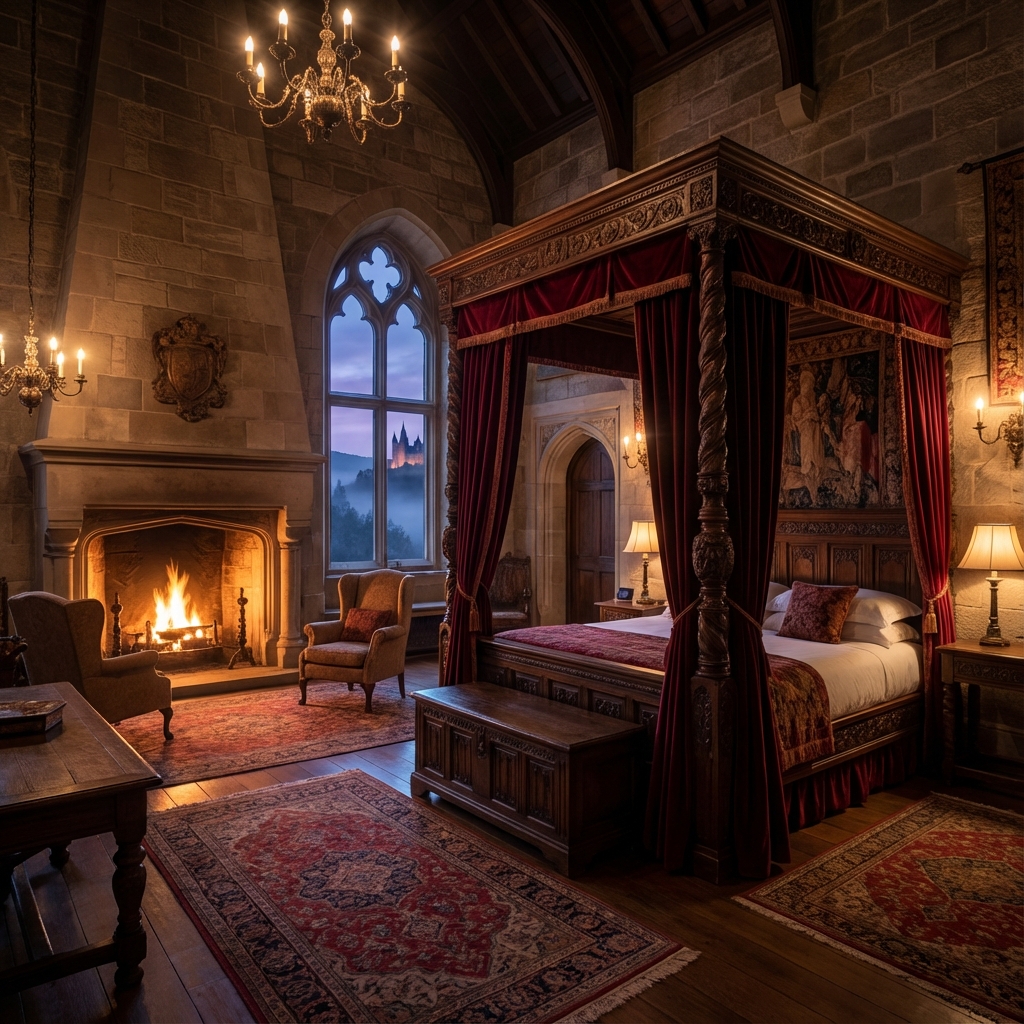
- The Hotel: Uniquely, you can actually stay in the castle. A boutique hotel is located in the east wing. Sleeping in a room with meter-thick walls and waking up to the view of the courtyard is a bucket-list experience.
- Events: In the summer, the castle hosts the "Mir Castle" music festival and medieval reenactments. Seeing knights in armor clashing swords against the backdrop of the red brick walls brings the history vividly to life.
Mir Castle is a survivor of empires. It wears its scars—the cannonball marks, the burnt bricks—with pride. It is a place where the legends of rams and curses feel just as real as the history of dukes and generals.