The Fairy Tale Castle of Saxony
Rising from the center of a large artificial lake, with its four round corner towers reflecting perfectly in the water, Moritzburg Castle (Schloss Moritzburg) is the very definition of a fairytale palace. Located just outside Dresden, it is one of the most impressive Baroque structures in Germany. The castle's symmetry, its warm ochre-and-white color scheme, and its seamless integration with the surrounding lakeside setting make it a masterpiece of 18th-century architecture.
But Moritzburg is not just a pretty façade. It was the playground of kings, a place of excess, hunting, and celebration. Today, it captures the imagination of millions as the filming location for the cult Christmas movie Three Wishes for Cinderella (Drei Haselnüsse für Aschenbrödel), drawing fans from all over Europe to walk up the famous staircase where the princess lost her shoe.
From Hunting Lodge to Pleasure Palace
The castle's origins date back to 1542, when Duke Moritz of Saxony built a Renaissance hunting lodge on a granite dome in the middle of the Friedewald forest. The area was teeming with game, making it a favorite retreat for the Wettin dynasty.
However, the Moritzburg we see today is the vision of one man: Augustus the Strong (August der Starke), Elector of Saxony and King of Poland. Augustus was a man of gargantuan appetites and ambitions. In 1723, he commissioned the architect Matthäus Daniel Pöppelmann (who also designed the Zwinger in Dresden) to transform the modest lodge into a "Temple of Diana," a Baroque pleasure palace dedicated to the goddess of the hunt.
The transformation was radical. Pöppelmann connected the four corner towers with new wings, added an extra floor, and redesigned the roofs. Most importantly, he expanded the castle ponds, turning the building into an island palace reachable only by a causeway. The result was a stage set for the King's extravagant parties, which often included mock naval battles on the lake and banquets that lasted for days.
The Feather Room and the Antlers
The interior of Moritzburg is as spectacular as the exterior, filled with treasures that reflect Augustus the Strong's obsession with hunting and exotic luxury.
The Stone Hall (Steinsaal)
The central Monströsen-Saal (Hall of Monstrosities) or Stone Hall serves as the castle's heart. It houses one of the world's most significant collections of red deer antlers. Among the exhibits is a legendary 66-point set of antlers (though sadly, these are a copy; the original was traded with the King of Prussia for a regiment of dragoons!). The hall is a stark, masculine space that emphasizes the castle's primary function as a hunting lodge.
The Feather Room (Federzimmer)
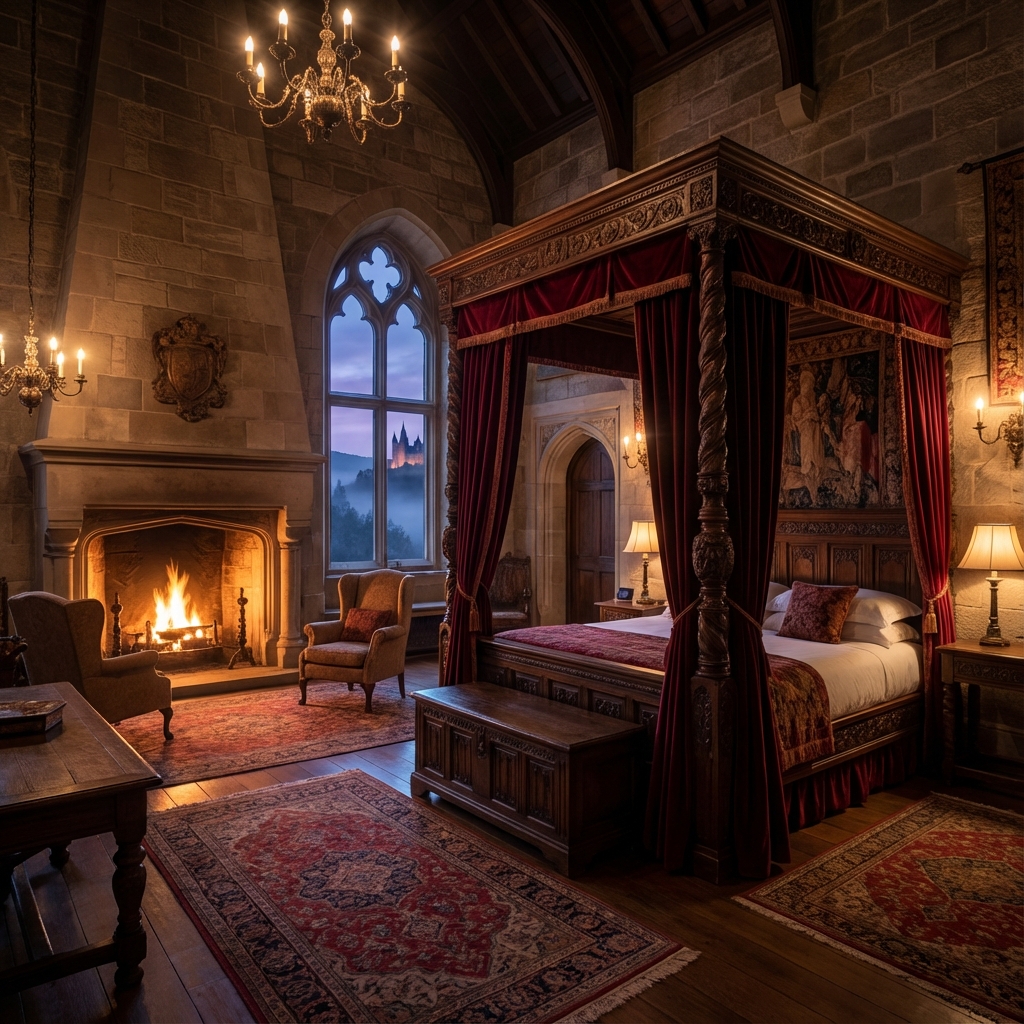
The most unique room in the castle, and perhaps in all of Europe, is the Feather Room. The bed of state (parade bed) and the wall hangings are made entirely of millions of pheasant, peacock, guinea fowl, and duck feathers. The feathers were woven into the fabric to create intricate patterns. This fragile masterpiece was purchased by Augustus in 1723 and was recently restored after decades of painstaking work. It is evidence of the incredible craftsmanship of the 18th century and the King's taste for the unusual.
The Leather Tapestries
Many rooms are lined with magnificent gold-embossed leather tapestries. These were depicted with scenes from mythology, particularly the story of Diana and Actaeon. The rich colors and the sheen of the gold leaf were designed to glow by candlelight, creating a magical atmosphere during evening festivities.
The Little Pheasant Castle
A short walk from the main castle, through the park, lies the Fasanenschlösschen (Little Pheasant Castle). Built later, between 1770 and 1776, this tiny Rococo gem was used for breeding pheasants for the royal hunt. But it was also a private retreat for the royal family.
Next to it is a miniature harbor complete with a mole and a lighthouse—the only lighthouse in Saxony! Here, the court would stage gondola rides and naval reenactments, pretending to be at sea in the middle of a landlocked forest. It is a charming example of the playful, theatrical nature of 18th-century court life.
The Treasure of the Wettins
Moritzburg has a dramatic modern history as well. In 1945, as the Red Army approached, the sons of the last Prince Ernst Heinrich of Saxony buried the family treasure in the castle park. The "Wettin Treasure" consisted of crates filled with gold, silver, and diamonds. Most of it was discovered by Soviet troops and looted, but in 1996, amateur treasure hunters found several crates that had been missed. The discovery sparked a legal battle and a media sensation, adding a layer of real-life mystery to the castle's lore.
Cinderella's Staircase
For many visitors, the main attraction is a simple staircase on the east side of the castle. This is where the famous scene from the 1973 Czech-German film Three Wishes for Cinderella was shot, where Cinderella loses her shoe while fleeing the ball. In the winter, the museum hosts a massive exhibition about the movie, displaying original costumes and props. A bronze slipper is permanently fixed to the steps, allowing visitors to try it on and see if they are the chosen prince or princess.
Planning Your Visit
Moritzburg is located about 15 km northwest of Dresden and is easily accessible by car, bus, or the historic narrow-gauge steam railway (Lößnitzgrundbahn).
- The Steam Train: For the full romantic experience, take the steam train from Radebeul to Moritzburg. The ride through the forest sets the perfect mood for visiting the castle.
- Horse-Drawn Carriages: The town of Moritzburg is famous for its horse breeding (the State Stud Farm is nearby). Taking a horse-drawn carriage ride around the castle ponds is a classic way to see the grounds.
- The Park: The castle park is free to enter and is beautiful in all seasons. In autumn, the reflection of the golden leaves in the lake is remarkable; in winter, the frozen lake allows for ice skating, just like in the old days.
- Game Reserve: The nearby Wildgehege Moritzburg is a wildlife park where you can see wolves, lynxes, and the red deer that were once hunted by the kings.
Moritzburg Castle is a place of fantasy. Whether it is the fantasy of an absolute monarch playing at being a sea captain, or the fantasy of a fairytale princess finding her prince, it is a building that invites you to dream.