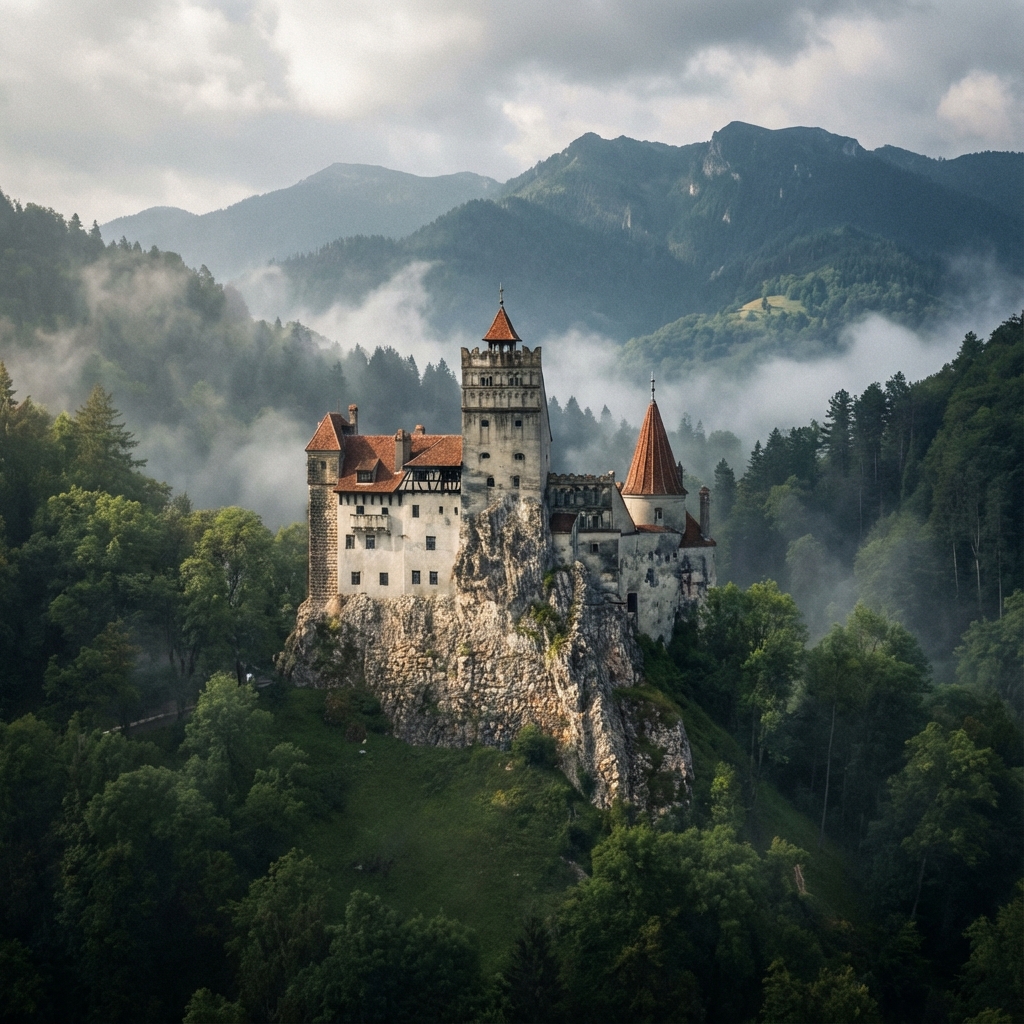
The Sentinel of the Carpathians
Standing proudly on a limestone cliff 566 meters above sea level, Niedzica Castle (also known as Dunajec Castle) offers one of the most stunning views in Poland. Below it stretches the shimmering expanse of Lake Czorsztyn, and in the distance rise the jagged peaks of the Tatra Mountains. For centuries, this fortress was the northernmost outpost of the Kingdom of Hungary, guarding the border with Poland across the Dunajec River. Just across the water, the ruins of the Polish castle of Czorsztyn stare back, a reminder of the historical rivalry that defined this region. Today, Niedzica is not just a relic of border wars; it is a thriving cultural center, a museum, and a place where one of the most bizarre and fascinating historical mysteries in Europe—involving Inca royalty—continues to captivate visitors.
Niedzica is a textbook example of a mountain stronghold. It is not just a ruin but a fully preserved complex that includes a gothic upper castle and a renaissance lower castle. It is a place where history, geography, and legend converge.
History: A Hungarian Fortress in Poland
Although it is now a Polish national treasure, Niedzica was built by the Hungarians. Construction began around 1325 by Kokos of Brezovica, a Hungarian noble. Its purpose was to defend the northern frontier of Hungary and control the lucrative trade route along the Dunajec valley. The castle remained in Hungarian hands for most of its history, owned by powerful families like the Zápolyas, the Horváths, and the Salamons. It was a witness to the shifting tides of Central European power, surviving raids by the Tatars and the chaos of the Napoleonic Wars.
One of the most stable periods for the castle was under the Salamon family, who owned it from the mid-19th century until the end of World War II. During the war, the castle was the residence of the Salamons until the advancing Soviet army forced them to flee in 1945. The castle was looted, and many of its treasures were lost, but the structure itself remained miraculously intact. Since 1948, it has been under the care of the Association of Art Historians, who have meticulously restored it and opened it to the public, preserving its unique Hungarian-Polish heritage.
Architecture: Gothic Heights and Renaissance Comforts
The castle is divided into two distinct parts: the Upper Castle and the Middle/Lower Castle, reflecting different eras of construction and function.
The Upper Castle
The oldest part is the Upper Castle, perched on the highest rock. It is Gothic in style, built for pure defense. It contains the main tower, the chapel, and the knight's residential quarters. The architecture here is stark and formidable, with thick limestone walls designed to withstand medieval siege engines. The climb to the viewing terrace at the top is steep but rewarding, offering a panoramic view of the dam, the lake, and the Pieniny National Park. From here, you can see the strategic importance of the location, commanding the river valley below.
The Lower Castle
In the 16th and 17th centuries, the castle was expanded to make it more livable and representative of the owners' wealth. The Lower Castle features Renaissance courtyards, bastions, and residential wings. The "Lords' Chambers" have been restored to show how the Hungarian nobility lived, with furniture, weapons, and hunting trophies from the 16th to 19th centuries. The Great Hall (Sala Rycerska) is particularly impressive, with its wooden ceiling and historical exhibits. It is often used today for conferences and banquets, keeping the castle's social function alive.
The Legend of the Inca Treasure
Niedzica is world-famous for a legend that sounds like the plot of an Indiana Jones movie. In the late 18th century, Sebastian Berzeviczy, a Hungarian noble and adventurer, traveled to Peru. There, he married an Inca princess (often named as Umina) and had a daughter. During the Spanish rebellion against the Incas (the Túpac Amaru II uprising), the family fled back to Europe to save the royal Inca bloodline, bringing with them part of the vast Inca gold.
They settled in Niedzica. However, Spanish assassins tracked them down. Umina was murdered in the castle courtyard in 1797 to protect the secret location of the treasure. Her son, Anton, was adopted by the Benesz family to hide his identity. The legend says the treasure was buried somewhere in the castle grounds.
This is not just folklore; in 1946, Andrzej Benesz (a descendant) found a lead tube hidden under a step in the castle. Inside was a "quipu"—an Inca system of knotted strings used for recording information. It was believed to be the map to the treasure. The quipu was sent to be deciphered but disappeared under mysterious circumstances. The treasure has never been found, but the story draws thousands of treasure hunters and mystery lovers to the castle every year.
The White Lady
Connected to the Inca legend is the castle's ghost. The "White Lady" seen wandering the courtyard and the ramparts is believed to be the spirit of Umina, the Inca princess. She is said to appear in a white flowing dress, eternally guarding the secret of her ancestors' gold. Some guards have reported strange lights and sudden drops in temperature near the chapel where she was buried. Unlike many castle ghosts who are victims of local tragedies, Umina represents a connection to a distant continent and a lost empire.
Visitor Information
Location and Access
Niedzica Castle is located in the Malopolska region, about 2 hours south of Krakow. It sits on the shores of Lake Czorsztyn. The most scenic way to arrive is to take a boat trip across the lake from the ruins of Czorsztyn Castle. In summer, "gondolas" and tour boats ferry tourists between the two castles regularly, offering a chance to see both fortresses from the water.
Museum and Carriage House
The castle houses a museum with historical interiors, a torture chamber in the dungeons (a favorite with kids), and exhibitions on the local Spisz region history. Just outside the castle walls is the Carriage House (Wozownia), which displays antique horse-drawn vehicles from the 19th century, including sleighs and carriages used by the local nobility.
The Dam and Recreation
Right next to the castle is the massive Niedzica Dam, built in the 1990s. While controversial at the time due to environmental concerns, it created the lake that now mirrors the castle. Walking across the top of the dam provides a fantastic vantage point for photography, capturing the castle reflected in the water with the mountains behind it. The lake itself offers opportunities for sailing and swimming in designated areas.
Practical Tips
The castle is open year-round, but hours are shorter in winter. It is a very popular destination, especially on weekends and holidays, so arriving early is recommended to avoid queues. The terrain is hilly, and there are many stairs within the castle, so comfortable shoes are a must.