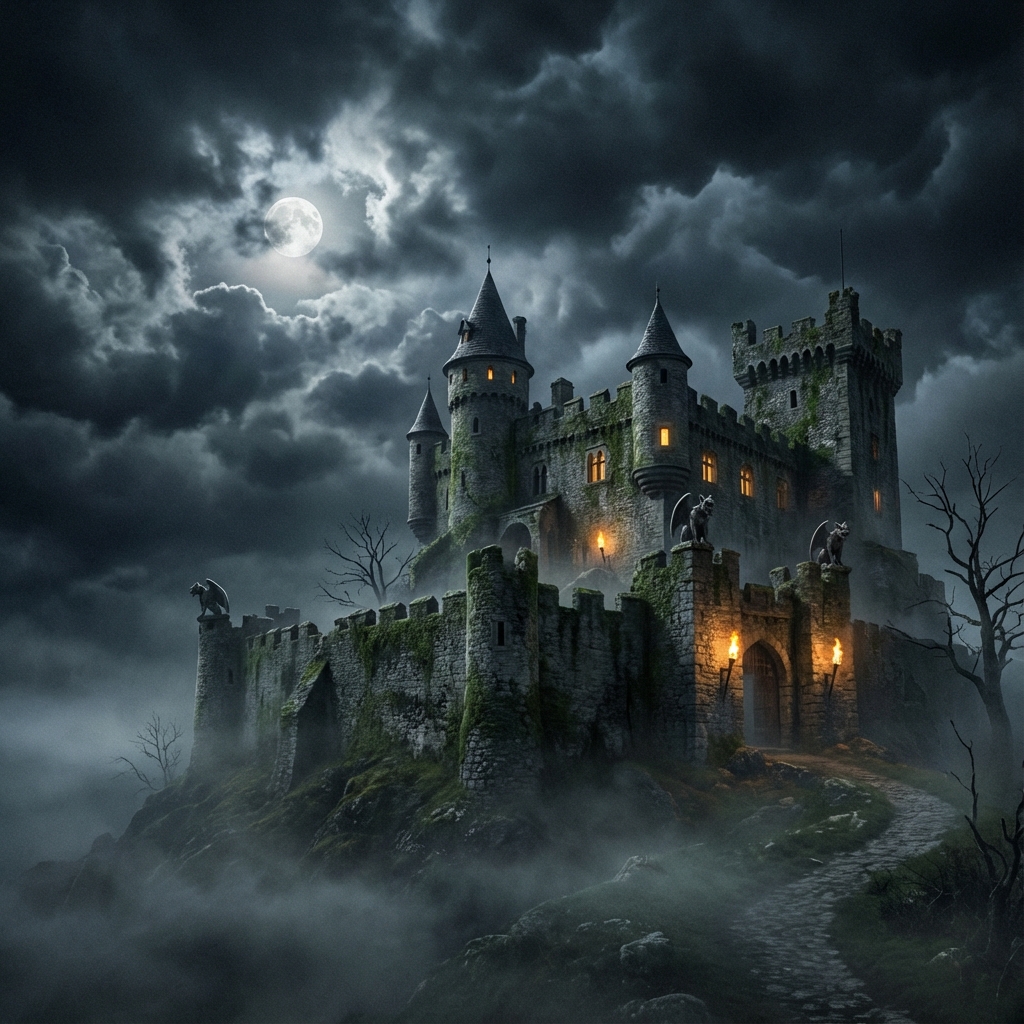
The Eagle's Nest of Slovakia
There are few castles in Europe as dramatic as **Orava Castle** (Oravský hrad). Perched like an eagle's nest on a razor-thin limestone cliff that rises 112 meters vertically above the Orava River, it defies gravity and imagination. It is widely considered one of the most beautiful and best-preserved castles in Slovakia. Its terrifyingly steep position was not just for show; it made the fortress virtually impregnable, allowing it to control the vital trade route between the Kingdom of Hungary and Poland for centuries. As you approach the village of Oravský Podzámok, the castle looms over the small wooden houses like a stone giant, dominating the skyline.
A Layer Cake of History
The castle is often described as a 'layer cake' because it consists of three distinct levels built over different eras, adapting to the shape of the rock. Each level reflects the architectural style and military needs of its time:
- The Upper Castle (The Citadel): The oldest and highest part, built in the 13th century immediately after the Mongol invasion of 1241. It clings to the very peak of the cliff and served as the last line of defense. The views from here are dizzying, stretching across the Orava valley to the jagged peaks of the Western Tatra mountains. The wind howls constantly at this height, reminding visitors of the harsh conditions medieval guards endured.
- The Middle Castle: Expanded in the late 15th and 16th centuries by the Corvinus and Zapolya families. It contains the residential palaces and the deep castle well, which was hand-dug 90 meters through solid rock—a monumental feat of medieval engineering. It represents the transition from a purely military outpost to a noble residence.
- The Lower Castle: The grandest section, built by the powerful **Thurzó family** in the 17th century. György Thurzó, the Palatine of Hungary, transformed the fortress into a Renaissance family residence, adding the Thurzó Palace and the Chapel of St. Michael.
The Chapel of St. Michael
The spiritual heart of the Lower Castle is the **Chapel of St. Michael**. Built in 1611 by György Thurzó, it is a Protestant chapel, which was rare in Catholic Hungary. It served as the family crypt. The centerpiece is the magnificent Renaissance marble altar, which has survived centuries of turmoil. György Thurzó is buried here in a beautifully carved sarcophagus that depicts him in full armor, symbolizing his dual role as a soldier and a statesman. The chapel's serene atmosphere contrasts sharply with the rugged, wind-battered fortifications above.
The Vampire's Lair: Nosferatu
Orava Castle has a dark, Gothic atmosphere that has long attracted filmmakers. Its most famous role was in the 1922 silent horror masterpiece **Nosferatu: A Combination of Horror** (the first unauthorized film adaptation of Bram Stoker's *Dracula*). The German director F.W. Murnau chose Orava to stand in for Count Orlok's Transylvanian castle because real Transylvanian locations were inaccessible after WWI. The castle's sharp angles, empty courtyards, and looming towers provided the perfect natural backdrop for the vampire's shadows without needing expensive sets.
To this day, the castle embraces this spooky heritage. 'Dracula' tours are popular, and scenes from the movie are often projected on the castle walls during night tours. More recently, the castle was used as the primary location for the BBC/Netflix 2020 adaptation of *Dracula*, proving that after 100 years, it is still the ultimate vampire lair. It also appeared in the fantasy film *Dragonheart: A New Beginning* (2000), further cementing its status as a go-to location for medieval fantasy.
Legends: The White Lady and The Devil
Like any proper castle, Orava is haunted. The most famous ghost is the **White Lady**. Legend says she was the wife of a cruel knight named Dončo. In a fit of jealous rage, he cut off her hand on their wedding day. She died of the injury, and he died of remorse. Her ghost, identifiable by her missing hand, is said to wander the halls of the Middle Castle, checking that the doors are locked. Another legend involves the castle well: it is said that the devil himself helped dig it in exchange for a soul, but the clever lord tricked him at the last moment.
The Great Fire and Resurrection
In 1800, a massive fire broke out in the castle, reportedly caused by a spark from a chimney that landed on a shingle roof. The fire raged for days, destroying all the wooden structures, roofs, and interiors of the Middle and Upper Castles. For decades, the castle lay in ruins, inhabited only by owls and bats.
It was saved by the **Pálffy family**, the last private owners. Count Jozef Pálffy, a romantic at heart, began partial reconstruction in the late 19th century, intending to turn it into a museum. However, the most significant restoration occurred after WWII, when the Czechoslovak state undertook a massive project to save the national monument. Today, it stands as a symbol of the resilience of Slovak heritage.
The Museums: Nature and History
The castle is home to the Orava Museum, one of the oldest in Slovakia (founded in 1868). It is not just a historic house but a complex of museums. The **Natural History** exhibition is particularly interesting, showcasing the diverse fauna of the Western Carpathians, including brown bears, wolves, lynx, and golden eagles. Seeing these taxidermied predators up close reminds visitors of the wild, untamed nature that surrounds the castle. The archaeological section displays finds from the castle hill, proving that people have lived on this rock since the Bronze Age.
Visitor Information
Orava Castle is a major tourist destination and can get very busy in summer.
- The Climb: The tour involves climbing over **700 stairs**. It is physically demanding and moves vertically through the rock. Wear comfortable shoes and bring water. It is not suitable for strollers or wheelchairs.
- Tours: Entry is by guided tour only to protect the historic structure. Tours are available in Slovak and English (check the schedule). The standard tour takes about 2 hours and covers all three castle levels.
- Night Tours: In the summer (July-August), the castle hosts famous night tours featuring theatrical performances, fencing duels, and ghost stories. These are less about history and more about entertainment and atmosphere.
- Rafting: A popular activity is to take a traditional wooden raft ride down the Orava River. The view of the castle towering 112 meters above you from the water is the most impressive angle for photography.