The Heart of the City
In the very center of the city of Örebro, occupying a small island in the Svartån river, stands a castle that looks exactly like a child's drawing of a fortress. Örebro Castle (Örebro slott) is a massive, square stone structure with four imposing round towers at its corners. For over 700 years, it has been the watchful guardian of the river crossing, a strategic point on the road between Stockholm and Oslo.
Unlike many castles that sit isolated on hilltops, Örebro Castle is integrated into the urban fabric. The modern city bustles around it, but once you cross the stone bridge over the moat, you are transported back to the days of kings and rebels. It is a building that has served every purpose imaginable: defense tower, royal palace, prison, governor's residence, and now, a lively cultural destination.
From Defense Tower to Vasa Palace
The castle's origins date back to the mid-13th century, likely built by Earl Birger (Birger Jarl) to control the trade routes and the bridge over the Svartån. Initially, it was just a simple defense tower with a surrounding wall. However, its strategic importance meant it was constantly expanded.
The castle we see today is largely the work of the Vasa dynasty. In the 16th century, King Gustav Vasa and his son, Duke Charles (later King Charles IX), transformed the medieval fortress into a modern Renaissance palace. They added the four massive cannon towers, raised the walls, and decorated the facade. It was designed to withstand artillery fire while providing a comfortable residence for the royal family.
However, by the 18th century, the castle had fallen into disrepair. It was rebuilt again in the classicist style, losing some of its Renaissance charm. It wasn't until the late 19th century that a major restoration project gave it back its "castle-like" appearance, with the addition of the slate roofs and the romanticized historical details we see today.
A Stage for History
Örebro Castle has witnessed some of the most pivotal moments in Swedish history. It was a favorite meeting place for the Riksdag (parliament). In 1540, the Riksdag of Örebro declared the Swedish crown hereditary within the Vasa family, a monumental shift in the nation's governance.
Most famously, in 1810, the castle hosted the Riksdag that elected Jean-Baptiste Bernadotte as Crown Prince of Sweden. A French marshal under Napoleon, Bernadotte would go on to become King Charles XIV John, founding the royal dynasty that still sits on the Swedish throne today. Standing in the Hall of State, you are standing in the room where the course of modern Swedish history was decided.
The Dark Side: Prisons and Witches
For centuries, the castle's thick walls also served as a prison. The dark, damp dungeons in the towers held everyone from prisoners of war (Russian generals and Danish commanders) to local criminals.
One of the darkest chapters involves the witch trials. In the 17th century, women accused of witchcraft were held here before being led to their execution. The conditions were horrific, and many did not survive their imprisonment. Today, the castle's "Prison Tower" exhibition allows visitors to descend into these grim spaces and learn about the fate of those who fell foul of the law or superstition.
Legends of the Gray Lady
With such a long history of power and suffering, it is no surprise that Örebro Castle is considered one of the most haunted places in Sweden. The most famous spirit is the "Gray Lady" (Grå frun). Legend says she is the ghost of a Danish prisoner's wife or perhaps a servant girl who was mistreated.
Another legend tells of Engelbrekt Engelbrektsson, the rebel leader who captured the castle in 1434. It is said that his spirit still watches over the fortress he fought so hard to liberate. Night guards and cleaning staff have reported strange noises, doors opening by themselves, and the feeling of being watched in the empty corridors.
Architecture: A River Fortress
The castle's architecture is defined by its relationship with the river. The Svartån flows around it, creating a natural moat that is 15 meters wide. The four corner towers are the dominant feature. They are 22 meters high and have walls that are up to 3 meters thick at the base.
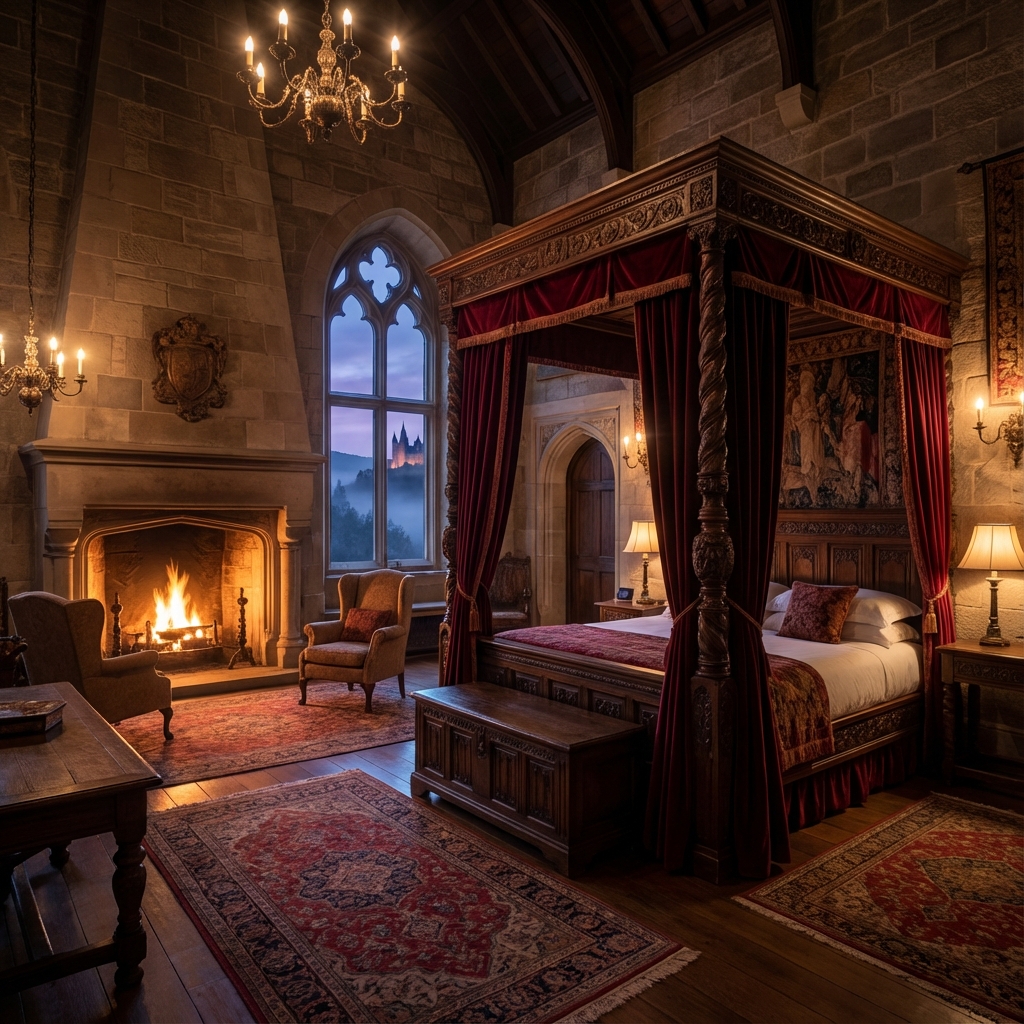
Inside, the contrast between the grim exterior and the elegant interior is striking. The Governor's Residence, located in the north wing, features beautiful 18th-century salons with crystal chandeliers and silk wallpaper. The current County Governor still lives in part of the castle, continuing a tradition that goes back centuries. The southwest tower, known as the Vasa Tower, contains some of the oldest surviving masonry, including the original medieval entrance.
The "Open Art" Exhibitions
In recent years, Örebro Castle has become a canvas for modern art. During the city's biennial "Open Art" festival, the castle often features large-scale, sometimes provocative installations. A giant yellow bunny has leaned against the tower, and colorful sculptures have floated in the moat. This clash of the ancient and the avant-garde keeps the castle relevant and surprising for new generations.
Planning Your Visit
Örebro is located about 200 km west of Stockholm, easily accessible by train.
- Guided Tours: The best way to experience the castle is on a guided tour. " The Vasas' Castle" tour takes you through the royal history, while the "Ghost Walk" (often held in the evenings or near Halloween) explores the spooky legends and dungeons.
- The Lillån Promenade: After visiting the castle, take a walk along the Svartån river. The path offers stunning views of the castle from different angles, perfect for photography.
- Wadköping: Just a short walk from the castle is Wadköping, an open-air museum with wooden buildings from old Örebro. It provides a great context for how the common people lived while the kings sat in the stone castle.
- Accessibility: The castle courtyard is accessible, and there are elevators to some of the exhibition floors, making it relatively friendly for strollers and wheelchairs compared to other medieval sites.
Örebro Castle is a symbol of stability in a changing world. The river flows past it, the city grows around it, but the four towers stand firm, a stone anchor in the middle of Sweden.