The Center of the Universe
For over a century, the Palace of Versailles (Château de Versailles) was the center of the world—or at least, the center of the Western world's culture, fashion, and political power. What began as a humble brick hunting lodge for Louis XIII was transformed by his son, Louis XIV (the Sun King), into the most magnificent palace in Europe. It became a gilded cage for the French nobility, a theater of absolute monarchy, and ultimately, the symbol of the excess that sparked the French Revolution.
With its 2,300 rooms, 67 staircases, and 800 hectares of gardens, Versailles is overwhelming. It was designed to impress, to intimidate, and to proclaim the glory of France. Today, it remains a UNESCO World Heritage site and one of the most visited monuments on the planet.
The Vision of the Sun King
Louis XIV had a clear political motive for building Versailles. He wanted to move the court away from the rebellious mobs of Paris. By forcing the powerful aristocracy to live with him at Versailles—where he could keep an eye on them, and where they would bankrupt themselves on clothes and gambling to please him—he neutralized their power and established himself as the absolute ruler.
Building the palace was a colossal undertaking. It involved draining swamps, moving forests, and diverting rivers to feed the fountains. Thousands of workers died during the construction. The result was a building that had no equal. The 'Grand Siècle' (Great Century) of French art and architecture is perfectly encapsulated here.
Inside the Palace
The visitor route typically takes you through the King's and Queen's State Apartments, the Royal Chapel, and the Hall of Mirrors.
The Hall of Mirrors (Galerie des Glaces)
This is the masterpiece of Versailles. Stretching 73 meters long, it was designed by Jules Hardouin-Mansart to dazzle visitors. Seventeen arched windows overlook the gardens, and opposite them are seventeen arches filled with 357 mirrors. In the 17th century, mirrors were incredibly expensive luxuries. To fill a hall with them was a display of unimaginable wealth. The ceiling is covered in paintings by Charles Le Brun depicting the military victories of Louis XIV.
The hall has witnessed history. It was here that the German Empire was proclaimed in 1871 (a humiliation for France), and here that the Treaty of Versailles was signed in 1919, officially ending World War I.
The King's Bedchamber
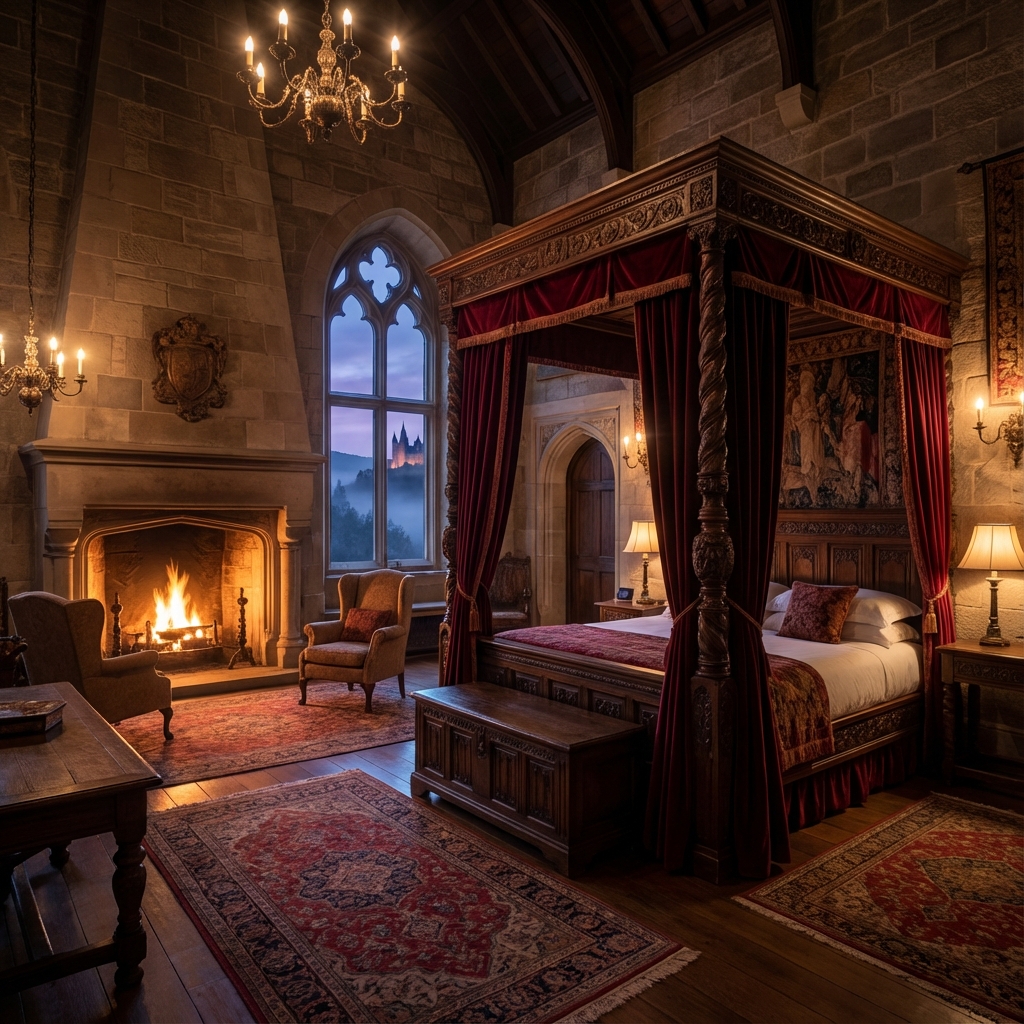
Located in the exact center of the palace, facing the rising sun, is the King's Bedchamber. This was the most important room in the kingdom. The King's famously public 'getting up' (Lever) and 'going to bed' (Coucher) ceremonies took place here, attended by dozens of favored courtiers. To hold the candlestick for the King while he undressed was the highest honor a noble could hope for.
The Royal Opera
Constructed entirely of wood (for acoustics) but painted to look like marble, the Royal Opera is an often-overlooked gem. Inaugurated in 1770 for the wedding of the future Louis XVI and Marie Antoinette, it is a blue-and-gold marvel of technology, with a floor that could be raised effectively transforming the opera house into a ballroom.
The Gardens: Man Over Nature
The gardens of Versailles are as important as the building. Designed by the genius scenery architect André Le Nôtre, they are the supreme example of the 'Jardin à la française' (French formal garden). Everything is symmetrical, geometric, and controlled. It was a demonstration of the King's power not just over men, but over nature itself.
- The Fountains: There are 50 fountains in the gardens. In Louis XIV's time, there wasn't enough water pressure to run them all at once. The fountain-men would whistle to each other to turn them on as the King approached and turn them off as he passed. Today, the 'Musical Fountains Shows' run on weekends in summer, allowing visitors to see them in full glory.
- The Grand Canal: A 1.6km long cross-shaped artificial lake. Louis XIV kept a flotilla of boats here, including gondolas gifted by the Doge of Venice (complete with gondoliers) and a scale model of a warship.
The Estate of Trianon
Attempting to escape the rigid etiquette and constant public scrutiny of the main palace, the kings built smaller, more intimate retreats deep within the park.
The Grand Trianon
Built of pink marble for Louis XIV and his mistress Madame de Montespan, this elegant palace is a masterpiece of harmony. Napoleon also stayed here frequently.
The Petit Trianon and Queen's Hamlet
This is the domain of Marie Antoinette. The Petit Trianon was gifted to her by Louis XVI. Here, no one—not even the King—could enter without her invitation. She redecorated the gardens in the English style and built the Hameau de la Reine (Queen's Hamlet), a rustic model village complete with a farm, dairy, and mill. Here, the Queen and her ladies would dress in simple white muslin dresses and play at being milkmaids, far from the suffocating rituals of the court. It is a charming, if poignant, place, highlighting the disconnect between the monarchy and the starving peasants of France.
Visitor Information
Versailles is located about 20km southwest of Paris.
- Getting There: Take the RER C train to 'Versailles Château Rive Gauche' station. It is a 10-minute walk to the palace gates.
- Tickets: The 'Passport' ticket gives access to the whole estate (Palace, Trianons, Gardens). Booking a time slot online is mandatory.
- Crowds: Versailles is famously crowded. The Hall of Mirrors can be a crush. The best advice is to arrive later in the day (after 3 PM) when the tour groups leave, or head straight to the Trianons (which open at 12 PM) and do the main palace late.
- The Park: Entrance to the Park (the wooded areas beyond the formal gardens) is free for pedestrians and cyclists. You can rent bikes or golf carts to explore the vast distances.
Frequently Asked Questions
- Was it smelly?
- Historically, yes. With thousands of people and few toilets, 18th-century Versailles was notorious for its stench. Today, thankfully, it smells only of polished wood and fresh flowers.
- How much walking is involved?
- A lot. A full visit involves walking several kilometers, especially if you explore the gardens. Wear comfortable shoes.
- Why is there no furniture in some rooms?
- The vast majority of the original furniture was auctioned off during the French Revolution. The curators have spent decades buying back original pieces or finding equivalents, but some rooms remain sparsely furnished compared to 1789.