A Monument to Gold and Faith
The National Palace of Mafra (Palácio Nacional de Mafra) is not just a building; it is a statement of absolute power and limitless wealth. Located about 28 kilometers from Lisbon, this colossal Baroque complex is the Portuguese equivalent of Versailles or El Escorial. It dominates the small town of Mafra, its twin bell towers visible for miles around. Built by King João V in the 18th century, it stands as a permanent reminder of the age when gold and diamonds flowed from Brazil into the coffers of the Portuguese Empire.
The numbers alone are staggering: the complex covers nearly four hectares (40,000 square meters), has 1,200 rooms, more than 4,700 doors and windows, and 156 staircases. It houses a royal palace, a basilica, and a Franciscan convent that once accommodated over 300 friars. In 2019, it was rightly inscribed as a UNESCO World Heritage site.
The King's Vow
The origin of Mafra lies in a promise. In 1711, King João V, having been married to Queen Maria Anna of Austria for three years without producing an heir, made a vow to God. He promised to build a convent for Franciscan friars if he was granted a child. A daughter, Princess Barbara of Portugal, was born later that year, and the King kept his word.
Originally, the plan was for a modest convent for 13 friars. But as vast quantities of gold began to arrive from the colony of Brazil, the King's ambition swelled. He appointed the German architect Johann Friedrich Ludwig (known in Portugal as João Frederico Ludovice) to design something magnificent. The project expanded into a massive royal residence and basilica, employing over 50,000 workers at its peak. An entire "village" was built just to house the construction crew.
The Basilica: Six Organs and Two Carillons
At the center of the 220-meter-long façade lies the Basilica of Our Lady and St. Anthony. It is a masterpiece of Baroque engineering, built with limestone from the region (pero-pinheiro) and marble from Sintra, Arrábida, and Estremoz. The interior is a riot of pink and white marble, with an imposing dome that floods the nave with light.
But the true acoustic wonders of the Basilica are its organs. Uniquely, the church houses a set of six historical organs, all built at the same time (between 1806 and 1807) and designed to play together. When all six are played simultaneously, the sound is overwhelming, a physical force that shakes the air.
Flanking the Basilica are the two bell towers, which house the world's largest collection of carillons. Cast in Antwerp and Liège, the 98 bells weigh over 200 tons combined. They are so sophisticated that they can be played by a keyboard or mechanically. On Sundays, the sound of the bells ringing out over the countryside is a tradition that has lasted for centuries.
The Library: A Cathedral of Books
While the gold and marble impress, the soul of Mafra is its Library (Biblioteca). Located on the fourth floor of the east wing, it is widely considered one of the most beautiful libraries in the world. The hall is 88 meters long, with a floor of rose, grey, and white marble, and wooden Rococo bookshelves that reach the ceiling.
The library holds over 36,000 leather-bound volumes, ranging from the 14th to the 19th centuries. The collection includes rare incunabula (books printed before 1501) and a first edition of the Os Lusíadas by Camões. But the library's most famous residents are not the books, but the bats. A colony of small bats lives in the library, sleeping behind the bookcases during the day and coming out at night to hunt insects. The librarians welcome them, as they protect the ancient pages from silverfish and other pests. It is a perfect, natural symbiotic relationship.
The Palace: The King and Queen's Apartments
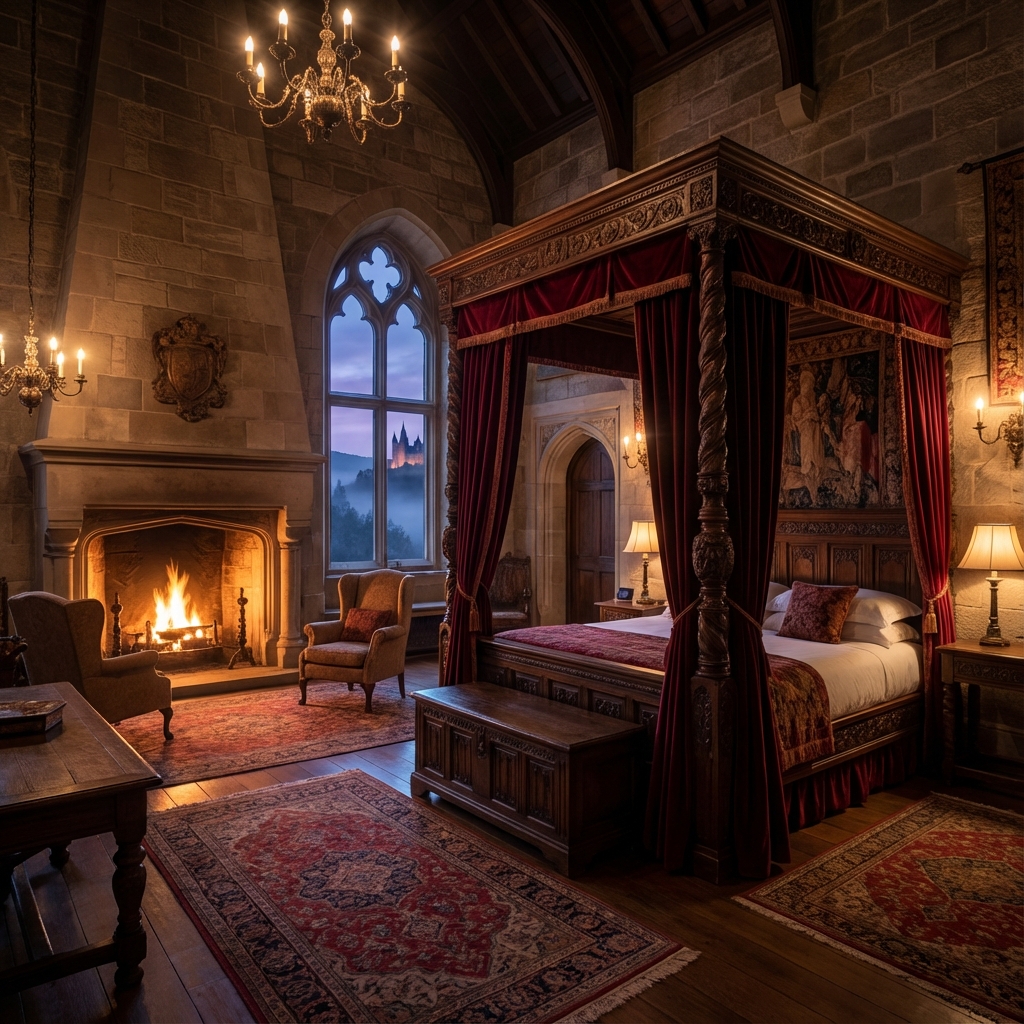
The Royal Palace occupies the two turrets at the ends of the façade and the connecting galleries. The North Turret was the King's apartment, while the South Turret belonged to the Queen. They are separated by a long gallery—so long (232 meters) that it is said the King used it to exercise when it rained. When the King wanted to visit the Queen (or vice versa), the arrival was announced by a trumpet blast that echoed down the hallway.
The rooms are furnished in styles ranging from Baroque to Empire, reflecting the tastes of the various monarchs who used the palace as a hunting lodge. Highlights include the Hunting Trophy Room (Sala dos Troféus), where furniture is made from deer antlers and the skins of boars hunted in the nearby woods, and the Throne Room with its magnificent ceiling frescoes.
A Literary Legend
The construction of the palace is the subject of one of Portugal's most famous novels, Memorial do Convento (translated as *Baltasar and Blimunda*) by Nobel Prize winner José Saramago. The book tells the story of the common people—the laborers and stone masons—who built this monument to royal vanity. It is a poignant reminder of the human cost behind the gold and marble.
The Hunting Park (Tapada Nacional)
Behind the palace lies the Tapada Nacional de Mafra, a vast enclosed park created in 1747 as a royal hunting ground. Covering over 800 hectares, it is still home to wild boar, fallow deer, red deer, and foxes. It was here that the Portuguese court indulged in their favorite pastime. Today, it is a protected nature reserve where visitors can hike, bike, or take a train tour to see the animals in their natural habitat.
Planning Your Visit
Mafra is an easy day trip from Lisbon, accessible by bus or car.
- The Library: Access to the library is restricted to the doorway to preserve the environment, but the view down the long hall is stunning.
- The Carillon Concerts: Check the schedule for organ and carillon concerts. Hearing the six organs play together is a once-in-a-lifetime experience.
- The Convent: Do not miss the Infirmary and the Pharmacy of the convent, which still contain the original 18th-century medical instruments and ceramic jars for herbs and potions.
- Combined Ticket: You can often buy a combined ticket that allows entry to the Palace and the nearby Palace of Queluz or Sintra palaces.
The Palácio Nacional de Mafra is a place of extremes. It is a monument to a vow kept, a fortune spent, and an empire that spanned the globe. In its silent library and thundering bells, the spirit of 18th-century Portugal lives on.