Christian IV's Summer House
In the busy heart of modern Copenhagen lies a fairytale castle that seems to have been dropped from another era. Rosenborg Castle (Rosenborg Slot) was built by King Christian IV, Denmark's famous 'builder king,' in the early 17th century. Originally intended as a modest summer house outside the cramped city walls, Christian IV loved the project so much that he kept expanding it between 1606 and 1624 until it became the magnificent Dutch Renaissance palace we see today. Designed by architects Bertel Lange and Hans van Steenwinckel the Younger, its towering spires, red brick masonry, and sandstone ornamentation remain a beloved symbol of the Danish monarchy. It was one of Christian IV's favorite residences, and he loved it so much that he commanded to be brought here to die in 1648.
The King's Private World
Unlike the grand ceremonial palaces of Christiansborg or Amalienborg, Rosenborg offers an intimate glimpse into the private lives of the kings. It was used as a royal residence until 1710, and the interiors have been remarkably preserved. Walking through the rooms is like traveling through time. You can see Christian IV's private toilet (with a surprisingly modern flush mechanism for the 1600s), his writing desk, and even the blood-stained clothing he wore during the naval Battle of Colberger Heide in 1644, where he lost an eye. The display of these bloodied garments was a calculated move to show his sacrifice for the nation, solidifying his image as a warrior king.
The Knights' Hall and the Silver Lions
The crowning glory of the castle is the Knights' Hall (Riddersalen) on the third floor. Originally a ballroom, it was later used for banquets and audiences. The hall is dominated by the Coronation Thrones. The King's Throne is a masterpiece of absolutist propaganda, made of narwhal tusks (which were believed to be unicorn horns) and guarded by three life-size silver lions. The lions—named Dot, Dan, and Od—are said to come alive to protect the monarch. The ceiling is adorned with the Danish coat of arms, surrounded by the Orders of the Elephant and the Dannebrog. The tapestries on the walls depict Christian V's victories in the Scanian War (1675–1679), reminding visitors of Denmark's past military might against Sweden.
The Coronation Chair deserves special mention. It was commissioned by Frederick III and made between 1662 and 1671. It is constructed entirely of narwhal tusks, a material that was worth its weight in gold at the time because it was believed to come from the mythical unicorn. The chair was used at the coronation of all Danish kings from Christian V to Christian VIII. The association with the unicorn was intentional; it symbolized that the King was Christ's vicar on Earth, as the unicorn was a symbol of Christ. Standing guard around it are the three silver lions, whose tails are raised or lowered depending on the political climate of the time (a playful myth, but they are physically movable).
The Treasury: Crown Jewels and Ancient Wine
Deep in the specially fortified basement lies Denmark's greatest treasure: the Crown Jewels and the Royal Regalia. The collection is one of the finest in Europe and includes:
- The Crown of Christian IV (1596): An open crown of gold, enamel, and table-cut stones, considered one of the finest Renaissance crowns in the world.
- The Crown of Christian V (1670): A closed 'absolute' crown used for the anointing of all subsequent absolute monarchs.
- The Coronation Carpet: A magnificent Persian Isfahan carpet woven in silk, gold, and silver (c. 1650). It is so precious that it is only used for coronations (and now, royal anointings).
- Rosenborg Wine: The cellar also houses a collection of Rhine wine dating back to the 1590s. This "Rosenborg Wine" is still served by the Queen at the annual New Year's banquet, making it likely the oldest drinkable wine in the world.
The Glass Cabinet and Flora Danica
Another unique feature is the Glass Cabinet, created in 1714. It houses a vast collection of glass and porcelain, including Venetian glass given as gifts to the Danish kings. The way the light hits the hundreds of glass pieces is dazzling, showcasing the king's wealth and taste. It was designed to mimic the 'Porcelain Cabinets' popular in other European courts but with a focus on glass, which was a rare luxury. The castle also holds one of the finest collections of Flora Danica porcelain, a famous Danish dinner service hand-painted with botanical accuracy.
The Winter Room
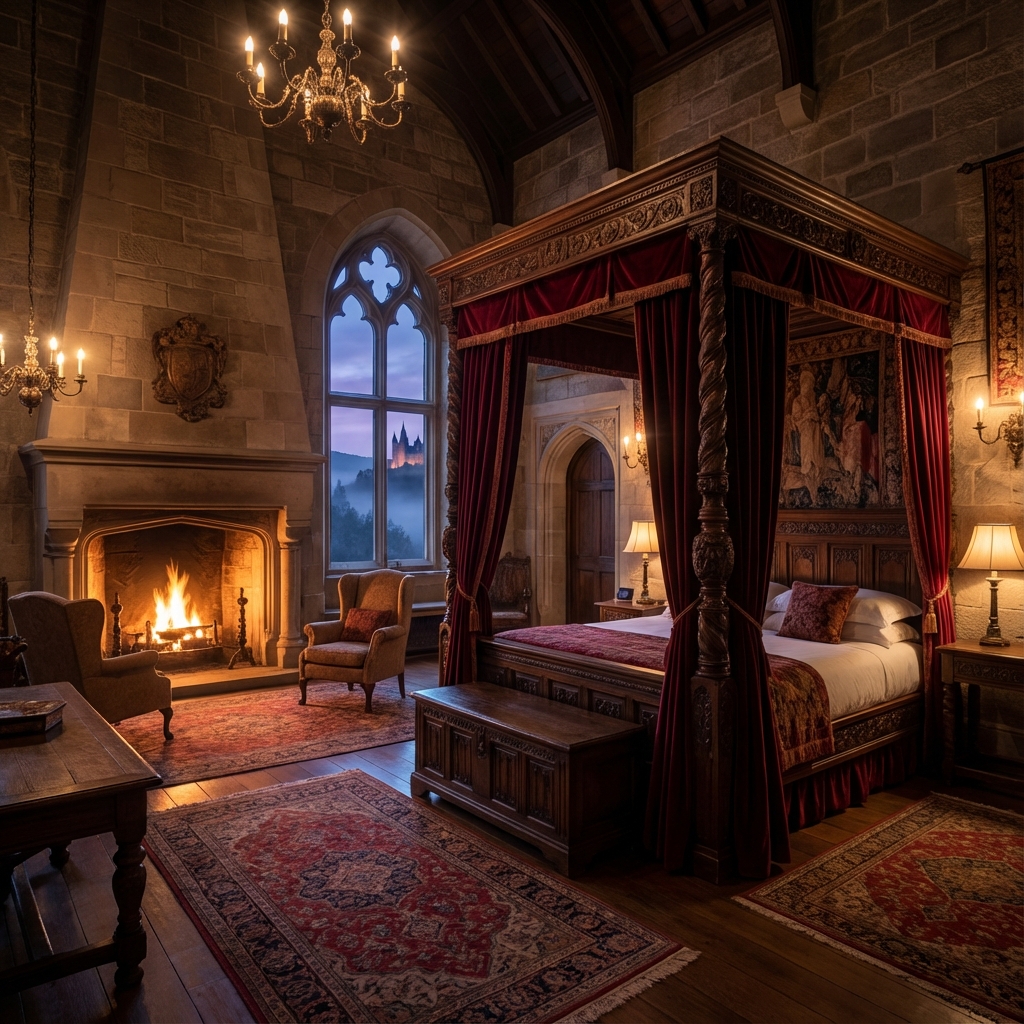
One of the most atmospheric rooms is the Winter Room, located on the ground floor. It was Christian IV's favorite living room. The dark wood paneling is inlaid with paintings purchased by the King in Antwerp, creating a cozy and rich environment. A cleverly concealed speaking tube allowed the King to give orders to the wine cellar below without having to summon a servant, ensuring his private conversations remained private. It is small details like this that make Rosenborg feel more like a home than a museum.
The King's Garden
Rosenborg is set within The King's Garden (Kongens Have), the oldest and most visited park in Copenhagen. Designed in the Renaissance style, it features rose gardens, long avenues of lime trees, and the striking Hercules Pavilion. Located at the end of the Cavalier's Walk (Kavalergangen), this pavilion features a statue of Hercules flanked by Orpheus and Eurydice, created by Giovanni Baratta. In the summer, the garden is the city's living room, filled with locals picnicking and enjoying the view of the castle towers rising above the trees. The view of the castle from the rose garden is particularly striking and offers one of the best photo opportunities in the city.
The garden is not just about the long avenues. The Rose Garden is a sensory delight, especially in July when the flowers are in full bloom. It was a personal project of Queen Ingrid, who loved roses. Today, it features historical varieties that would have been known in the Renaissance, filling the air with a scent that is far more complex than modern commercial roses. It is a peaceful spot to sit and admire the copper spires of the castle glinting in the sun.
Visitor Information
Rosenborg Castle is a must-see in Copenhagen. Due to its small rooms and high popularity, entry is by timed ticket only, and it is highly recommended to book online in advance to avoid disappointment. Large bags must be stored in lockers. Combining a visit to the castle's dark, glittering treasury with a sunny walk in the King's Garden is the perfect Copenhagen experience. The castle is located within walking distance of Nørreport Station.