Introduction
Rising from the wooded slopes of the Siebengebirge (Seven Mountains) and gazing out over the Rhine River, Schloss Drachenburg looks like a fairytale dream. With its soaring spires, decorative turrets, and golden finials glinting in the sun, it captures the imagination. However, unlike the ancient ruins of Burg Drachenfels further up the hill, Drachenburg is a relatively modern creation. Built in just two years between 1882 and 1884, it is a prime example of Historicism—a style that mixed elements from various architectural eras (Gothic, Renaissance, Romanesque) to create idealized, romanticized structures.
Commissioned by Baron Stephan von Sarter, a wealthy stockbroker who rose from humble beginnings as the son of a local innkeeper, the castle was intended as a prestigious residence to signal his entry into the nobility. Ironically, Sarter never lived there, choosing to remain in Paris where he had made his fortune. Today, the castle stands as a monument to the Gründerzeit era ('Founders' Period') and the enduring romantic allure of the Rhine.
The Legend of the Drachenfels
The location is steeped in myth. The Drachenfels ('Dragon's Rock') is famously associated with the Nibelungen saga. Legend says that the hero Siegfried slew the dragon Fafnir in a cave on this very hill, bathing in its blood to become invulnerable (except for that one spot on his shoulder). While Drachenburg itself is not a medieval site, its creators fully embraced these legends. The architecture and decor pay homage to these Germanic myths, with murals depicting scenes from the Nibelungenlied adorning the walls, grounding the modern villa in ancient folklore.
Architecture: A Dream in Stone
Schloss Drachenburg is a 'Gesamtkunstwerk'—a complete work of art where architecture, interior design, and garden planning merge. The exterior combines neo-Gothic and neo-Renaissance styles, designed by architects Leo von Abbema and Bernhard Tüshaus. It was built to look impressive from the river below, contributing to the scenic beauty of the Rhine Gorge, a UNESCO World Heritage site.
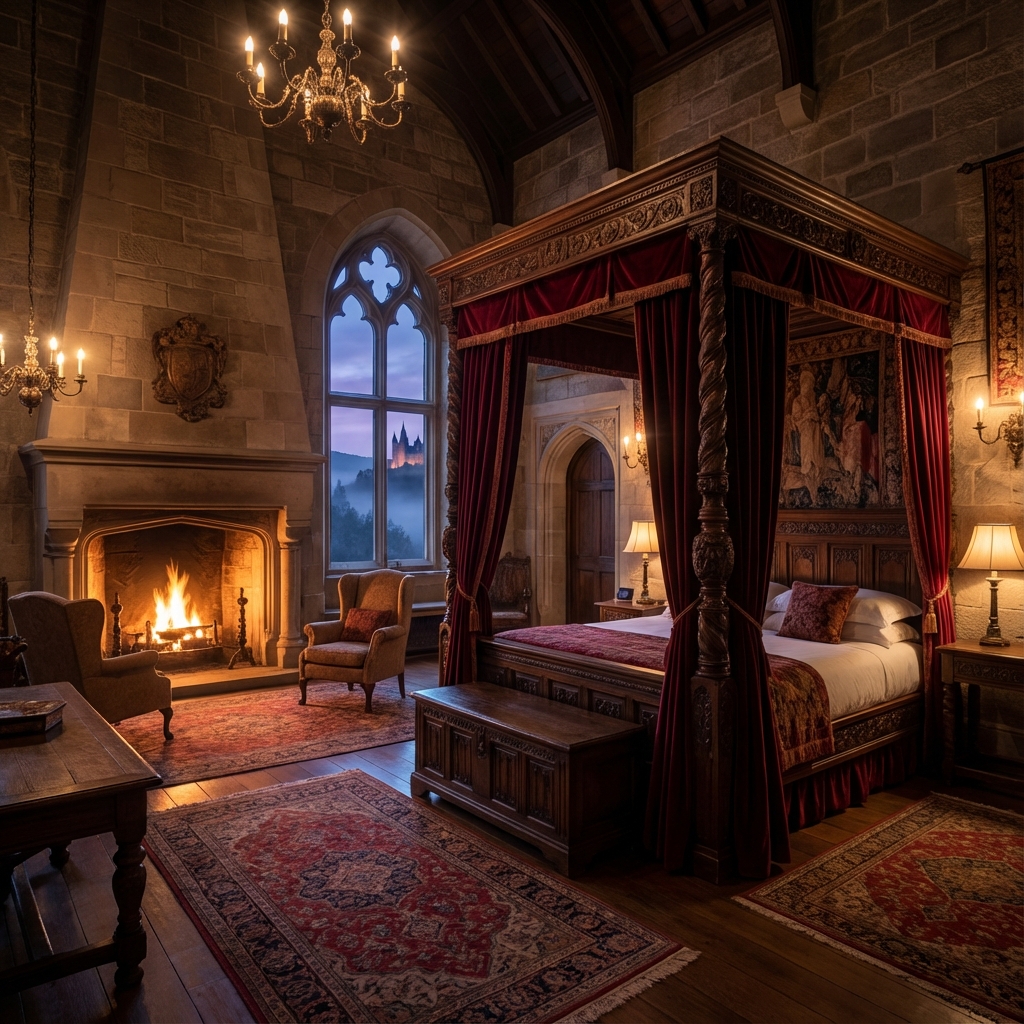
The interiors are equally lavish, showcasing the wealth and taste of the late 19th century. The restoration has returned them to their original splendor, allowing visitors to experience the lifestyle of the era.
The Main Staircase and Art Gallery
The heart of the castle is the Main Staircase, a grand, sweeping structure illuminated by magnificent stained glass windows. These windows portray historical figures and Holy Roman Emperors, emphasizing a connection to the imperial history of Germany and lending the villa an air of legitimacy. The Art Gallery, leading off the staircase, was designed to display Sarter's collection of paintings and sculptures, functioning as a private museum.
The Nibelungen Room
Perhaps the most thematic room in the castle is the Nibelungen Room. It serves as a private drawing room or bar, but its decoration is purely legendary. The walls are covered in large-scale murals depicting key scenes from the saga of Siegfried and the dragon. This room directly links the 'modern' castle to the ancient folklore of the hill it stands on, blurring the lines between history and myth.
The Dining Hall and Music Room
The Dining Hall is a wood-paneled masterpiece. It features a magnificent fireplace and paintings celebrating hospitality and hunting, the traditional pastimes of the nobility. Adjacent is the Music Room, a space designed for entertainment and culture, featuring a neo-Gothic organ (added later but fitting the style) and delicate stucco work. These rooms were designed for hosting grand social events, which Sarter, in his absence, never actually hosted.
A Chequered History: From Villa to Ruin
After Sarter's death in 1902, the castle underwent numerous changes in ownership and purpose, reflecting the turbulent history of 20th-century Germany. It served as a summer resort for wealthy travelers, a Christian boys' boarding school, and eventually a Nazi elite school (Adolf Hitler School). During World War II, the castle was heavily damaged by artillery fire, and the art collection was largely looted.
By the 1960s, the castle was on the verge of demolition. It was considered an architectural 'folly' of little value, and there were plans to replace it with a modern office block. Fortunately, a private eccentric, Paul Spinat, saved it in the 1970s. He opened it to the public and began some eccentric restorations (including adding a fake organ). In 1986, the State of North Rhine-Westphalia took over and began a massive, decades-long restoration project.
Restoration to Glory
The restoration of Drachenburg is considered one of the most significant in Germany. Using original plans and photographs, the castle was returned to its 1884 glory. This included the reconstruction of the missing North Tower, which had been destroyed in the war. The interiors were restored to their original color schemes, and lost furniture was reacquired or recreated. Today, it stands as one of the best-preserved examples of late 19th-century residential architecture in Germany.
The Park and Gardens
The castle is surrounded by a beautiful park, designed to transition naturally into the surrounding forest. The park features exotic trees, rhododendrons, and immaculate lawns. It was designed to offer carefully framed views of the Rhine and the castle itself. Walking through the park, visitors can appreciate the romantic vision of nature that was popular in the 19th century. The Venus Terrace offers a particularly stunning viewpoint, overlooking the river towards Bonn.
Visiting Drachenburg
Today, Schloss Drachenburg is one of the most popular attractions in the Rhineland. Visitors can reach the castle by hiking up the hill through the Nightingale Valley or taking the historic Drachenfelsbahn, the oldest rack railway in Germany (operating since 1883). The ride up offers spectacular views and adds to the charm of the visit.
Throughout the year, the castle hosts events such as the 'Castle Illumination' (Schlossleuchten) in spring, where the building is lit up in bold colors, and a magical Christmas market. Whether for the architecture, the history, or the views of the Rhine, a visit to Schloss Drachenburg is a window onto the romantic soul of Germany.
The Legacy of Rhine Romanticism
Schloss Drachenburg stands today not just as a luxurious 19th-century villa, but as the ultimate, tangible manifestation of the "Rhine Romanticism" movement. This powerful cultural wave, which swept across Europe in the 1800s, idealized the dramatic landscapes, medieval ruins, and rich folklore of the Rhine Valley. Writers, poets, and painters from Lord Byron to William Turner flocked to the region, seeking inspiration in the mist-shrouded crags and ancient castles. Drachenburg was built to physically embody this very spirit, weaving the aesthetic of a mythical past into a modern aristocratic retreat. The castle's continued preservation serves as a vital educational tool, allowing modern visitors to step directly into the mindset of the Gründerzeit era. The meticulously restored interiors and the curated scenery of the surrounding park offer a profound lesson in how the 19th-century elite sought to legitimize their newfound wealth by connecting themselves to romanticized, ancient German legends. By exploring Drachenburg, tourists are not merely looking at a building; they are experiencing a perfectly preserved cultural dream, a monument to a time when mythology and modern ambition were beautifully intertwined on the banks of the Rhine.