The Neuschwanstein of the North
Schwerin Castle (Schweriner Schloss) sits on its own island in Lake Schwerin, connected to the mainland by a single bridge. It is one of the most significant and wildly romantic examples of Historicism in Europe. Often called the "Neuschwanstein of the North," it shares that castle's fairytale quality, with a forest of towers, cupolas, and chimneys reflecting in the water. For centuries, it was the residence of the Dukes and Grand Dukes of Mecklenburg-Schwerin. Today, it serves a dual purpose: it is a museum of royal life, but also the seat of the State Parliament (Landtag) of Mecklenburg-Vorpommern, making it a unique mix of modern democracy and ducal splendor.
With 653 rooms, it is one of the largest palaces in the region. The design was heavily influenced by the French Renaissance châteaux of the Loire Valley (particularly Chambord), but interpreted through a 19th-century German lens.
History: A Thousand Years of Fortification
The site has been fortified for over a thousand years. The first record from 965 AD describes a Slavic fortress built by the Obotrites on this very island. In 1160, Henry the Lion captured the fort, establishing German rule and founding the city of Schwerin. Over the centuries, the castle grew from a wooden fort into a brick gothic stronghold and then a Renaissance palace.
However, the castle we see today is largely the work of Grand Duke Friedrich Franz II. Between 1845 and 1857, he hired the renowned architects Georg Adolf Demmler and Friedrich August Stüler to completely rebuild the castle. They unified the disparate buildings into a single, cohesive romantic masterpiece. A fire in 1913 destroyed the Golden Hall, but much of the rest survived the wars of the 20th century. After the monarchy fell in 1918, the castle became a museum and later a college for kindergarten teachers during the GDR era. Since 1990, it has regained its political importance as the seat of the state government.
Inside the Castle: Ducal Splendor
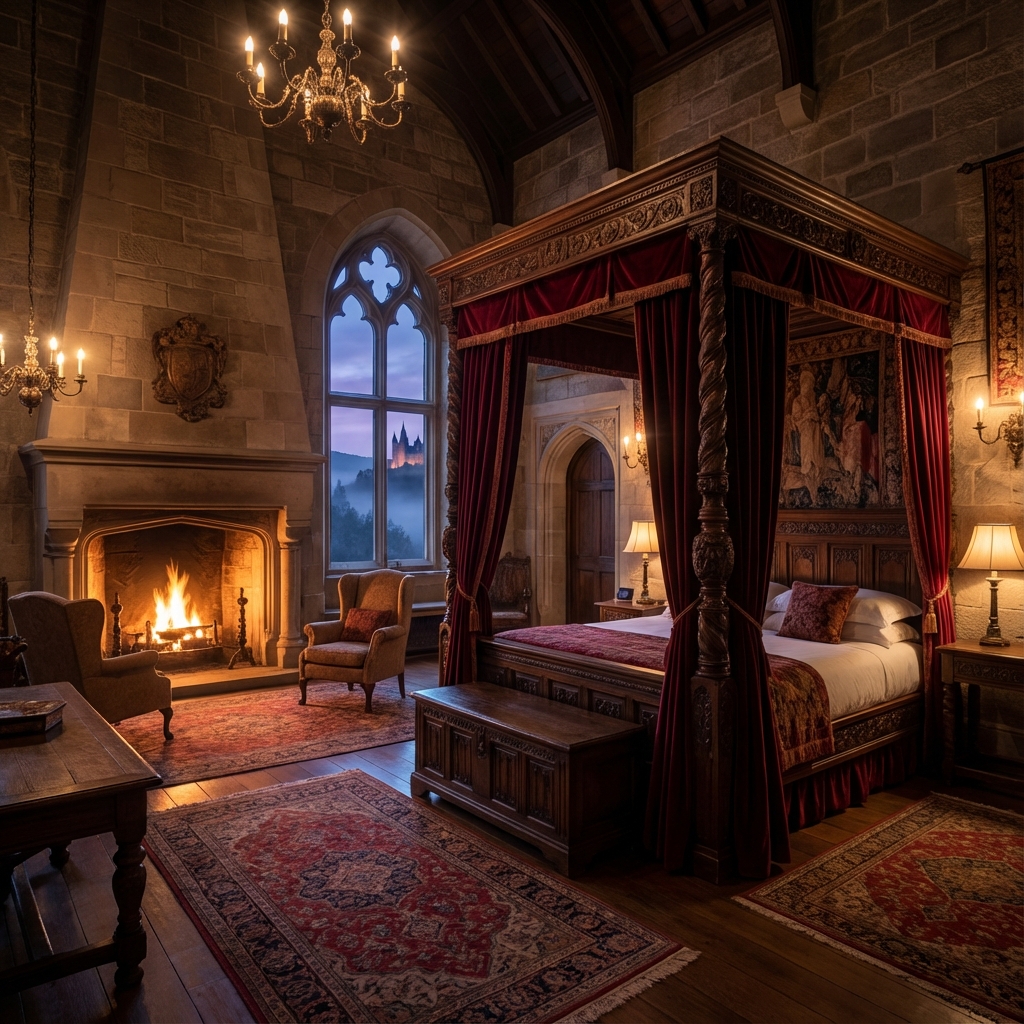
The interior reflects the immense wealth and taste of the 19th-century Grand Duchy. The **Throne Room** is the centerpiece, a hall of stunning pomp designed to assert the power of the dynasty. It features columns of Carrara marble, gilded cast-iron doors, and heavy red velvet drapery. Above the throne, three angels hold the crown of the Grand Duchy.
The **Ancestral Gallery** is another highlight, displaying life-sized portraits of the Mecklenburg rulers, tracing the family lineage back to the founder of the dynasty in the Middle Ages. The sheer length of this lineage was a point of immense pride. The **Dining Room**, **Library**, and **Smoking Room** feature intricate parquet floors, with different geometric patterns in every room made from rare woods. The craftsmanship is exquisite, with every surface decorated with stucco, wood carving, or gold leaf.
The Petermännchen: The Castle's Little Guardian
Schwerin is famous for its resident ghost, the **Petermännchen** (Little Peterman). Legend describes him not as a terrifying specter, but as a small man, no more than a few feet high, dressed in 17th-century cavalier clothes. Unlike many ghosts, he is considered a benevolent protector of the castle.
Stories say he wakes up sleeping guards to ensure they do their duty and punishes thieves or those who disrespect the castle. During the Thirty Years' War, he is said to have driven away invading soldiers by making terrifying noises. He is a shape-shifter and a master of keys, able to open any door in the palace. Today, he is the official mascot of the city, and you can find his image on everything from beer bottles to souvenirs.
The Gardens: An Island Paradise
The castle is surrounded by the **Burggarten** (Castle Garden) on the island, which transforms the fortress into a garden palace. It includes an Orangery, constructed of cast iron and glass, which is a marvel of 19th-century engineering. It now houses a delightful café where visitors can enjoy coffee and cake with a view of the lake. Near the Orangery is a romantic grotto built from large boulders, a popular spot for photos.
A bridge connects the island to the larger **Schlossgarten** (Palace Garden) on the mainland. This is a baroque park designed by the famous scenery architect Peter Joseph Lenné. It features strict geometric canals, statues, and long avenues of lime trees arranged to direct the view back to the castle, framing it perfectly for the observer. The park is a favorite place for locals to jog, walk, or simply sit and admire the view.
Dining and Events
In addition to the Orangery café, the castle is home to the elegant **Schlossrestaurant**, located in the historic royal kitchen wing. It offers fine dining with a focus on regional Mecklenburg specialties, served in a setting that retains the castle's historic charm. The castle also hosts numerous concerts and events throughout the year, including the famous Open-Air Opera festival (Schlossfestspiele), where performances take place in the Old Garden square with the illuminated castle as a spectacular backdrop.
A Working Parliament in a Royal Palace
Schwerin Castle's status as the seat of the Mecklenburg-Vorpommern Landtag (state parliament) makes it one of the most extraordinary working government buildings in the world. Every day that the parliament is in session, elected representatives debate regional legislation in rooms that were designed for dukes and grand dukes. The contrast is deliberate and meaningful: the state government chose to occupy the ducal palace after reunification in 1990 as a symbolic statement that the democratic institutions of unified Germany were the rightful heirs to the region's historic center of power.
This dual function also drives one of Europe's most unusual UNESCO World Heritage nominations. Schwerin Castle is the centerpiece of a proposed nomination for the Residences of the Mecklenburg Dukes, a serial nomination that includes several palace buildings across the state. The nomination argues not only for the architectural significance of the Historicism style—the 19th-century romantic interpretation of Renaissance and Gothic forms—but for the unique way in which these historic spaces have been continuously inhabited and repurposed rather than frozen as museums. A castle that is still making laws is, in UNESCO's language, an outstanding example of "living heritage."
Visiting Schwerin
Schwerin is the capital of Mecklenburg-Vorpommern and is easily reachable by train from Hamburg (about 1 hour) or Berlin (about 2 hours). The castle museum is open Tuesday to Sunday (April-October: 10am-6pm; November-March: 10am-5pm). Since it is a working parliament, some areas may occasionally be closed for sessions, but the main museum rooms are generally accessible.
For the best view, take a boat tour on Lake Schwerin. Seeing the golden towers of the castle rising from the water, especially at sunset, is an unforgettable experience.