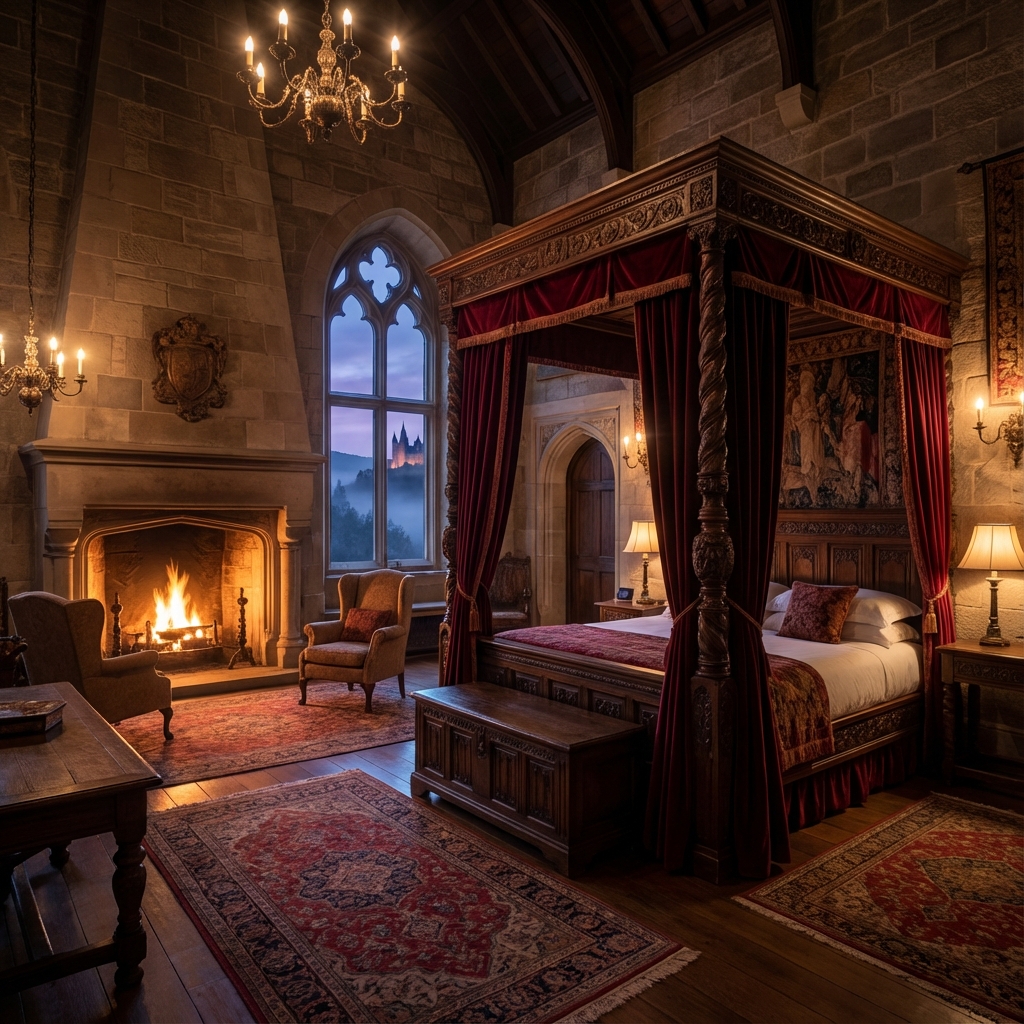
The Tower of London is officially known as Her Majesty's Royal Palace and Fortress of the Tower of London. Founded towards the end of 1066 as part of the Norman Conquest of England, the White Tower, which gives the entire castle its name, was built by William the Conqueror in 1078. It was a resented symbol of oppression inflicted upon London by the new ruling elite. Today, it is a UNESCO World Heritage site and one of the world's most famous fortresses.
The White Tower
The heart of the complex is the White Tower, a massive keep built of stone imported from Caen in France. It was designed to awe and subdue the unruly citizens of London. Inside, the Chapel of St John the Evangelist is a beautiful example of early Norman architecture. The tower now houses the Royal Armouries collection, including the armor of Henry VIII (which dramatically shows his expanding waistline over the years).
The Crown Jewels
The Tower is the home of the Crown Jewels, a priceless collection of 23,578 gemstones that are still used in royal ceremonies. The collection includes:
- St Edward's Crown: The solid gold crown used only at the moment of coronation.
- The Imperial State Crown: Worn by the monarch at the State Opening of Parliament, featuring the Black Prince's Ruby and the Cullinan II diamond.
- The Koh-i-Noor: One of the most famous and controversial diamonds in the world, set in the Crown of Queen Elizabeth the Queen Mother.
The Ravens
Legend says that "If the ravens leave the Tower, the kingdom will fall." To prevent this catastrophe, at least six ravens are kept at the Tower at all times (currently there are seven, plus a spare!). These intelligent birds are cared for by the Ravenmaster and are free to roam the grounds during the day. Their wings are clipped slightly to discourage them from flying too far.
Prison and Execution
For centuries, the Tower was synonymous with imprisonment and death. High-status prisoners were held here, often in relative comfort, before their execution.
- Anne Boleyn: The second wife of Henry VIII was executed by a French swordsman on Tower Green in 1536. Her body is buried in the Chapel Royal of St Peter ad Vincula.
- The Princes in the Tower: One of history's greatest mysteries involves the disappearance of the young Edward V and his brother Richard in 1483. They were housed in the Tower by their uncle, Richard III, and never seen again. Two skeletons found under a staircase in 1674 are believed to be theirs.
- The Traitors' Gate: Many prisoners entered the Tower by water through this notorious gate beneath St Thomas's Tower.
The Yeoman Warders (Beefeaters)
The Tower is guarded by the Yeoman Warders, popularly known as Beefeaters. They are all retired military personnel with at least 22 years of service and an exemplary record. They live within the Tower walls with their families. Their guided tours are legendary for their mix of history, humor, and gruesomeness.
The Royal Menagerie
For 600 years, the Tower was home to a royal zoo. Kings were given exotic animals as gifts, including lions, polar bears, elephants, and monkeys. The animals were kept in the Lion Tower. The collection was moved to Regent's Park in the 1830s to become the London Zoo. Today, wire sculptures of these animals can be seen around the grounds.
One of the most famous stories is that of the Polar Bear, a gift from the King of Norway to Henry III in 1252. The bear was allowed to swim in the River Thames attached to a long chain so it could catch fish for its dinner. There was also an African elephant given by Louis IX of France, which sadly died after only two years, likely due to the cold climate and a diet of red wine (which the keepers thought was good for it).
The Royal Mint
For over 500 years, the Tower of London was also the site of the Royal Mint. From the reign of Edward I until 1810, the majority of the nation's coins were struck here in a dedicated area known as Mint Street. Working conditions were dangerous and noisy, filled with toxic fumes and the risk of losing fingers in the coin presses. Isaac Newton even served as Warden of the Mint here, where he successfully hunted down counterfeiters.
The Great Heist of Colonel Blood
In 1671, an Irish adventurer named Colonel Thomas Blood attempted the most audacious heist in British history: stealing the Crown Jewels. Disguised as a parson, he befriended the Keeper of the Jewels, Talbot Edwards. One day, he and his accomplices attacked Edwards, bound him, and began stuffing the jewels into their pockets. They flattened St Edward's Crown with a mallet to make it fit under a cloak and filed the Sceptre in half.
They were caught just as they were escaping. Remarkably, King Charles II was so amused by Blood's daring and charm that instead of executing him, he pardoned him and gave him land in Ireland. It remains one of the few times someone attacked the Crown and profited from it.
The Ceremony of the Keys
Every night at exactly 9:53 pm, the Ceremony of the Keys takes place. It is the traditional locking up of the Tower of London and has been performed without fail for over 700 years. The Chief Yeoman Warder, accompanied by an escort of soldiers, locks the main gates. A sentry challenges them: "Halt! Who comes there?" "The Keys." "Whose Keys?" "King Charles's Keys." It is the oldest military ceremony in the world.
Visitor Tips
- The Crown Jewels Queue: This is the most popular exhibit. Go there first thing in the morning to avoid long lines.
- Take a Beefeater Tour: The tours start every 30 minutes near the entrance. They are included in the ticket price and are the best way to learn the bloody history of the Tower.
- Allow Time: The Tower complex is large. You need at least 3 hours to see the main sights.
Frequently Asked Questions
- Is it haunted?
- The Tower is said to be one of the most haunted places in the UK. The ghost of Anne Boleyn has been reported walking around the White Tower carrying her head under her arm.
- Can I see the Ceremony of the Keys?
- Yes, but tickets are extremely limited and must be booked online at least a year in advance.