The Stone Guardian of the Aura River
Standing sentinel at the mouth of the Aura River, Turku Castle (Turun linna) is more than just a fortification; it is the granite bedrock upon which much of Finnish history is built. As one of the oldest buildings in Finland, its gray stone walls have witnessed over 700 years of sieges, royal intrigues, fires, and festivities. From its humble beginnings as a military camp to its golden age as a Renaissance palace, and later its decline into a prison and warehouse, the castle's story mirrors the nation's own trip.
Today, it is the most visited museum in Finland, a labyrinthine complex where visitors can walk through medieval dungeons, movement in Renaissance ballrooms, and explore the comprehensive exhibitions of the Turku Historical Museum. It is a place where the past is not just remembered; it is palpable.
From Castrum to Castle
Construction of the castle began around 1280, shortly after Finland was incorporated into the Kingdom of Sweden. Originally, it was a simple fortified camp (castrum) built on an island to protect the burgeoning trading town of Turku and to serve as the administrative center for the Swedish crown in "Eastland." Over the next two centuries, the open camp was enclosed and built upwards, transforming into the massive stone keep we see today.
The medieval castle was a grim place, designed purely for defense and administration. It housed the soldiers, the bailiff, and the stores of grain and taxes collected from the peasantry. The "Main Castle" (the tall, central part) retains this austere, military character, with its thick walls, narrow winding stairs, and defensive galleries.
The Golden Age: Duke John and Catherine Jagiellon
The castle's transformation from a fortress into a palace occurred in the mid-16th century, during the time of Duke John (later King John III of Sweden). In 1556, King Gustav Vasa appointed his son John as the Duke of Finland. John settled in Turku and, crucially, married the Polish princess Catherine Jagiellon.
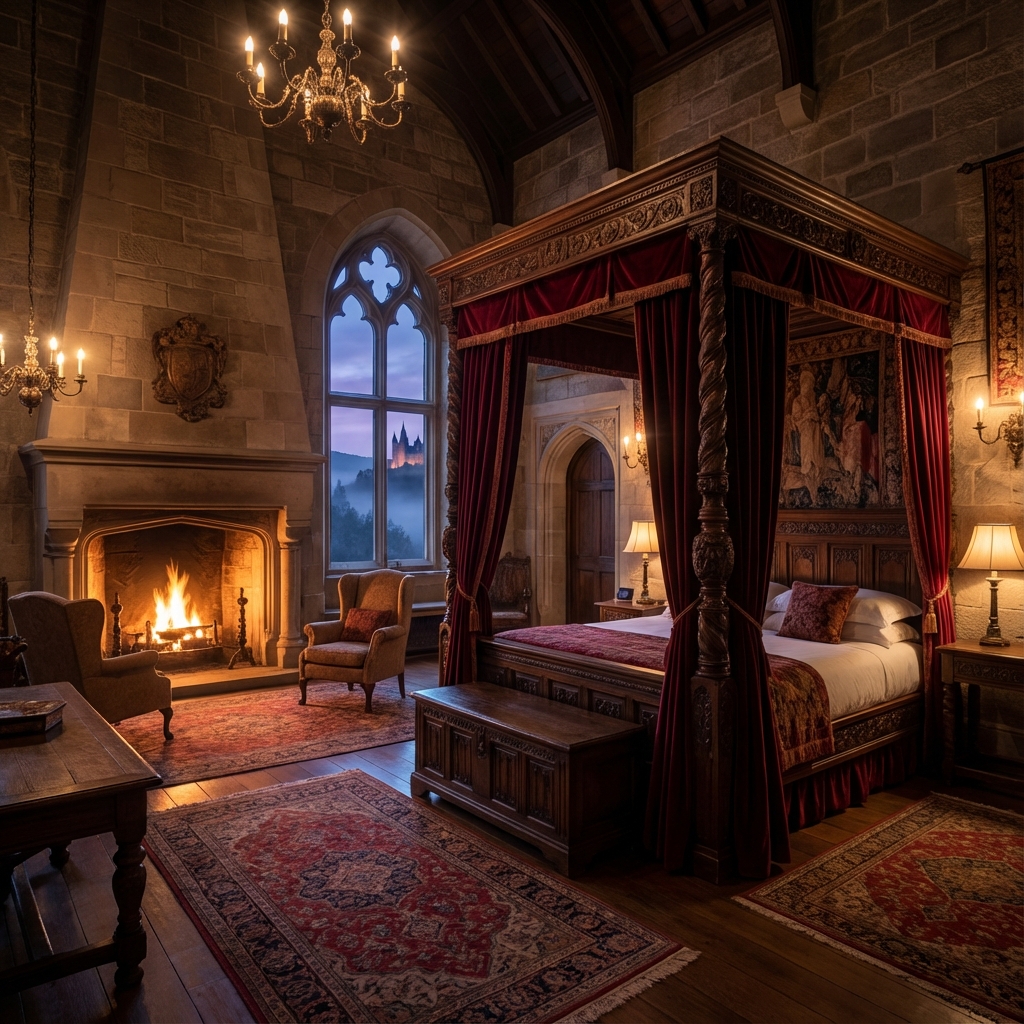
Catherine brought with her a massive dowry and the refined tastes of the Renaissance court in Krakow. Under her influence, Turku Castle blossomed. The drafty stone halls were paneled with wood and decorated with tapestries. Large windows were cut into the walls to let in light. The couple introduced forks, velvet, and continental fashion to Finland. For a brief, shining moment, the court at Turku was a center of European culture and politics, rivaling Stockholm itself.
The "Bailey" (the outer castle) was expanded during this time to house the new court. The King's Hall and the Queen's Hall, with their coffered ceilings and beautiful lighting, are the legacy of this era. They are still used today for high-profile banquets and city celebrations.
The Prison of Kings
However, the golden age was short-lived. Duke John's brother, King Eric XIV, grew jealous and suspicious. He besieged the castle in 1563. John and Catherine were captured and imprisoned in Sweden. In a twist of fate, when John later deposed Eric and became King, he imprisoned his brother in Turku Castle. The "Eric XIV's Prison" is a small, modest guardroom where the fallen king was held. It is a stark reminder of how quickly fortune can turn.
The castle continued to serve as a prison for centuries. It was a place of misery for common criminals and political dissidents alike. The "Round Tower" and the dungeons beneath the main keep are chilling places to visit, with their heavy iron doors and graffiti scratched into the walls by hopeless inmates.
Destruction and Restoration
By the 19th century, the castle had lost its military value and was used as a grain storehouse. In 1941, during the Continuation War, the castle was struck by a Soviet incendiary bomb. The wooden roofs and interiors were completely destroyed by the ensuing fire. It seemed like the end for the old fortress.
But the destruction paved the way for the most extensive restoration in Finnish history. Beginning after the war and finishing in 1961, the project not only repaired the damage but also archaeological excavated the entire site. The restoration was done with immense respect for the different layers of history. Today, you can clearly see the lines between the medieval stone, the Renaissance brick, and the modern concrete repairs.
Museum Highlights
The castle is now part of the Museum Centre of Turku. The collection is vast, but some highlights include:
- The Medieval Wooden Sculptures: The castle houses a stunning collection of religious art from medieval Finnish churches, including rare wooden statues of saints that survived the Reformation.
- The Miniature Castle: A detailed scale model shows how the castle looked in its heyday, helping visitors understand the complex layout of the buildings.
- The Toy Museum: Located in the Bailey, this collection of old dolls and toys is a hit with children and nostalgic adults alike.
- The Nun's Chapel: A quiet, atmospheric space that was once used by the nuns of the Bridgettine order (though the convent was actually in Naantali, they had a presence here).
Legends of the Castle
Turku Castle is famously haunted. The "Little Elf" (Tonttuukko) is a benevolent spirit who is said to protect the castle. He is described as a tiny, grey-bearded man who lives in the cellars. Museum staff leave him a bowl of porridge at Christmas to ensure his favor.
Less benevolent is the legend of the headless soldier, who patrols the ramparts on foggy nights. And then there is the tragic story of the noblewoman who was walled up alive in the "Maiden's Tower" for loving a commoner—a recurring motif in castle folklore, but one that feels disturbingly plausible in the dark corners of the keep.
Planning Your Visit
Turku Castle is located about 3 km from the city center, right at the harbor where the ferries to Sweden depart.
- Guided Tours: The castle is huge and confusing. Joining a guided tour is highly recommended to navigate the maze of rooms and hear the stories of Duke John and King Eric. The "Medieval Tour" focuses on the older parts, while the "Renaissance Tour" explores the Bailey.
- Accessibility: Be warned: the medieval part of the castle (the Main Castle) is a nightmare for accessibility. There are steep, uneven stairs, low doorways, and no elevators. The Bailey (where the museum shop and café are) is more accessible.
- For Kids: The castle offers "Little Knight Tours" where children are "knighted" by the Queen. They can dress up in costumes and search for the castle elf.
- The Park: The surrounding Castle Park is a lovely place for a walk, offering great views of the harbor and the archipelago ferries gliding past the ancient walls.
Turku Castle is a building that demands respect. It is cold, hard, and imposing, but inside, it is full of life and stories. It is the memory of Finland, carved in stone.