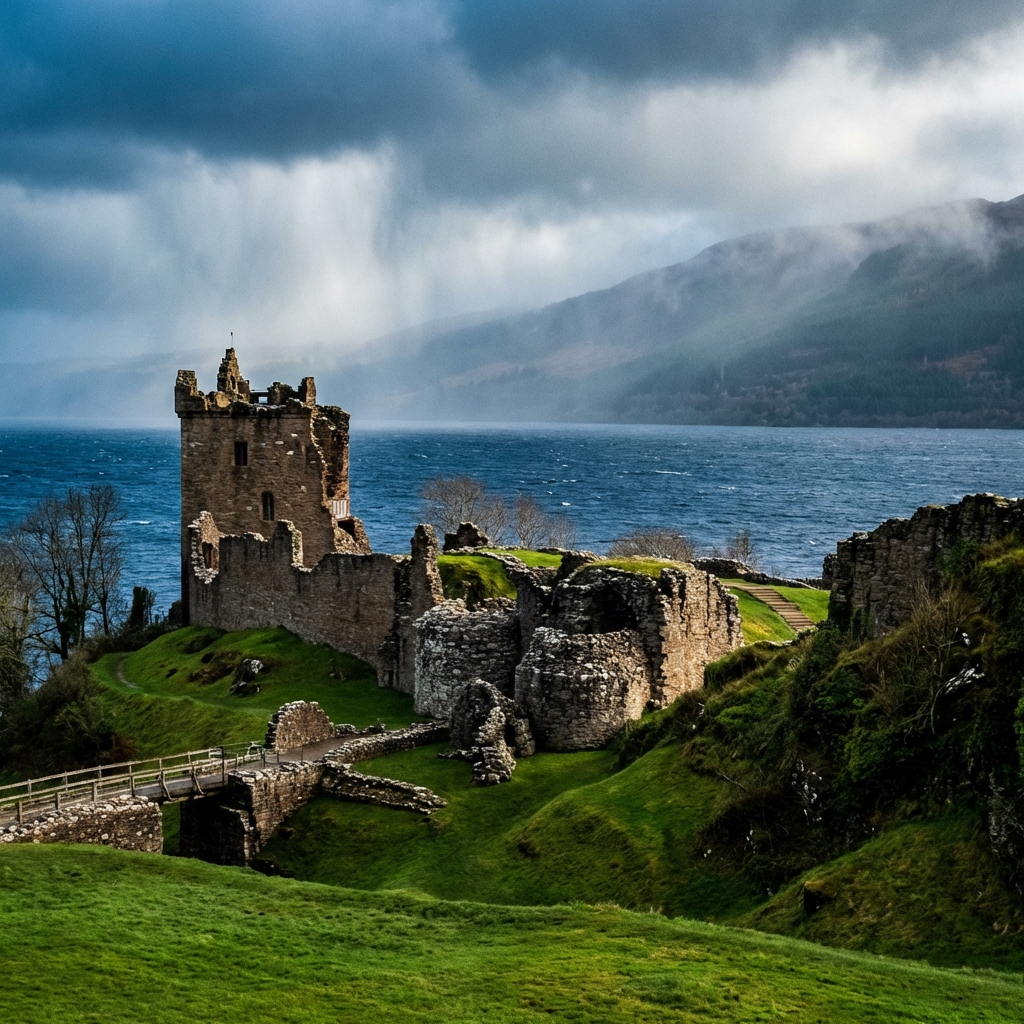
Urquhart Castle is one of Scotland's most iconic and visited castles, not because of its opulent rooms—it is a ruin—but because of its dramatic setting and turbulent history. Perched on a rocky promontory jutting into the dark, deep waters of Loch Ness, it offers some of the most spectacular views in the Highlands. For centuries, this fortress controlled the Great Glen, a strategic route through the Scottish Highlands, making it a prize worth fighting for. The ruins we see today date largely from the 13th to the 16th centuries, though the site's history as a fortification goes back much further.
A Thousand Years of Conflict
The site has been fortified since the early Middle Ages, possibly even serving as a Pictish fort visited by St Columba in the 6th century. Archaeological evidence suggests a high-status Pictish settlement existed here long before the stone castle was raised. The present castle was built in the 13th century by the Durward family and immediately became a flashpoint in the Wars of Scottish Independence.
It changed hands between the Scots and the English repeatedly. In 1296, Edward I of England (the "Hammer of the Scots") captured it. It was later reclaimed by Robert the Bruce, who became King of Scots. In 1332, it was the only Highland castle that held out against the English. The castle remained a royal stronghold but was constantly raided by the Lords of the Isles, the MacDonald clan rulers of the western seaboard who challenged the authority of the Scottish crown. These raids were brutal and frequent, reflecting the lawless nature of the Highlands during this period.
The Great Raid
One of the most devastating attacks occurred in 1545 when the MacDonalds, along with their allies the Camerons, stripped the castle of everything valuable. They took not just furniture and cannons but even the iron gates and the doors. They left the castle a shell, taking "great heirship" (plunder) back to the islands. The inventory of stolen goods from this raid gives historians a fascinating glimpse into what a wealthy Highland castle contained: feather beds, pots, pans, brewing equipment, and even the castle's locking mechanisms were carted away.
The Final Destruction
The castle's active life ended in 1692 during the Jacobite risings. A government garrison held the castle against Jacobite forces. When the soldiers left, they blew up the gatehouse and other fortifications with gunpowder to prevent the castle from ever being used as a military stronghold by the rebels again. It has remained a romantic ruin ever since, capturing the imagination of poets, painters, and travelers for centuries.
Architecture and Layout
Despite its ruined state, the layout of Urquhart is clearly visible and impressive. The castle is divided into two main enclosures or 'baileys': the Nether Bailey and the Upper Bailey.
- The Grant Tower: The most prominent feature still standing is the five-story Grant Tower. It was the main keep and lord's residence, offering comfort as well as defense. The walls are thick, and the remains of the great hall and private chambers can still be identified. You can climb the spiral staircase to the battlements for an unrivaled view of Loch Ness, looking both north towards Inverness and south towards Fort Augustus.
- The Gatehouse: Though blown up in 1692, the remains of the gatehouse are impressive. It was the main entry point, defended by a drawbridge, portcullis, and murder holes. The sheer scale of the debris testifies to the power of the explosion that destroyed it.
- The Great Hall: In the Nether Bailey, the foundations of the Great Hall show where feasts and courts would have been held. This was the social heart of the castle, where the lord would dine and entertain guests.
- The Trebuchet: A full-sized working replica of a medieval siege engine sits on the grounds. It demonstrates the kind of weaponry that would have been used to attack the castle walls during the bloody sieges of the Middle Ages.
Loch Ness and the Monster
Urquhart Castle is inextricably linked with the legend of the Loch Ness Monster (Nessie). The castle overlooks the deepest part of the loch, where the water plunges to depths of over 700 feet. Many of the most famous sightings of "Nessie" have been reported from the castle walls or the nearby car park. The juxtaposition of the ancient ruin against the dark, mysterious water creates a perfect atmosphere for legends.
Whether you believe in the monster or not, the view of the vast, dark water stretching away into the mountains is atmospheric and slightly eerie. Boat trips on Loch Ness often include a stop at the castle or a cruise past its walls, offering a different perspective from the water, where you can see the defensive advantage of the rocky promontory.
Visitor Center and Experience
Historic Environment Scotland manages the site and has built an excellent modern visitor center. It is cut into the hillside to minimize its visual impact on the scenery, almost invisible from the loch itself.
- The Film: The visit starts with a short film about the castle's history. At the end of the film, the screen curtains part to reveal a stunning panoramic view of the real castle ruins below. It is a theatrical and memorable reveal that sets the tone for the visit.
- Artifacts: The center displays a collection of artifacts found on the site, including a medieval ewer (jug), gaming pieces, arrowheads, and jewelry. These items give a human dimension to the stone ruins, showing that this was a place where people lived, loved, and played, not just fought.
- The Café: The visitor center features a café with large windows overlooking the loch, allowing visitors to scan the water for monsters while enjoying a coffee and scone.
Visitor Tips
- Arrive Early: Urquhart Castle is a very popular stop for tour buses. Arriving early in the morning or later in the afternoon helps avoid the biggest crowds.
- Weather: The castle is very exposed to the elements. The wind coming down the Great Glen can be cold even in summer, so bring a windproof jacket.
- Combined Ticket: Consider buying a combined ticket for the castle and a Loch Ness cruise for the full experience. Seeing the castle from the water gives you a true sense of its impregnability.
Frequently Asked Questions
- Can I bring my dog?
- Assistance dogs are permitted, but pet dogs are not allowed in the castle or visitor center. This is unusual for Scottish ruins but is due to the high volume of visitors.
- Is there parking?
- Yes, there is a car park, but it fills up very quickly in peak season. Using the shuttle bus from the village of Drumnadrochit is often easier.
- Is it wheelchair accessible?
- The visitor center is fully accessible. A steep path leads down to the castle, but electric mobility scooters may be available to borrow. The ruins themselves have uneven ground, so some areas may be difficult to access.