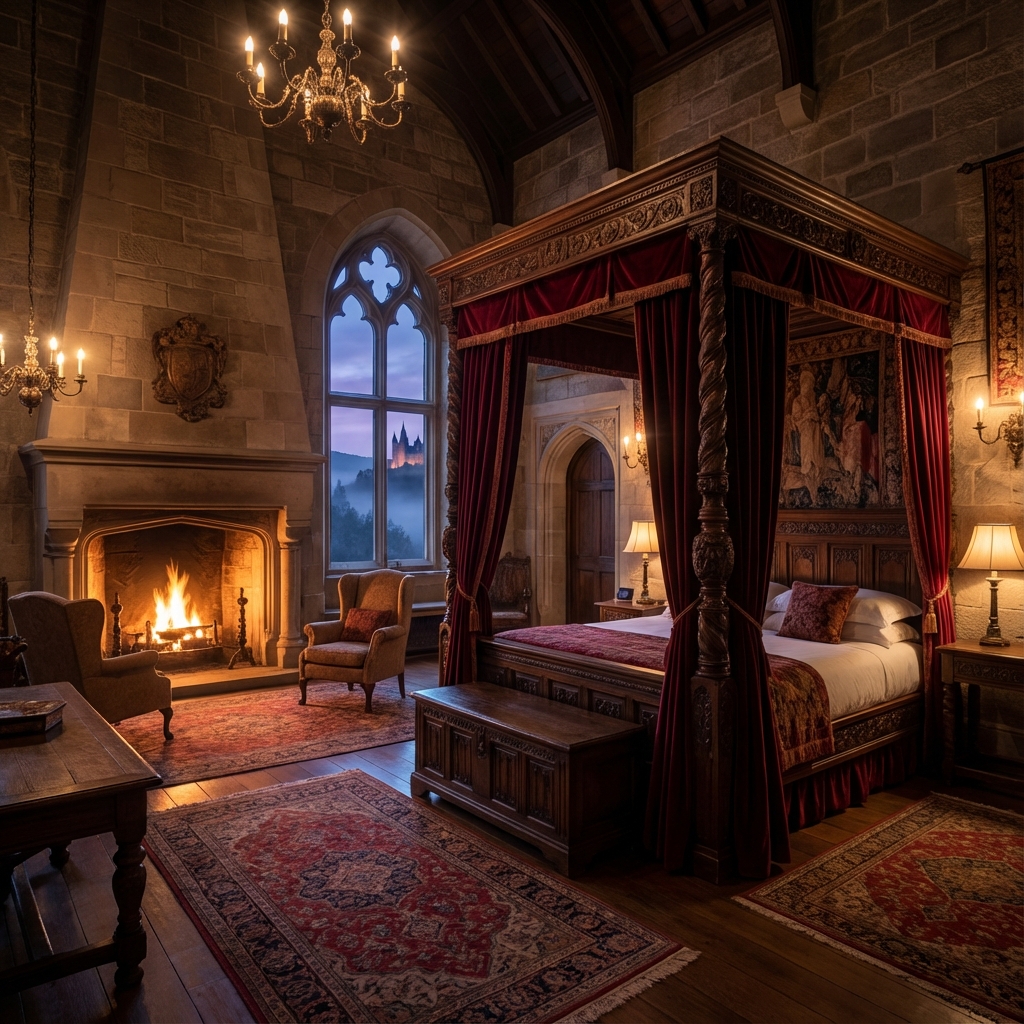
Arundel Castle is a magnificent restored medieval castle and stately home in West Sussex, England. It has been the seat of the Dukes of Norfolk and their ancestors for over 850 years. Standing high on a hill, it dominates the valley and offers wide views across the South Downs and the River Arun. Unlike many castles that are now ruins, Arundel is still a lived-in family home, combining medieval fortifications with Victorian Gothic grandeur.
A History of Dukes and Earls
The castle was founded on Christmas Day 1067 by Roger de Montgomery, a trusted advisor to William the Conqueror. It was built to defend the river valley from invasion. Since then, it has passed through several powerful families, eventually coming to the Howards, the Dukes of Norfolk.
The Dukes of Norfolk are the Premier Dukes of England and hold the hereditary office of Earl Marshal, which means they are responsible for organizing major state occasions such as the coronation of the monarch and the State Opening of Parliament. This high status has placed the family at the center of English history for centuries, often with dangerous consequences.
The Civil War Siege
During the English Civil War (1642–1651), the castle was severely damaged. It was first held by the Royalists, then captured by Parliamentarians, then retaken by Royalists, and finally besieged and taken again by Parliamentarians under William Waller. To prevent it from being used against them again, Parliament ordered the castle to be "slighted" (ruined). For many years, it lay in a semi-ruined state, with the family living in the few habitable wings.
The Collector Earl
A notable figure in the castle's history is Thomas Howard, the 14th Earl of Arundel (1585–1646), known as the "Collector Earl". He traveled extensively in Italy and amassed a huge collection of art and antiquities, including the famous "Arundel Marbles". Although much of his collection was dispersed during the Civil War, his passion for art established a tradition that continues today, with the castle housing paintings by Van Dyck, Gainsborough, and Canaletto.
The Victorian Reconstruction
The castle we see today is largely the result of a massive restoration project in the late 19th century. Henry, the 15th Duke of Norfolk, completed the work started by his predecessors. He employed the architect Charles Alban Buckler to rebuild the castle in the Gothic style. This project was one of the great architectural achievements of Victorian England. It included the installation of electricity, central heating, and lifts, making it one of the first country houses to have these modern amenities. The result is a successful marriage of medieval strength and Victorian comfort.
Inside the Castle
Visitors to Arundel Castle can explore a series of opulent rooms that reflect the wealth and taste of the Howard family.
- The Barons' Hall: A vast room with a high timber roof, built in the style of a medieval great hall. It features stained glass windows depicting family history and is used for banquets.
- The Library: One of the finest rooms in the castle, the library is carved from mahogany and features two tiers of galleries. It houses a collection of over 10,000 books, reflecting the family's serious intellectual interests across generations.
- The Bedrooms: Several bedrooms are open to the public, including the Victoria Room, prepared for a visit by Queen Victoria and Prince Albert in 1846. The furniture and red velvet hangings were specially commissioned for the royal visit.
- The Fitzalan Chapel: Unusually, the castle grounds contain a chapel that serves as the burial place of the Dukes of Norfolk. Although physically attached to the local parish church, it is legally the private property of the Catholic Duke, separated by a glass wall from the Anglican church.
The Gardens
The gardens at Arundel are as spectacular as the castle itself. They have been extensively re-designed in recent years.
- The Collector Earl's Garden: Opened in 2008 by Prince Charles, this garden is a tribute to the 14th Earl. It is designed as a Jacobean formal garden and features oak pagodas, fountains, and 'Oberon's Palace', a shell-lined structure containing a floating crown.
- The Stumpery: A unique garden created from overturned tree roots (stumps), which provides a habitat for ferns and shade-loving plants. It creates a prehistoric, almost magical atmosphere.
- The Kitchen Garden: A fully functioning organic garden that produces fruit, vegetables, and flowers for the castle and its events.
Events and Activities
Arundel Castle is famous for its calendar of historical events. Throughout the open season, the castle hosts medieval jousting tournaments, combat demonstrations, and history days. The "International Jousting Week" in July is a highlight, attracting knights from around the world to compete in full armor.
There is also a cricket ground within the castle grounds, often cited as one of the most beautiful cricket venues in the country. Seeing a match played against the backdrop of the castle towers is a quintessentially English experience.
Visitor Tips
- Check Opening Times: The castle is closed during the winter months (usually November to March). Always check the website before traveling.
- Steep Climbs: Accessing the Keep involves climbing a steep stone staircase. The views from the top are worth it, but it requires a reasonable level of fitness.
- Allow Enough Time: The gardens are extensive. Allow at least 3-4 hours to see both the castle interior and the gardens properly.
Frequently Asked Questions
- Is the castle wheelchair accessible?
- Most of the gardens and the lower ground floor of the castle are accessible. However, due to its medieval design, the Keep and upper floors of the castle (including the bedrooms and library) are not accessible to wheelchair users.
- Can I take photos?
- Photography is permitted in the gardens and grounds, but it is generally restricted inside the main castle rooms to preserve the fabrics and artworks.
- Is there a cafe?
- Yes, there is a restaurant and a coffee shop on-site serving meals and refreshments.
The Wildlife and Natural Environment
The pristine environment surrounding Arundel Castle is as rich in natural history as the building is in human heritage. The castle serves as a vital sanctuary for local wildlife, carefully managing its extensive grounds to promote biodiversity within the West Sussex scenery. The steep, wooded slopes that drop away from the castle walls are a haven for numerous native bird species, offering shelter and breeding grounds amidst the ancient oak and beech trees. Keen observers can often spot majestic birds of prey soaring on the thermals above the Arun valley, utilizing the castle’s high vantage point much like the medieval sentries of old. Also, the castle's commitment to conservation extends down to the wetlands along the River Arun. The estate plays a crucial role in maintaining these delicate water meadows, which provide essential habitats for seasonal migratory birds and a rich variety of aquatic life. The nearby WWT Arundel Wetland Centre works in harmony with the castle’s environmental stewardship, creating an interconnected corridor of nature that thrives in the shadow of the historic fortress. This deep respect for the surrounding ecology ensures that the stunning visual impact of Arundel Castle is matched by the lively, living scenery that encircles it.