The Stone Giant of Languedoc
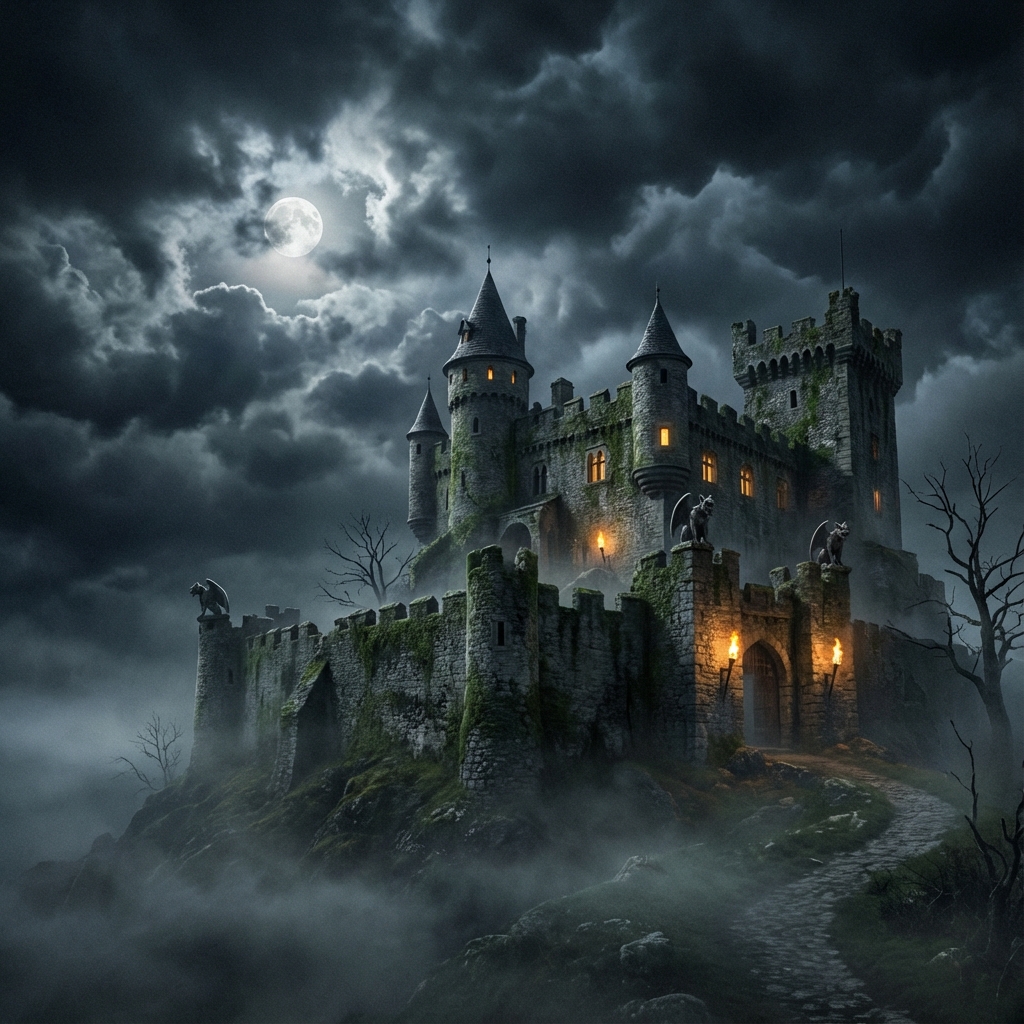
Rising dramatically above the Aude River in southern France, the Cité de Carcassonne is the archetypal medieval fortress. With its double ring of jagged ramparts, 53 witch-hat towers, and winding cobblestone streets, it looks like a scene straight out of a fairy tale. In fact, it is said to have inspired the design of Sleeping Beauty's castle. It is not merely a castle but an entire fortified town, a UNESCO World Heritage site that attracts millions of visitors who come to walk its walls and imagine the clash of swords and the intrigue of the Middle Ages.
Two Thousand Years of History
Carcassonne's strategic position on the route between the Atlantic and the Mediterranean has made it a prized possession for millennia. The hill was first fortified by the Gauls in the 6th century BC, followed by the Romans who built the initial ramparts in the 3rd century AD—sections of which are still visible today, distinguishable by their layers of red brick.
Following the Romans, the Visigoths took control, expanding the fortifications. However, the Cité's most defining era came in the 12th and 13th centuries under the Trencavel dynasty. During this time, Carcassonne became a stronghold of the Cathars, a religious sect deemed heretical by the Catholic Church. This led to the brutal Albigensian Crusade. In 1209, the crusader army led by Simon de Montfort besieged the city. After the water supply failed, Viscount Trencavel surrendered, and the city passed into the hands of the French crown.
King Louis IX (Saint Louis) and his successors transformed Carcassonne into an impregnable border fortress against the Kingdom of Aragon (Spain). They built the second, outer ring of walls and the massive barbican. The city became so secure that even the Black Prince, Edward the Black Prince of England, failed to take it during the Hundred Years' War. It housed the Inquisition for the region, with a tower specifically known as the Tower of the Inquisition, serving as a grim reminder of the religious persecution that once swept through Languedoc.
The Legend of Dame Carcas
One of the most beloved stories of the city is the legend of Dame Carcas, a Saracen princess who ruled the city after her husband's death during a siege by Charlemagne. As the siege dragged on for five years, the city's food supplies dwindled to a single pig and a sack of wheat. In a brilliant bluff, Dame Carcas force-fed the wheat to the pig and threw it over the walls. When the pig burst open upon hitting the ground, revealing a stomach full of grain, Charlemagne's troops believed the city was so well-stocked they could afford to waste food. Despairing of victory, they lifted the siege.
As the army retreated, Dame Carcas rang all the city's bells in celebration. One of Charlemagne's men exclaimed, "Carcas sonne!" (Carcas is ringing), giving the city its name. A statue of Dame Carcas now greets visitors at the Narbonne Gate.
Viollet-le-Duc and the Great Restoration
By the 19th century, the Cité had lost its military significance. The border with Spain had moved south, and the fortress was abandoned and crumbling. The stones were being pillaged for local construction, and the French government decreed its demolition in 1849. A public outcry, led by historian Jean-Pierre Cros-Mayrevieille and writer Prosper Mérimée, saved it.
The restoration was entrusted to the architect Eugène Viollet-le-Duc. His work was monumental and controversial. He rebuilt the towers and walls, adding the iconic slate roofs. Purists argue that slate is typical of northern France and that the original roofs would have been flat terracotta tiles, typical of the south. Despite these historical liberties, Viollet-le-Duc's vision saved Carcassonne and defined our modern romantic image of the Middle Ages.
Exploring the Cité
The Cité is divided into the town itself (free to enter) and the Château Comtal (Count's Castle), which requires a ticket. The Château is a fortress within a fortress, surrounded by a dry moat. A ticket here allows access to the ramparts. Walking the battlements offers sweeping views of the Ville Basse (Lower Town), the Pyrenees mountains in the distance, and the rolling vineyards of Languedoc.
Between the two rings of walls lies a strip of land known as The Lices. In medieval times, this was a kill zone for attackers who breached the first wall; today, it is a peaceful grassy area perfect for a walk away from the crowded center. You can see the Hoardings (hourds) on some towers—wooden structures projecting from the walls that allowed defenders to drop stones or boiling liquids on attackers at the base of the wall.
Another highlight is the Basilica of Saints Nazarius and Celsus. It is a stunning architectural hybrid, featuring a sturdy Romanesque nave and a soaring Gothic choir. The stained glass windows are among the finest in southern France, depicting scenes from the Bible with rich colors that have survived centuries.
A Star of the Screen
Thanks to its perfect state of preservation, Carcassonne has served as the backdrop for numerous films. It famously stood in for Nottingham Castle in Robin Hood: Prince of Thieves (1991). The city has a lively cultural life today, hosting the Festival de Carcassonne every summer, where concerts and theater performances are held in the ancient open-air Jean-Deschamps Theatre within the city walls.
Visitor Information
Carcassonne is best visited in the shoulder seasons (spring or autumn) to avoid the intense summer crowds. If visiting in summer, aim for early morning or late evening. The Cité is particularly magical at night when the stone walls are illuminated, and the day-trippers have left.
While inside the walls, be sure to try the local culinary specialty, Cassoulet—a hearty slow-cooked casserole containing meat (typically pork sausages, goose, or duck) and white beans. It is the perfect fuel for a day spent patrolling the ramparts.
The Modern Legacy and Tourism
Today, the Cité de Carcassonne is not just a dormant historical monument, but a thriving, albeit highly visited, community. The narrow streets that once echoed with the clatter of knights in armor are now lined with artisan shops, boutique hotels, and regional restaurants serving up the culinary delights of Occitanie. This influx of millions of global visitors each year presents a modern challenge: balancing the intense pressures of mass tourism with the vital need to preserve the delicate medieval fabric of the city. Strenuous conservation efforts are continuously underway to maintain the structural integrity of the ramparts and the authenticity of the historic setting. Beyond its physical walls, Carcassonne holds a significant place in modern popular culture, inspiring everything from the famous strategic board game named after the city to serving as an evocative symbol of European medieval heritage. The silhouette of its numerous turrets against the twilight sky remains one of the most romantic and enduring images of France. Whether viewed from the banks of the Aude River or explored from within its labyrinthine streets, the Cité continues to capture the imagination, proving that the magic of the Middle Ages is still very much alive in the heart of the Languedoc.