The Castle Born of an Oak Forest
Egeskov Castle (Egeskov Slot), located on the island of Funen in Denmark, is widely regarded as the best-preserved Renaissance water castle in Europe. It rises directly from a lake, its red brick walls and copper spires reflected in the dark water. The castle's name, which translates to "Oak Forest," refers to its legendary foundation. It is said that an entire forest of oak trees was felled to drive the thousands of piles into the lake bed upon which the castle stands. This engineering marvel has held firm since 1554.
Today, Egeskov is a lively family attraction. It is still inhabited by the Count Ahlefeldt-Laurvig-Bille family, but they open the grounds and much of the castle to the public. It is a place where history meets play, featuring world-class gardens, museums filled with vintage cars and planes, and a sense of wonder that appeals to all ages.
A Fortress in Troubled Times
While Egeskov looks peaceful today, it was born out of conflict. It was built by Frands Brockenhuus in 1554, shortly after the "Count's Feud" (Grevens Fejde), a bloody civil war that had ravaged Denmark. The nobility felt insecure, and Brockenhuus designed his home as a fortress first and a residence second.
The castle consists of two separate long houses connected by a thick double wall. The idea was that if one house was captured by enemies, the defenders could retreat to the other and continue the fight. The walls are filled with defensive features: machicolations for dropping boiling water or tar on attackers, arrow slits, and scalding holes. It was a secure stronghold accessible only by a drawbridge.
Inside the Castle
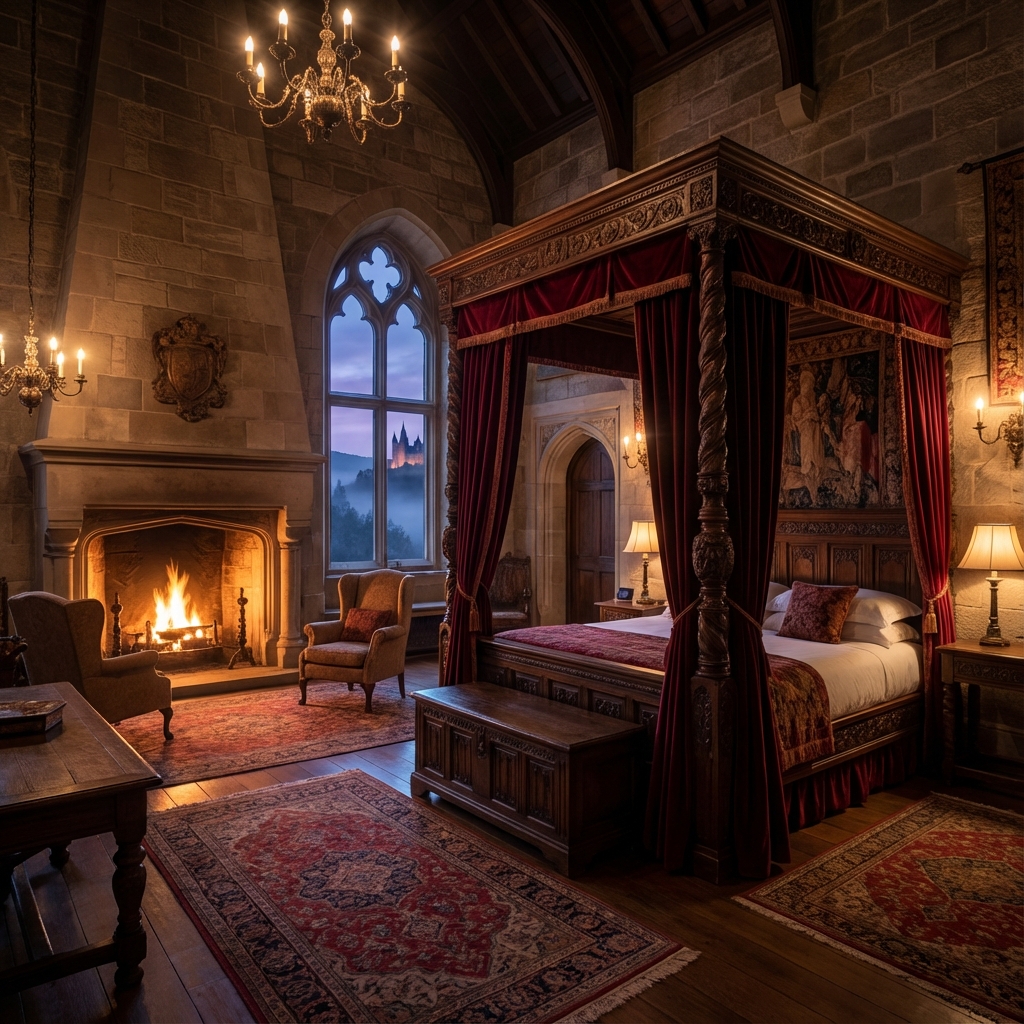
Walking through the castle is a trip through 400 years of family history. The rooms are furnished with antiques, trophies, and art collected by the various owners.
The Hunting Hall
The first room visitors enter is the Hunting Hall (Jagtstuen). The walls are adorned with trophies brought back from Africa by Count Gregers Ahlefeldt-Laurvig-Bille in the early 20th century. It is a classic example of the "gentleman explorer" aesthetic of the time. While modern sensibilities about big game hunting have changed, the room remains a preserved time capsule.
The Yellow Room
This room is furnished in the Louis XVI style and features valuable family portraits. It offers a glimpse into the domestic life of the Danish aristocracy in the 18th century.
Titania's Palace
One of the most magical exhibits in the castle is not part of the building itself, but a dollhouse. "Titania's Palace" is perhaps the most famous and elaborate dollhouse in the world. It was built by Sir Nevile Wilkinson for his daughter, Gwendolen, who claimed she had seen fairies in the garden and wanted a house for them. It took 15 years to build (1907–1922) and contains over 3,000 miniature works of art collected from around the world. The tiny rooms are filled with real mahogany furniture, hand-painted porcelain, and even a miniature chapel with a playable organ. It is a masterpiece of craftsmanship and fatherly love.
The Wooden Man Prophecy
In the attic of the castle lies a strange, wooden figure known as the "Wooden Man" (Træmanden). He lies on a pile of cushions under the eaves. Legend says that if he is ever moved from his spot, the castle will sink into the moat on Christmas Eve. The family takes this prophecy very seriously; the Wooden Man is never disturbed, and generations of children have whispered stories about him as they played in the vast attic.
The White Lady
Like many old castles, Egeskov has its ghosts. The most famous is the White Lady, said to be the spirit of Rigborg Brockenhuus. In the late 16th century, she fell in love with a young nobleman, Frederik Rosenkrantz. When she became pregnant out of wedlock, her furious father locked her in a room in the castle (now known as Rigborg's Room). She was imprisoned there for five years, until her father died. It is said that her restless spirit still walks the corridors, perhaps warning young lovers of the consequences of passion.
The Gardens: A World of Green
Egeskov's park is award-winning and immense. It has been voted one of the 12 most beautiful gardens in the world by CNN Travel.
- The Renaissance Garden: Featuring clipped box hedges and fountains, this garden attempts to recreate the strict geometry of the 17th century.
- The Fuchsia Garden: Egeskov holds one of the largest collections of fuchsias in Europe, with over 100 varieties. When they bloom in summer, it is a sea of purple and pink.
- The Mazes: The park features several mazes. The old beech maze is closed to the public to preserve it, but a newer bamboo maze (the largest in the world) challenges visitors to find their way to the center. It is a favorite for children.
- Tree Top Walking: For the adventurous, there is a walkway suspended in the treetops 15 meters above the ground, offering a bird's-eye view of the park.
Museums of Everything
The current Count is a collector, and the estate buildings are filled with an eclectic mix of museums.
- The Veteran Car Museum: This is a world-class collection of vintage automobiles, motorcycles, and airplanes. It includes rare vehicles from the dawn of motoring to the 1980s.
- The Falck Museum: Dedicated to the Danish rescue service Falck, it displays historical fire trucks and ambulances.
- The Camping Outdoor Museum: A nostalgic look at camping holidays through the decades, featuring vintage tents and caravans.
Planning Your Visit
Egeskov is located near Kværndrup, about 30 minutes by car from Odense (the birthplace of Hans Christian Andersen). It is a full-day destination.
- Opening Hours: The castle is open from late April to late October. It is closed in the winter, though the grounds sometimes open for a Christmas market.
- Picnics: The park is perfect for picnics. You can bring your own food or eat at the café. There are designated picnic areas where families can relax.
- Events: The castle hosts numerous events, including the Heartland Festival (music and food) and MC (motorcycle) meets. Check the calendar before you go.
Egeskov Castle is a place where the weight of history is lightened by the joy of the present. It is a fortress that has become a playground, a place where you can admire a 16th-century suit of armor in the morning and get lost in a bamboo maze in the afternoon.