The Vasa Fortress
Rising from the tranquil waters of Lake Mälaren in the charming town of Mariefred, Gripsholm Castle (Gripsholms slott) is one of Sweden's most iconic royal monuments. With its massive, round brick towers and red facade, it is a textbook example of the Vasa Renaissance style. It was built in 1537 by King Gustav Vasa, the father of the modern Swedish nation. Originally intended as part of a defensive network to protect the capital, Stockholm, against domestic and foreign enemies, it quickly evolved into a favored royal residence, a role it has played for nearly five centuries.
The castle was built on the site of an earlier medieval fortress owned by Bo Jonsson Grip (hence the name 'Gripsholm' – Grip's Island). Gustav Vasa confiscated the land during the Reformation and repurposed the stones from the nearby monastery to build his new stronghold. The result was a formidable yet elegant structure that symbolized the power of the new Vasa dynasty. The thick walls (up to 3 meters in places) were designed to withstand cannon fire, a new threat in the 16th century.
A Prison for Kings
While Gripsholm was built to project power, it often served as a gilded cage for the royal family itself. The castle has a dark history as a prison for deposed monarchs. King Eric XIV, Gustav Vasa's eldest son, was imprisoned here by his brother, John III, from 1563 to 1567. He was kept in relatively comfortable quarters, but the humiliation was absolute. Centuries later, in 1809, King Gustav IV Adolf was also held prisoner here after a coup d'état, before being forced to abdicate and sent into exile. Visitors can still see the chambers where these kings languished, contemplating their lost crowns. It is said that Gustav IV Adolf passed the time by playing the piano, the notes echoing sadly through the stone corridors, a haunting reminder of the fall of absolute monarchy.
The National Portrait Gallery
Today, Gripsholm is perhaps best known internationally for housing the Swedish National Portrait Gallery (Statens porträttsamling). Founded in 1822 by King Charles XIV John, it is the oldest national portrait gallery in the world. The collection contains over 5,000 works, chronicling the history of Sweden from the 16th century to the present day. It includes portraits of kings, queens, scientists, writers, and celebrities.
The collection is not a dusty archive; it is alive and growing. Every year, the Gripsholm Association commissions an 'Honorary Portrait' of a distinguished living Swede, ensuring the gallery remains relevant. Recent additions include portraits of ABBA's Benny Andersson, diplomat Hans Blix, and Prime Minister Olof Palme. Walking through the halls is like walking through a 'Who's Who' of Swedish history, observing the changing fashions and artistic styles over 500 years.
The Round Tower Theatre
One of the castle's most delightful surprises is hidden inside one of the massive round towers. It is the Palace Theatre, commissioned by King Gustav III (the 'Theatre King') in 1781. It is one of the best-preserved 18th-century theaters in Europe. The intimate stage, complete with its original sets and machinery, was used for the amusement of the court. Gustav III loved acting and often participated in the plays himself, blurring the lines between monarch and performer. The theater is a jewel of Neoclassical design, contrasting sharply with the heavy Renaissance architecture of the exterior. It lay forgotten for decades until it was rediscovered and restored in the 20th century. The original sets, painted to look like palaces and forests, are still in place.
The Lion of Gripsholm
No visit to Gripsholm is complete without seeing its most bizarre celebrity: the Lion of Gripsholm. In 1731, the Dey of Algiers presented King Frederick I with a live lion (one of the first in Scandinavia). The lion lived in a cage near the Royal Palace in Stockholm until it died. The King then ordered the skin and bones to be sent to a taxidermist to be mounted.
The problem was that the taxidermist had never seen a live lion. Working only from the skin and bones, he did his best, but the result is... unique. The lion has a strangely human-like face, with close-set eyes and a goofy, tongue-lolling grin that looks more like a cartoon character than a fearsome predator. For centuries, it was kept in storage, but in the internet age, photos of the 'badly stuffed lion' went viral, and it is now proudly displayed as a beloved (if unintentional) masterpiece of comedy.
Duke Karl's Chamber
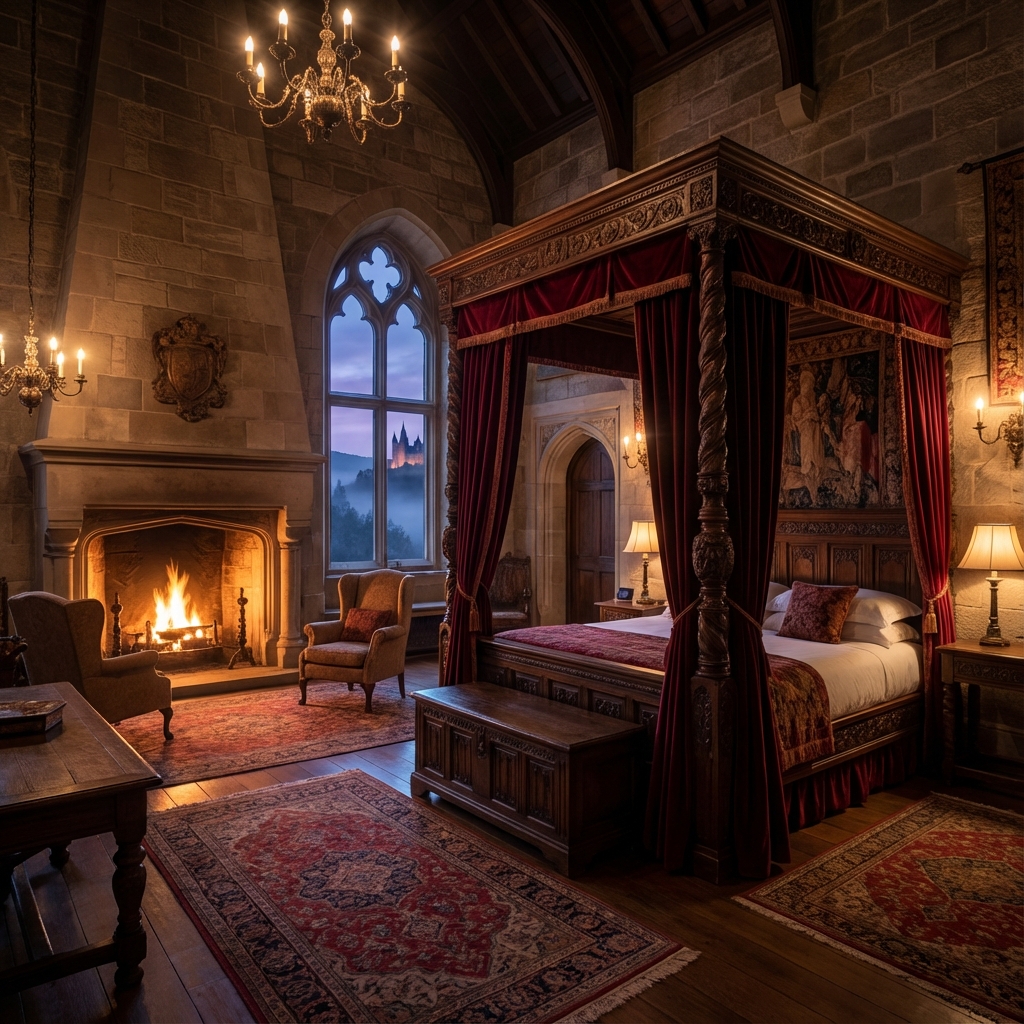
For a glimpse into 16th-century royal life, visitors should see Duke Karl's Chamber. It is one of the few rooms that has preserved its original Vasa-era interior almost intact. The walls are covered with intricate paneling and painted friezes depicting flowers and fruits, and the room features a secret door leading to the moat—a handy escape route for a paranoia-prone prince. It gives a rare sense of the color and vibrancy of the Renaissance court, which is often imagined as dark and austere.
The Gripsholm Runestones
History at Gripsholm predates even the medieval fortress. Just outside the castle entrance stand two ancient Runestones discovered in the 20th century during renovations. They date back to the Viking Age (11th century) and commemorate the 'Ingvar Expedition,' a disastrous Viking voyage to the Caspian Sea. The inscriptions tell a tragic story of warriors who 'fared like men far after gold' but died in the east. These stones serve as a powerful reminder of the deep roots of history in this location, linking the Renaissance kings to their Viking ancestors.
Visitor Information
Gripsholm Castle is open to the public daily during the summer (May-September) and on weekends in the winter. It is located in Mariefred, a scenic town with wooden houses and cobblestone streets, about an hour west of Stockholm. A popular way to arrive in the summer is by the historic steamship S/S Mariefred, which has been sailing the route from Stockholm since 1903. The trip takes you through the beautiful archipelago of Lake Mälaren. In the royal deer park (Hjorthagen) next to the castle, visitors can walk among free-roaming fallow deer, adding a touch of nature to the history.