The Emperor's Holy Fortress
Deep in the forests of the Bohemian Karst, just 30 kilometers south of Prague, a jagged silhouette rises above the Berounka River. This is Karlštejn Castle (Hrad Karlštejn), the most famous and historically significant castle in the Czech Republic. It was built not just as a fortress, but as a giant safe deposit box. Its founder, Charles IV (Holy Roman Emperor and King of Bohemia), constructed it in 1348 for a singular, sacred purpose: to safeguard the Imperial Crown Jewels, holy relics, and the royal insignia of the Holy Roman Empire. It was intended to be a new Jerusalem, a center of spiritual power in the heart of Europe.
The Ascent to Heaven
The architecture of Karlštejn is unique because it is strictly hierarchical. It was designed to symbolize a spiritual trip from the earthly to the heavenly. As you walk through the castle, you are literally ascending in importance:
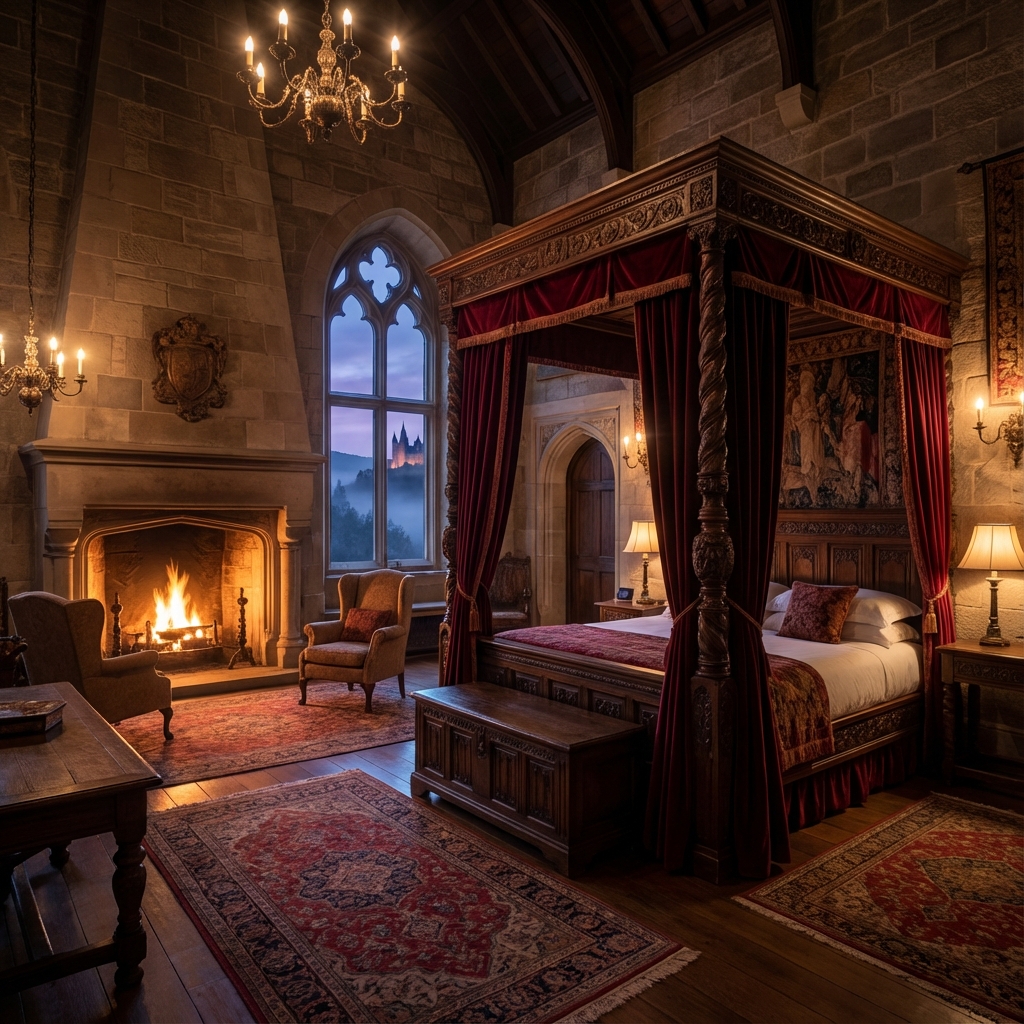
- Level 1: The Imperial Palace: The lowest level (though still high on the cliff) was the residential area for the Emperor and his court. It contains the bedrooms, the Hall of Ancestors, and the Audience Hall.
- Level 2: The Marian Tower: Rising above the palace, this tower houses the Church of Our Lady and the private chapel of the Emperor, dedicated to St. Catherine. The walls of this tiny chapel are decorated with precious stones, and it was here that the Emperor spent days in private meditation.
- Level 3: The Great Tower: The highest point of the castle. This massive, 60-meter-tall keep stands apart from the rest of the buildings. Its walls are up to 7 meters (23 feet) thick. It was the frantic heart of the fortress, impregnable and holy. Inside lies the castle's greatest treasure.
The Chapel of the Holy Cross
Located on the top floor of the Great Tower is the Chapel of the Holy Cross. This isn't just a chapel; it is one of the most stunning spaces in Gothic art anywhere in the world. This was the vault. The Imperial Crown Jewels were kept here behind four iron doors with nine separate locks.
Entering this chapel is like stepping inside a jewelry box. The lower walls are encrusted with over 2,200 polished semi-precious stones (jasper, amethyst, and chalcedony) set into gilded plaster. Above them are 129 original panel paintings by the master Theodoric, depicting the 'Army of Heaven' (saints and angels) looking down on the jewels. The vaulted ceiling is covered in gold leaf and studded with Venetian glass lenses to mimic the stars in the night sky. The Emperor was so humble in this space that he supposedly entered it barefoot and allowed no one else to sleep above this floor.
Note: Entrance to the Chapel requires a separate, more expensive ticket (Tour II) which must be booked months in advance due to strict climate control limitations.
The Legend of the Women
A famous legend, popularized by the 19th-century comedy play Noc na Karlštejně (A Night at Karlštejn), claims that women were forbidden from entering the castle to ensure the purity of the space. In reality, this ban applied only to the Great Tower and the Chapel of the Holy Cross. Women, including the Empress, certainly lived in the Imperial Palace. However, the legend persists, painting the castle as a strict, monastic brotherhood of knights.
The Missing Well
For all its impregnable walls, Karlštejn had one fatal flaw: it had no natural spring. A castle without water cannot survive a siege. The engineers of the 14th century knew this, but they couldn't find water in the solid rock. So, miners dug a shaft 80 meters deep—below the level of the river in the valley floor. Even then, they didn't hit a spring.
They were forced to dig a horizontal tunnel connecting the bottom of the well to a nearby stream, creating a cistern. This was a terrifying secret. If an enemy found the channel and poisoned or blocked it, the castle was doomed. To bring the water up, they installed a massive wooden treadwheel. It required two men walking inside it to hoist the heavy buckets. Legend says this secret was known only to the Emperor and the Burgrave; any miner who worked on the tunnel was supposedly executed to ensure their silence (though this is likely just a grim legend!).
The Hussite Wars
The castle's defenses were tested in 1422 during the Hussite Wars. The Prague Hussites besieged Karlštejn for seven months. They bombarded the castle with cannonballs and, significantly, with dead bodies and manure, trying to spread disease inside. It was an early form of biological warfare. Karlštejn held out. The thick walls of the Great Tower deflected the stone shots, and the defenders survived, proving the castle's worth.
The Romantic Restoration
Like many European castles, what we see today is partly a 19th-century vision. By the 1800s, Karlštejn was dilapidated. Emperor Franz Joseph I launched a restoration led by architect Josef Mocker. Mocker 'purified' the castle, removing Renaissance additions and rebuilding the roofs in a sharp, high-Gothic style that gives the castle its distinctive, spiky silhouette today. While purists argue it's not historically accurate, Mocker's work made Karlštejn the iconic fairytale structure it is today.
Visitor Information
- Getting There: It is an easy 40-minute train ride from Prague Main Station to the town of Karlštejn. From the station, it is a 20-30 minute walk uphill to the castle gates. The walk passes through a village filled with souvenir shops and restaurants.
- Tours: You cannot wander the castle alone; you must join a guided tour.
- Tour I: The basic tour. Covers the Imperial Palace and the Marian Tower. Great for casual visitors.
- Tour II: The exclusive tour. Includes everything in Tour I plus the Great Tower and the Holy Cross Chapel. Highly recommended, but requires reservation.
- No High Heels: The walk is steep, and the castle floors are uneven. Wear sensible shoes.
- The View: Even if you don't go inside, the hiking trails on the surrounding hills offer spectacular views of the castle rising out of the mist—a photographer's dream.