The Loveliest Castle in the World
Rising majestically from the still waters of its moat, Leeds Castle in Kent has been described by historians and visitors alike as 'the loveliest castle in the world.' It is a picture-book fortress, its stone walls and turrets reflected perfectly in the surrounding lake. But Leeds Castle is more than just a pretty façade; it has a rich history spanning 900 years, serving as a Norman stronghold, a royal palace for six of England's medieval queens, and a glamorous 20th-century retreat for the rich and famous. Its unique mix of medieval grandeur and Art Deco luxury makes it one of the most fascinating historic houses in Britain.
Located near Maidstone, just an hour from London, the castle sits on 500 acres of beautiful parkland and formal gardens. Whether you are interested in royal history, antique dog collars (yes, really!), or simply getting lost in a yew maze, Leeds Castle offers a full day of exploration.
The Ladies' Castle: A Royal Legacy
Leeds Castle is often called 'The Ladies' Castle' because of its long association with medieval queens. It was traditionally the dower house of the Queens of England—the property settled on the queen for her widowhood.
Norman Origins (1119)
The castle's story began in 1119 when Robert de Crevecoeur built a stone stronghold on two islands in the River Len. It was a military fortification designed to control the route to the coast. In 1278, the castle came into the possession of King Edward I, known as 'Longshanks.' Edward and his beloved wife, Eleanor of Castile, fell in love with the site. They transformed the rugged fortress into a comfortable royal palace, adding the Gloriette—the D-shaped residential keep that rises sheer from the water.
The Queens of Leeds
Following Eleanor, the castle became the property of several queens:
- Margaret of France: The second wife of Edward I, who survived him and lived here in comfort.
- Isabella of France: Known as the 'She-Wolf of France,' she held the castle until she was forced to surrender it.
- Joan of Navarre: Step-mother of Henry V, who was briefly imprisoned here on suspicion of witchcraft!
- Catherine de Valois: The widow of Henry V, who began her secret romance with Owen Tudor here—a liaison that would found the Tudor dynasty.
Henry VIII and Catherine of Aragon
The most famous royal owner was arguably Henry VIII. He spent vast sums of money enlarging and beautifying the castle for his first wife, content, Catherine of Aragon. He turned it into a palace fit for the Renaissance, adding the upper floors of the Gloriette and the Maiden's Tower. While Catherine stayed here, the royal court enjoyed hunting in the vast deer park. Ironically, the castle remained a royal possession until the end of the Tudor period, when it passed into private hands.
The Baillie Years: 20th Century Glamour
While the medieval history is fascinating, the interior of the castle today is largely defined by its last private owner, the Anglo-American heiress Lady Olive Baillie. She bought the castle in 1926 and, with the help of French designers Armand-Albert Rateau and Stephane Boudin, transformed it into one of the most stylish houses in England.
Lady Baillie restored the medieval fabric but decorated the interior in a luxurious Art Deco style. During the 1930s, Leeds Castle became a playground for high society. The Baillie family hosted weekend house parties for statesmen, royalty, and film stars, including Charlie Chaplin, Errol Flynn, and the Prince of Wales. The castle had every modern convenience, including a wave machine in the swimming pool and a cinema.
During World War II, the glamorous parties stopped, and the castle was used as a hospital. Lady Baillie and her daughters moved into the Gloriette while the main house was used to treat wounded soldiers. Upon her death in 1974, Lady Baillie left the castle to the Leeds Castle Foundation to be preserved for the public.
Exploring the Castle
A tour of the castle takes you through centuries of history, from medieval stone halls to 1930s boudoirs.
- The Henry VIII Banqueting Hall: The largest room in the castle, featuring a magnificent fireplace and bay windows overlooking the moat. This is where the medieval court would have dined under a carved timber ceiling.
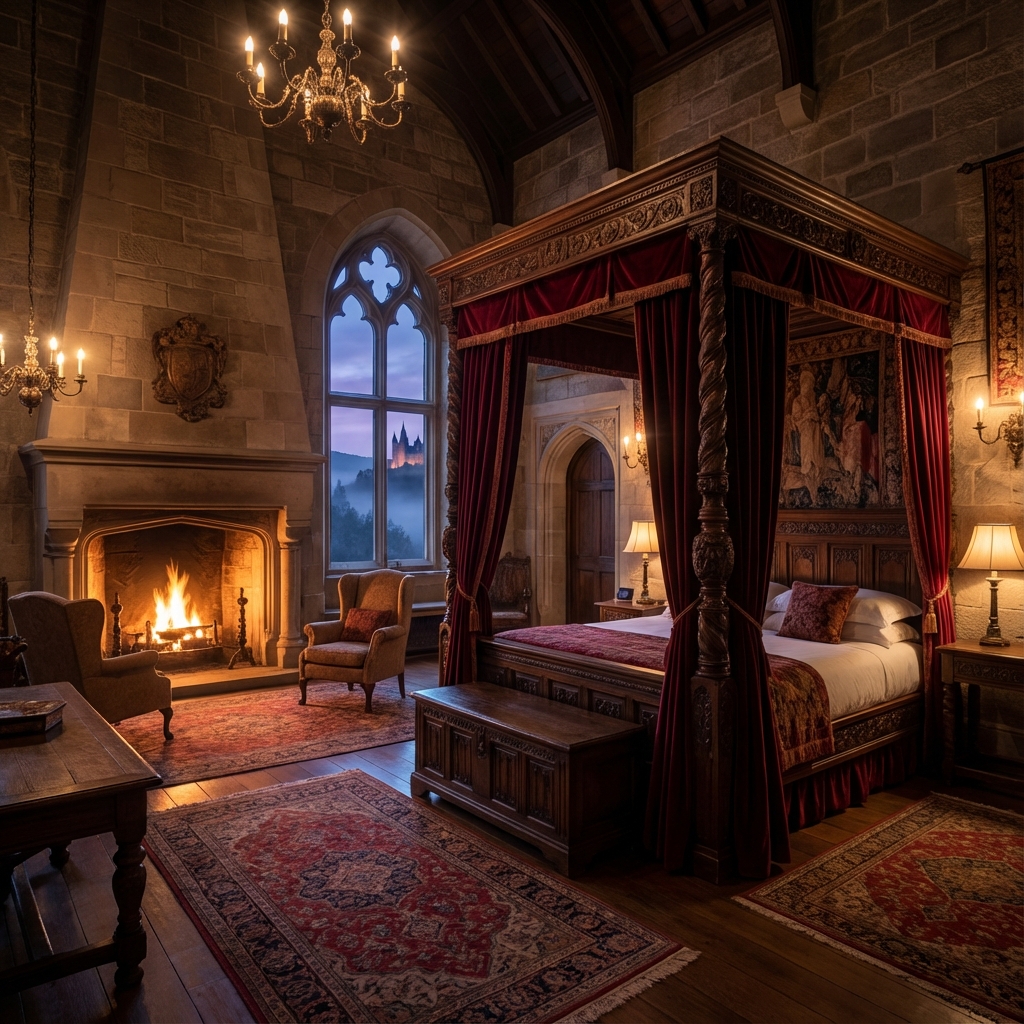
- The Queen's Bedroom: A reconstruction of how a royal bedchamber might have looked in the 15th century, with a hung bed offering privacy and warmth.
- The Baillie Bedroom: Lady Baillie's own suite is a masterpiece of 'Hollywood Regency' style, with Louis XVI panelling painted in a unique shade of blue and an exquisite marble bathroom.
- The Yellow Drawing Room: The centerpiece of Lady Baillie's entertaining, this room is elegance personified, with 18th-century French furniture and fine art.
- The Spiral Staircases: Be prepared for some climbing! The stone spiral stairs in the Gloriette are authentic and narrow, worn down by footsteps over centuries.
Grounds and Gardens
The 500-acre estate is as impressive as the castle itself, offering varied landscapes and attractions.
The Culpeper Garden
Named after the 17th-century owners of the castle, this was originally the site of the kitchen garden. Today, it is a quintessential English cottage garden, exploding with color from roses, lupins, and poppies, framed by low box hedges.
The Lady Baillie Mediterranean Garden
Located on the terrace overlooking the Great Water, this garden brings a touch of the Riviera to Kent. It features exotic palms, cacti, and succulents that thrive in the sheltered microclimate.
The Maze and Grotto
A favorite for families, the maze is constructed from 2,400 yew trees planted in a square design. The goal is to reach the center, but the challenge doesn't end there. Once you solve the maze, you exit through an underground Shell Grotto, a whimsical tunnel decorated with shells and mosaics representing mythical beasts.
Unique Attractions
The Dog Collar Museum
Yes, you read that correctly. Leeds Castle is home to the world's only Dog Collar Museum. The collection spans five centuries and includes over 130 collars. Seeing the spiked iron collars used to protect hunting dogs from wolves in the 15th century alongside the velvet and silver collars of 18th-century lapdogs offers a unique insight into the history of pet ownership.
The Black Swan Ferry
For a grand entrance, visitors can take the Black Swan Ferry across the Great Water to the castle entrance. It offers spectacular views of the castle rising from the lake and is named after the castle's famous black swans (a gift from Winston Churchill), which still patrol the moat today.
Falconry
The castle has a dedicated Birds of Prey Centre. Daily falconry displays are held in the arena, where you can watch hawks, falcons, and owls flying free against the backdrop of the castle walls.
Visitor Information
Leeds Castle is open all year round, but check the website for seasonal variations.
- Tickets: The castle operates a unique ticket system where you pay once and get free admission for 12 months. This makes it great value if you plan to return.
- Getting There: By car, it is off the M20 motorway. By train, the nearest station is Bearsted, where a shuttle bus service runs to the castle during the summer season.
- Accessibility: The main castle has wheelchair access to the ground floor rooms (Library, Dining Room, etc.), but the upper floors of the Gloriette are only accessible by stairs. A video tour is available. The grounds are generally accessible with hard paths, and a land train runs from the entrance to the castle.
- Dining: There are several cafes and restaurants on-site, including the castle-view restaurant and kiosks in the gardens.
Frequently Asked Questions
- Is the castle National Trust?
- No, it is owned by the Leeds Castle Foundation, a private charitable trust.
- Can we picnic?
- Absolutely. The 500-acre grounds are perfect for picnics, and there are designated areas with tables near the car parks and in the parkland.
- Are dogs allowed?
- Dogs are not allowed in the castle or the formal gardens, but they are welcome in the parkland on leads.
- How long does the maze take?
- It depends on your sense of direction! On average, it takes about 20-30 minutes to solve.