A Dream on the Adriatic
Jutting out into the blue waters of the Gulf of Trieste, Miramare Castle (Castello di Miramare) is a vision of romantic elegance. Its gleaming white limestone facade contrasts beautifully with the deep blue of the Adriatic Sea and the lush greenery of its park. Built between 1856 and 1860, the castle was the dream home of Archduke Ferdinand Maximilian of Habsburg (brother of Emperor Franz Joseph I) and his wife, Charlotte of Belgium. It was designed to be their private nest, a place of peace and art, far from the rigid court life of Vienna. Maximilian personally oversaw every detail of the design, working closely with the architect Carl Junker to create an eclectic masterpiece that combined Gothic, Medieval, and Renaissance styles.
The Tragic Romance
The history of Miramare is inseparable from the tragic destiny of its owners. Maximilian and Charlotte lived here happily for only four years. It was a golden time of music, painting, and sailing. However, in 1864, Maximilian made the fatal decision to accept the offer to become the Emperor of Mexico, a position created by the ambitions of Napoleon III of France. The couple left their beloved Miramare for the New World, carrying with them hopes of establishing a liberal monarchy.
Their reign in Mexico was short, chaotic, and disastrous. Abandoned by his French allies and facing a fierce republican uprising led by Benito Juárez, Maximilian was captured. Despite pleas for clemency from world leaders like Victor Hugo and Giuseppe Garibaldi, he was executed by firing squad on June 19, 1867. His last words were reportedly, "Poor Charlotte!" Charlotte, who had returned to Europe to beg for help from the Pope and Napoleon III, lost her mind with grief and paranoia. She spent the rest of her life in seclusion, first at Miramare and then in Belgium, never recovering from the loss. The castle remains a frozen monument to their love and ambition, filled with the objects they chose together.
The Curse of Miramare
A persistent local legend claims that Charlotte, mad with grief, cursed the castle before she left. The curse states that anyone who spends a night under its roof will die a violent death away from home and their loved ones. Locals point to a series of tragic deaths associated with the castle's residents to prove the legend true: Duke Amedeo of Aosta (died in a British POW camp), General Friedrich Rainer (executed for war crimes), and Charles Guilleminot (committed suicide). Even today, superstitious visitors might feel a chill in the air despite the sunny Italian setting.
Interiors: A Captain's Cabin
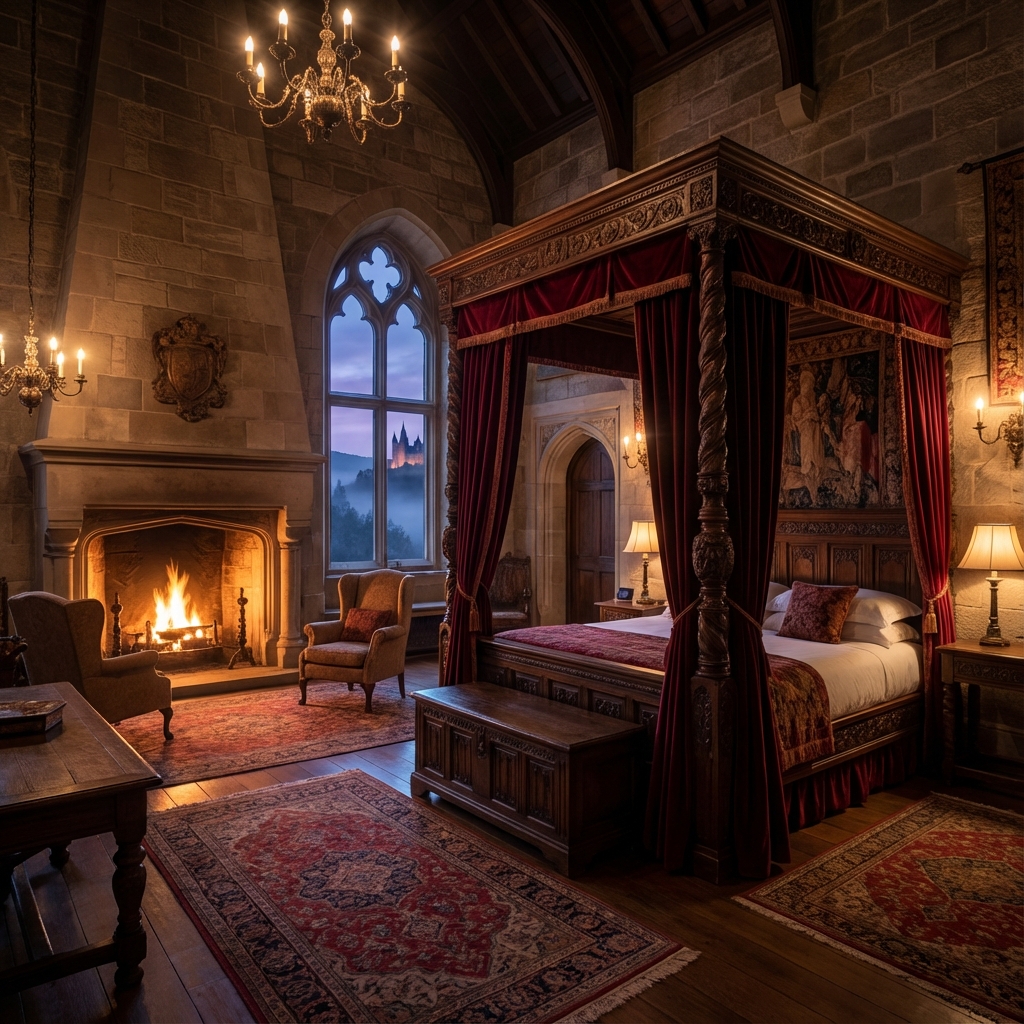
Maximilian was a passionate sailor and the Commander-in-Chief of the Austrian Navy. This love for the sea is reflected in the castle's interior design, particularly on the ground floor. His private apartments are modeled after the cabins of the frigate Novara, the ship he commanded on a scientific expedition around the world (1857-1859). The ceilings are low, the wood paneling is dark and polished, and the furniture is compact, giving the distinct impression of being on board a ship at sea. Visitors can see his original desk, maps, and extensive library, preserved exactly as he left them.
The first floor, intended for official receptions, stands in stark contrast. The Throne Room is a dazzling display of Habsburg grandeur, with red silk walls, chandeliers, and portraits of the dynasty. It was recently restored to its original splendor. The walls are adorned with paintings celebrating Maximilian's naval exploits and the history of the castle. The "Room of the Seagulls" features a ceiling painted with birds against a blue sky, a reminder of the freedom Maximilian craved but ultimately lost.
Maximilian was a music lover, and one of the most curious objects in the castle is the "Hydraulic Organ" in the Music Room. It was designed to function using the pressure of the sea water pumped up from the gulf below. Unfortunately, the complex mechanism never worked properly, remaining a silent monument to the ambitious but often impractical dreams of its owner.
The Park and the Sphinx
The 22-hectare park surrounding the castle is a masterpiece of garden design and acclimatization. When Maximilian bought the land, it was a barren, rocky promontory known as "Goat's Point," devoid of vegetation. He transformed it into a botanical garden, importing tons of fertile soil from Styria and Carinthia. He planted exotic species from around the world that he had collected during his naval voyages, including giant sequoias from California, cedars from Lebanon, and ginkgo biloba from China.
The park is designed with a mix of winding English paths and formal Italian geometric parterres. It features sculptures, ponds, and the "Castelletto" (Little Castle), a smaller residence where the couple lived during the construction of the main castle. At the end of the small harbor stands a small pink granite Sphinx from Egypt, dating back to the Ptolemaic period (2nd century BC). It sits on a pier jutting into the sea, gazing eternally towards the horizon, perhaps waiting for the Emperor who never returned.
The Scientific Legacy
Beyond its romantic history, Miramare was a center of science. Maximilian was fascinated by botany and marine biology. The park is not just a garden but an arboretum. Today, the waters surrounding the castle form the Miramare Marine Protected Area (Area Marina Protetta di Miramare), established in 1986. It was the first marine reserve in Italy, protecting the unique biodiversity of the Gulf of Trieste. Visitors can visit the WWF Visitor Center located in the "Castelletto" to learn about the marine life or take guided snorkeling tours to see the underwater world that Maximilian loved.
Visitor Information
Miramare Castle is located about 8 km from the center of Trieste. It is one of the most visited castles in Italy. Visitors can tour the castle apartments, the park, and the stables (now an exhibition center). The park is free to enter and is a favorite spot for locals to jog or walk their dogs. The views of the sunset over the Adriatic from the castle terraces are unforgettable. A visit here is a poignant experience, combining the beauty of the setting with the melancholy of a life cut short.