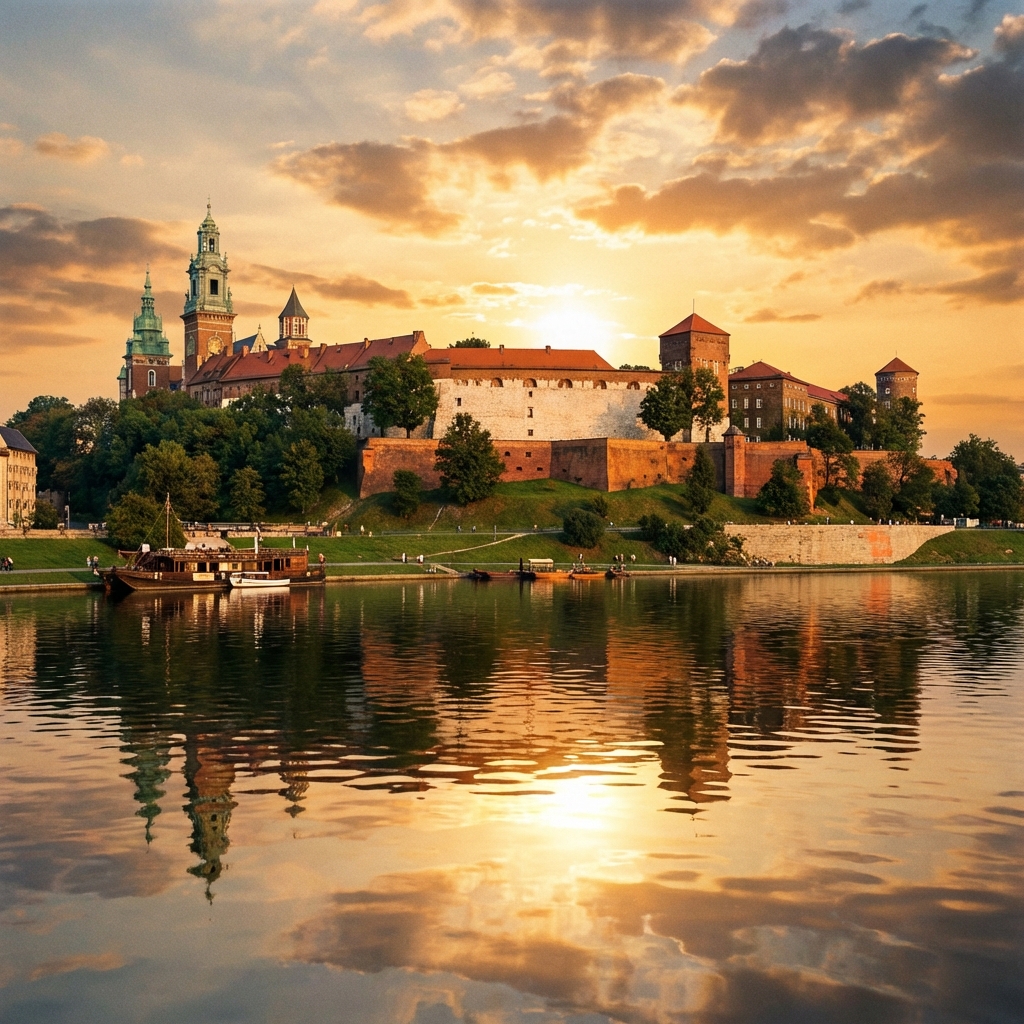
The Forgotten Versailles of the East
Emerging from the rolling hills of the Lviv region in western Ukraine, Pidhirtsi Castle (sometimes spelled Podhorce) is a hauntingly beautiful monument to a bygone era of grandeur. Once hailed as one of the finest palace complexes in Eastern Europe, rivalling the great courts of France and Italy, it is a structure that defies easy categorization. It is a "palazzo in fortezza"—a luxurious Renaissance palace wrapped in the protective shell of a military bastion. For centuries, it stood as a symbol of the wealth and power of the Polish-Lithuanian Commonwealth. Today, even in its semi-ruined state, it retains a majestic aura, drawing visitors with its elegant lines, its tragic history, and its reputation as one of the most haunted places in Ukraine.
History: Splendor and Ruin
The castle was commissioned in 1635 by Stanisław Koniecpolski, the Grand Hetman of the Crown and one of the most successful military commanders of his age. He wanted a residence that would serve as a place of rest and leisure, a contrast to the rugged life of the military camps. He hired the Italian architect Andrea dell'Aqua to design the palace and the French military engineer Guillaume Le Vasseur de Beauplan to design the fortifications.
For over a century, Pidhirtsi was the center of high society. Kings like Władysław IV Vasa and John III Sobieski visited the castle. It was famous for its lavish parties, fireworks displays, and extensive art collection. In the 18th century, under the Rzewuski family, it reached its peak. Wacław Rzewuski, an eccentric nobleman, added a theater, a printing press, and even a laboratory for his alchemy experiments. The castle's collection included hundreds of paintings (some by Titian and Raphael), arms, and armor.
However, the 20th century brought a series of catastrophes. During World War I, the castle was on the front lines and was looted by Russian troops. In the Polish-Soviet War, it was damaged again. World War II brought further looting, but the final blow came under Soviet rule. The castle was converted into a tuberculosis sanatorium, a function that completely ignored its historical value. In 1956, a massive fire broke out, gutting the interiors and destroying the remaining woodwork, frescoes, and ceilings. It was not until 1997 that the Lviv Art Gallery took over the site, beginning a long and difficult process of restoration.
Architecture: A Palace in Armor
The architectural genius of Pidhirtsi lies in its duality. From the north, it looks like a defensible fortress with a deep moat and high brick bastions. From the south, it presents the facade of an elegant three-story palace with open loggias and a terrace.
The Bastion System
The castle is surrounded by a pentagonal system of bastions. These were not merely decorative; they were functional defenses equipped with cannons that protected the residence from Tatar raids and Cossack uprisings. The stonework of the walls is massive, contrasting sharply with the delicate rustication and pilasters of the palace facade.
Lost Interiors
Although the interiors were devastated, historical records describe them with awe. There was a "Crimson Room", a "Chinese Office", and a "Golden Hall", each decorated with thematic tapestries and furniture. The "Knights' Hall" displayed captured Turkish tents and weapons. Today, restoration teams are using old photographs to painstakingly recreate some of these elements, but much of the original splendor lives on only in memory.
The Italian Park
To the north of the castle lies the "Italian Park," which was once the most beautiful garden in the Commonwealth. Arranged on three terraces, it featured fountains, parterres, and sculptures. Although much of it is overgrown today, the terraced structure remains visible, and recent efforts are being made to clear the vegetation and restore the geometric lines of the original 17th-century design. Opposite the castle stands the Church of St. Joseph, a magnificent Baroque rotunda built in the 18th century. With its colonnade and dome, it adds a sacred counterpoint to the secular grandeur of the palace.
Legends: The White Lady and the Alchemist
Pidhirtsi is widely considered one of the most haunted castles in Ukraine, a reputation that has even attracted American ghost hunting TV shows. The most persistent legend is that of the "White Lady." According to the story, one of the castle's owners, Seweryn Rzewuski, was a jealous and cruel man. Suspecting his young wife of infidelity (or perhaps simply tiring of her), he had her walled up alive in the castle's basement. Since then, a spectral figure in a white dress has been seen wandering the halls and the park, weeping silently. Visitors and guards have reported sudden drops in temperature, mysterious shadows, and the feeling of being watched.
Another layer of mystery comes from Wacław Rzewuski, the alchemist. It is said that in his secret laboratory, he sought the Philosopher's Stone and the Elixir of Life. Locals whisper that strange lights were seen in the castle windows late at night, and that some of his experiments may have opened doors that should have remained closed. Some even claim that the fire of 1956 was not an accident, but a delayed result of a curse placed on the castle centuries ago.
Visitor Information
Part of the Golden Horseshoe
Pidhirtsi Castle is a key stop on the "Golden Horseshoe of Lviv," a popular tourist route that also includes Olesko Castle and Zolochiv Castle. It makes for an excellent day trip from Lviv.
Access and Hours
The castle is located about 80 kilometers east of Lviv. The drive takes about 1.5 hours via the M06 highway. Buses run regularly from Lviv to the nearby village, though a car or guided tour is the most convenient option. The castle grounds are open daily, usually from 10:00 AM to 5:00 PM (closing earlier in winter). While the interiors are largely empty and still under restoration, visitors can enter the courtyard, walk the bastion walls, and visit the exhibition halls where photographs of the castle's former glory are displayed. The Church of St. Joseph across the way is also worth a visit for its impressive facade.