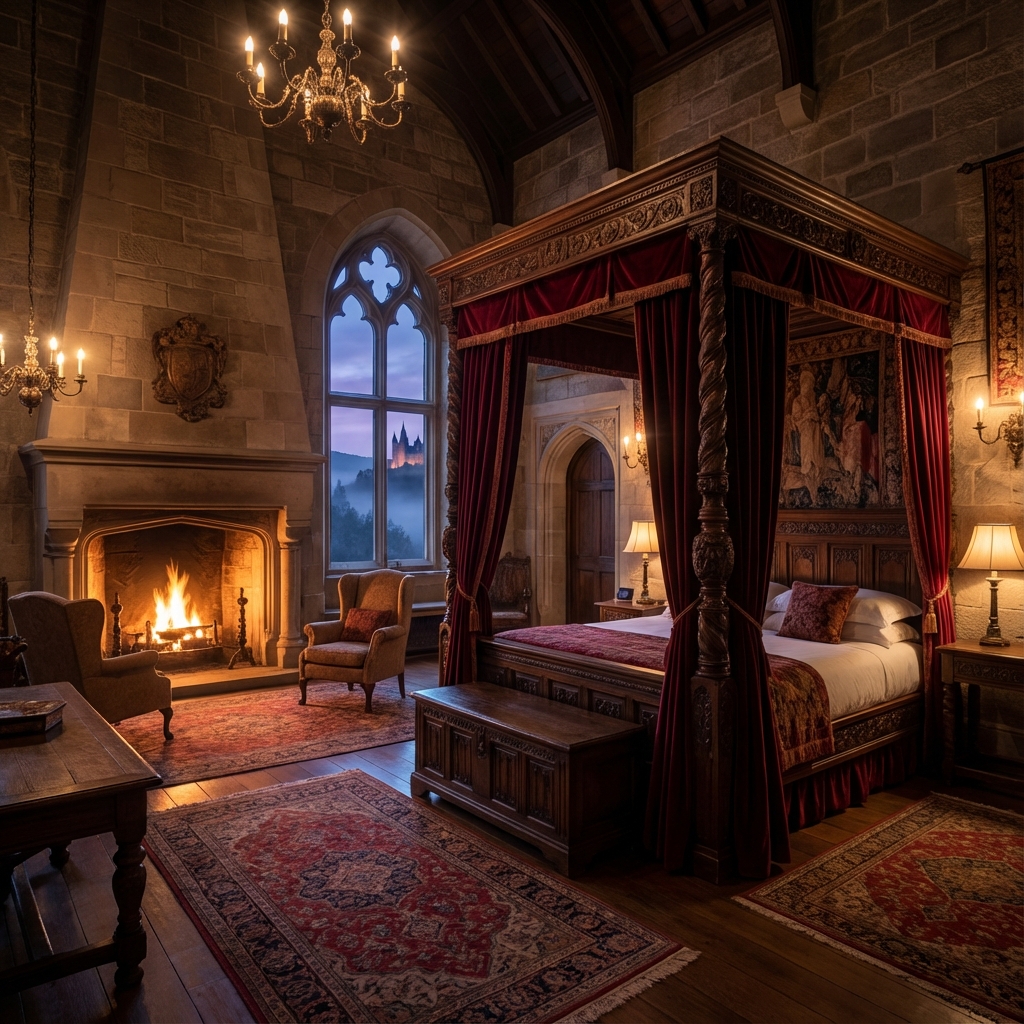
Prague Castle (Pražský hrad) is not just a castle; it is a sprawling architectural timeline of Central European history. According to the Guinness Book of World Records, it is the largest ancient castle complex in the world, covering an area of almost 70,000 square meters. Standing majestically on a hill overlooking the Vltava River, it has been the seat of power for Kings of Bohemia, Holy Roman Emperors, and presidents of Czechoslovakia and the Czech Republic.
History: A City Within a City
Founded around 880 by Prince Bořivoj of the Přemyslid dynasty, the castle began as a wooden fortification protected by an earthen mound. Over the next thousand years, every ruler added to it, resulting in a fascinating mix of Romanesque, Gothic, Renaissance, and Baroque styles.
The Seat of Emperors
The castle's golden age came in the 14th century under Charles IV, King of Bohemia and Holy Roman Emperor. He ordered the construction of the Gothic St. Vitus Cathedral and strengthened the fortifications. Later, Emperor Rudolf II turned the castle into a center of science and alchemy, hosting astronomers like Tycho Brahe and Johannes Kepler.
The Defenestration of Prague
One of the most significant events in European history took place here on May 23, 1618. Protestant nobles, angry at the violation of their religious rights, threw two Catholic imperial regents and their secretary out of a window in the Ludwig Wing of the Old Royal Palace. They fell 21 meters (70 feet) but survived (Catholics claimed they were saved by angels; Protestants claimed they landed in a pile of manure). This act, known as the Second Defenestration of Prague, triggered the Thirty Years' War, which devastated Europe.
St. Vitus Cathedral
Dominating the skyline is the St. Vitus Cathedral. It took nearly 600 years to complete (1344–1929). It is the spiritual heart of the country.
- The St. Wenceslas Chapel: The most sacred part of the cathedral, its walls are lined with over 1,300 semi-precious stones and Gothic frescoes. A door in the corner leads to the Crown Chamber.
- The Crown Jewels: The Bohemian Crown Jewels, including the St. Wenceslas Crown, are kept in a chamber locked by seven locks. The seven keys are held by seven different state and church officials, including the President and the Prime Minister. They are rarely displayed to the public.
St. George's Basilica
Often overshadowed by the massive cathedral, the Basilica of St. George is actually the oldest surviving church building within the castle complex. Founded in 920, its striking rusty-red baroque façade hides a beautifully preserved Romanesque interior. The stark, heavy stone walls and the double staircase leading to the choir offer a glimpse into the castle's austere early medieval past. It is also the final resting place of St. Ludmila, the grandmother of St. Wenceslas and the first Czech Christian martyr.
The Old Royal Palace
The original residence of the princes and kings features the Vladislav Hall. Built between 1493 and 1502, it has a stunning Late Gothic vaulted ceiling that was an engineering marvel of its time. The hall is so large that knights used to hold indoor jousting tournaments here; the "Riders' Staircase" was built wide enough for horses to enter.
Golden Lane
This scenic street of tiny, colorful houses was originally built in the 16th century for the castle's marksmen (guards). Later, it became home to goldsmiths (hence the name). Legend says alchemists lived here trying to turn lead into gold, but in reality, they lived elsewhere.
- Franz Kafka: The most famous resident was the writer Franz Kafka, who lived in house No. 22 between 1916 and 1917, seeking a quiet place to write.
- The Armory: The upper floors of the houses are connected by a defensive corridor lined with medieval armor and weapons.
The Deer Moat
Running along the north side of the castle is the Deer Moat (Jelení příkop). This deep natural ravine was originally part of the castle's northern defenses. Under Emperor Rudolf II, it was used for hunting (hence the name) and keeping lions. Closed for decades during the communist era, it is now a peaceful public park open during the summer. A modern pedestrian tunnel designed by architect Josef Pleskot cuts through the massive Powder Bridge embankment, allowing visitors to walk the full length of the moat in a setting that feels miles away from the city.
The Plečnik Renovations
After World War I, when the castle became the seat of the new democratic president Tomáš Garrigue Masaryk, the Slovenian architect Jože Plečnik was hired to modernize the castle. His contributions are subtle but brilliant examples of modernism blending with history. Look for the Bull Staircase connecting the Third Courtyard to the South Gardens, and the monolithic granite bowl in the gardens. Plečnik's goal was to transform the castle from a symbol of monarchical oppression into a democratic "Castle for the People."
Visitor Tips
- Changing of the Guard: The ceremonial Changing of the Guard takes place daily at 12:00 noon in the First Courtyard, featuring a fanfare and flag exchange.
- The Gardens: The Royal Garden and the South Gardens offer beautiful views of the city and are free to enter (open April–October).
- Security Check: Since 2016, there are security checks at the castle entrances. The queues can be long, so arrive early (before 9 am) or use the eastern entrance (Opyš) for shorter lines.
- Tickets: You can walk through the castle courtyards for free, but you need a ticket (Circuit A or B) to enter the Cathedral, Palace, and Golden Lane.
Frequently Asked Questions
- How much time should I plan?
- To see the main interiors (Circuit B), allow at least 2-3 hours. For the full complex including museums and gardens, you can easily spend half a day.
- Is it wheelchair accessible?
- Most of the courtyards and the main floor of the Cathedral and Palace are accessible, but Golden Lane and some towers have stairs and cobblestones that are difficult.
- When does it open?
- The castle complex opens at 6:00 am, but the historical buildings open at 9:00 am. An early morning walk before the buildings open is magical and quiet.