Cashel of the Kings
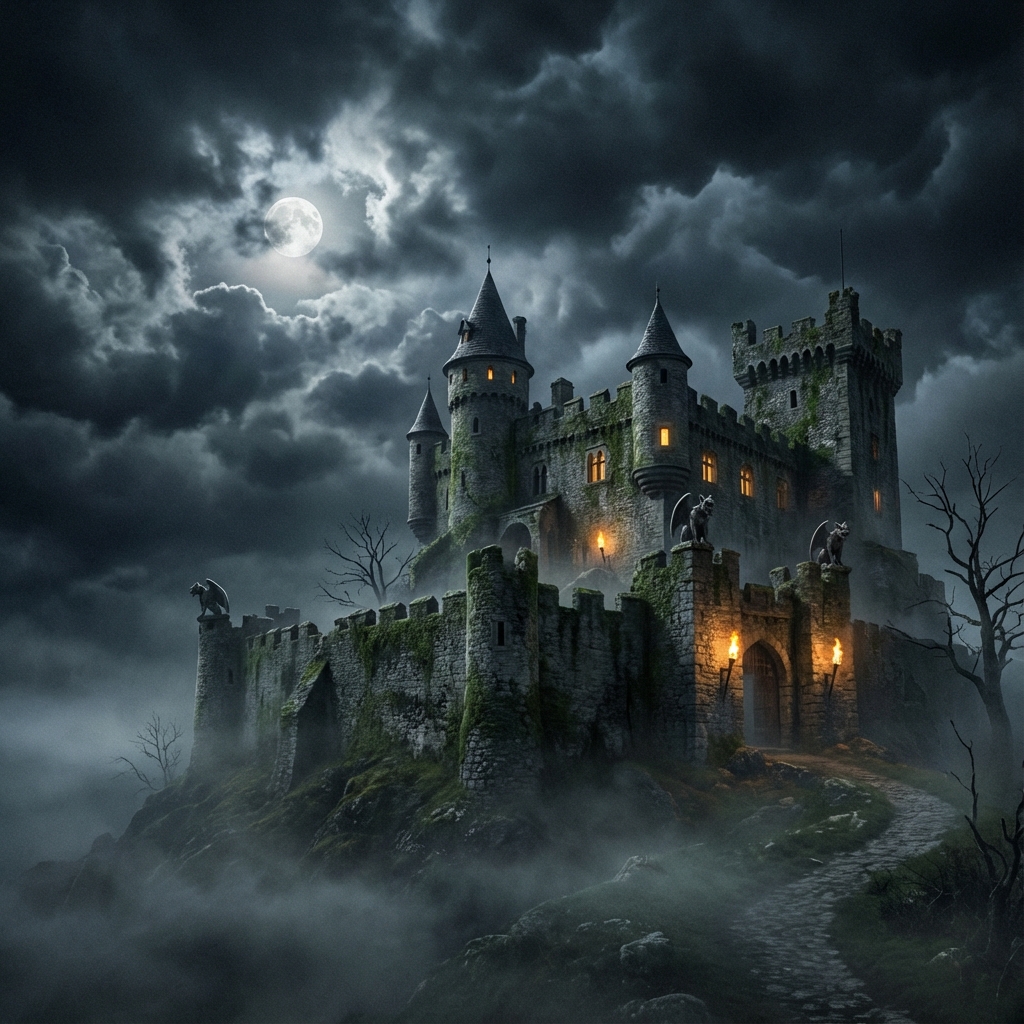
Rising dramatically from the fertile green plains of the Golden Vale in County Tipperary, the Rock of Cashel (Carraig Phádraig) is one of Ireland's most spectacular archaeological sites. It is not a single building but a complex of medieval structures perched on a massive outcrop of limestone. For centuries, this was the seat of the High Kings of Munster, a symbol of royal power and religious authority that rivaled Tara. Today, its silhouette of towers, gables, and turrets against the Irish sky is one of the most recognized images of the Emerald Isle.
Legends of Saints and Devils
The origins of the Rock are steeped in mythology. Local folklore claims that the Rock itself is the result of a supernatural encounter. The story goes that the Devil was flying over Ireland with a mouthful of mountain he had bitten off from the Slieve Bloom Mountains (a gap in the hills known today as the 'Devil's Bit'). While flying, he saw St. Patrick building a church in the Golden Vale. In a fit of disgust and surprise, he dropped the rock from his mouth, and it landed in the middle of the plain to become the Rock of Cashel.
The site's connection to St. Patrick is central to its history. It is said that in the 5th century, St. Patrick came here to convert Aenghus, the King of Munster, to Christianity. A famous legend tells that during the baptism ceremony, Patrick accidentally drove the sharp point of his crozier (staff) through the king's foot. The stoic king, believing this pain was part of the baptismal ritual, remained silent and did not flinch until the ceremony was over.
A Medieval Masterpiece
In 1101, King Muirchertach Ua Briain gifted the Rock to the Church, a clever political move to deny the site to his rivals, the Eóganachta clan. This act transformed Cashel from a royal fortress into a great ecclesiastical center. The buildings that remain today are a timeline of Irish medieval architecture.
- The Round Tower: The oldest surviving building on the Rock is the Round Tower, dating from around 1100. Standing 28 meters tall, it is built of sandstone and retains its original conical cap. These towers were used as bell towers and places of refuge for monks during Viking raids. The door is raised 3.5 meters above the ground for security.
- Cormac's Chapel: Consecrated in 1134, this chapel is the jewel of the Rock. It is a masterpiece of Romanesque architecture, unlike anything else in Ireland at the time. Its design was influenced by German and English styles, featuring twin towers and intricate carvings. Inside, it houses the only surviving Romanesque frescoes in Ireland, which have recently been restored to reveal their vivid colors. The chapel also contains a mysterious stone sarcophagus, rumored to be the tomb of King Cormac himself.
- The Gothic Cathedral: Built in the 13th century, this massive structure dominates the site. Although it is now roofless, its soaring arches and lancet windows testify to its former grandeur. The central tower collapsed in the 18th century, but the walls remain standing.
- The Hall of the Vicars Choral: This 15th-century building was the home of the lay choir who sang the cathedral services. It has been fully restored, and its basement houses a museum containing the original St. Patrick's Cross (a 12th-century high cross). The restored hall gives visitors a sense of the medieval acoustics and daily life of the clergy.
Tragedy and Ruin
The Rock of Cashel has witnessed violence as well as piety. During the Irish Confederate Wars in 1647, the Rock was besieged by Parliamentarian troops under Lord Inchiquin. The townspeople fled to the Cathedral for sanctuary, believing the holy ground would protect them. Tragically, the troops stormed the complex, piling turf against the cathedral walls and setting it on fire. Over 800 people were massacred inside, and many important religious artifacts were destroyed. The site was eventually abandoned in the 18th century when the Anglican Archbishop moved to a more comfortable palace in the town below.
The Scudamore Sarcophagus
One of the most intriguing artifacts on the site is the Scudamore Sarcophagus. This beautifully carved 13th-century tomb is often overlooked by visitors. It is decorated with elaborate floral motifs and the heads of two beasts. Originally located in the cathedral, it was moved for protection. It serves as a reminder of the artistry that once flourished here, even amidst the turbulent politics of medieval Ireland.
Visitor Information
The Rock of Cashel is managed by the Office of Public Works (OPW). It is open year-round, though hours are shorter in winter. The climb to the top is steep but manageable, and the views from the plateau are magnificent, stretching across the Tipperary countryside.
Just a short walk from the Rock lies Hore Abbey, a ruined Cistercian monastery sitting in the middle of a cow pasture. It offers a fantastic view of the Rock from below and is often much quieter, allowing for atmospheric photos. The town of Cashel itself has a heritage center and the Brú Ború Cultural Centre, which celebrates traditional Irish music and movement. A visit to the Rock is often combined with a trip to nearby Cahir Castle, one of Ireland's largest and best-preserved medieval castles.
A visit to the Rock of Cashel is a trip into the heart of Ireland's spiritual and royal past. It is a place where stone, sky, and story meet, standing as a silent witness to over a millennium of Irish history.
Music and Living Tradition
The Rock of Cashel is not merely a ruin frozen in the past—it sits at the heart of a living cultural tradition. The town of Cashel is celebrated for traditional Irish music, and the Brú Ború Cultural Centre at the foot of the Rock hosts performances of music, song, and movement that reflect the ancient Gaelic heritage of Munster. The great harpists and bards who once entertained the High Kings of Munster in the castle's halls have their direct descendants in the sessions that take place in the town's pubs on any given evening. The Rock draws scholars of early Irish Christianity from around the world, drawn by Cormac's Chapel and its unique combination of Irish, English, and Continental Romanesque traditions—a reminder that medieval Ireland was not an island cut off from Europe, but an active participant in its cultural and religious life.